Venice
Venice Travel Tips: Getting Around, Money and Tourist Traps
Last checked
Venice's historic centre has no cars at all, which makes the practical side of a visit entirely about feet and water — the right vaporetto ticket, validated at every change, and a clear sense of which crowded corners carry an extra fee or an extra scam.
Arriving
Marco Polo Airport (VCE) sits on the mainland near Mestre. The ATVO express bus takes about 20 minutes to Piazzale Roma, Venice's road terminus — buy tickets at machines in the arrivals baggage hall, at the ATVO counter, or at the ATVO office in Piazzale Roma itself. ACTV's own urban line 5 covers the same route.
Alilaguna runs water buses straight from the airport into the city — the Blue line serves Murano, Fondamente Nove, the Lido, Arsenale, San Zaccaria, San Marco and Zattere, while the Orange line serves Madonna dell'Orto, Guglie, San Stae, Rialto and several stops further down the Grand Canal. It's slower than the bus and needs a separate ticket — Alilaguna fares aren't covered by ordinary ACTV tickets.
Trains terminate at Venezia Santa Lucia, on the edge of the historic city — don't get off at Venezia Mestre, which is still on the mainland. From either the station or Piazzale Roma, the last stretch of any journey into the city is on foot or by boat, so plan for carrying luggage over bridges. Road taxis stop at Piazzale Roma, since there are no cars beyond it; water taxis have ranks at Ferrovia, Piazzale Roma, Rialto, the Lido and the airport. Use only an officially licensed taxi.
Getting around
Venice is a genuinely pedestrian city — you can cross the main islands on foot in about an hour. Follow the yellow "Per Rialto," "Per San Marco" and "Per Ferrovia" signs rather than trusting GPS, which struggles among the narrow stone streets; walk on the right, and don't stop on a bridge to check your phone.
ACTV runs the vaporetto network and the rest of the lagoon transport. Line 1 runs the full length of the Grand Canal — Piazzale Roma, Ferrovia, Rialto, San Marco, the Lido — while line 2 is the faster Grand Canal and Giudecca loop. The standard ticket covers the waterborne network, excluding a couple of specialty routes and all Alilaguna services, plus the mainland buses and tram; day passes run from first validation. Validate your ticket before boarding and again at every change, and keep it for the whole journey to show on request — inspectors fine passengers who don't.
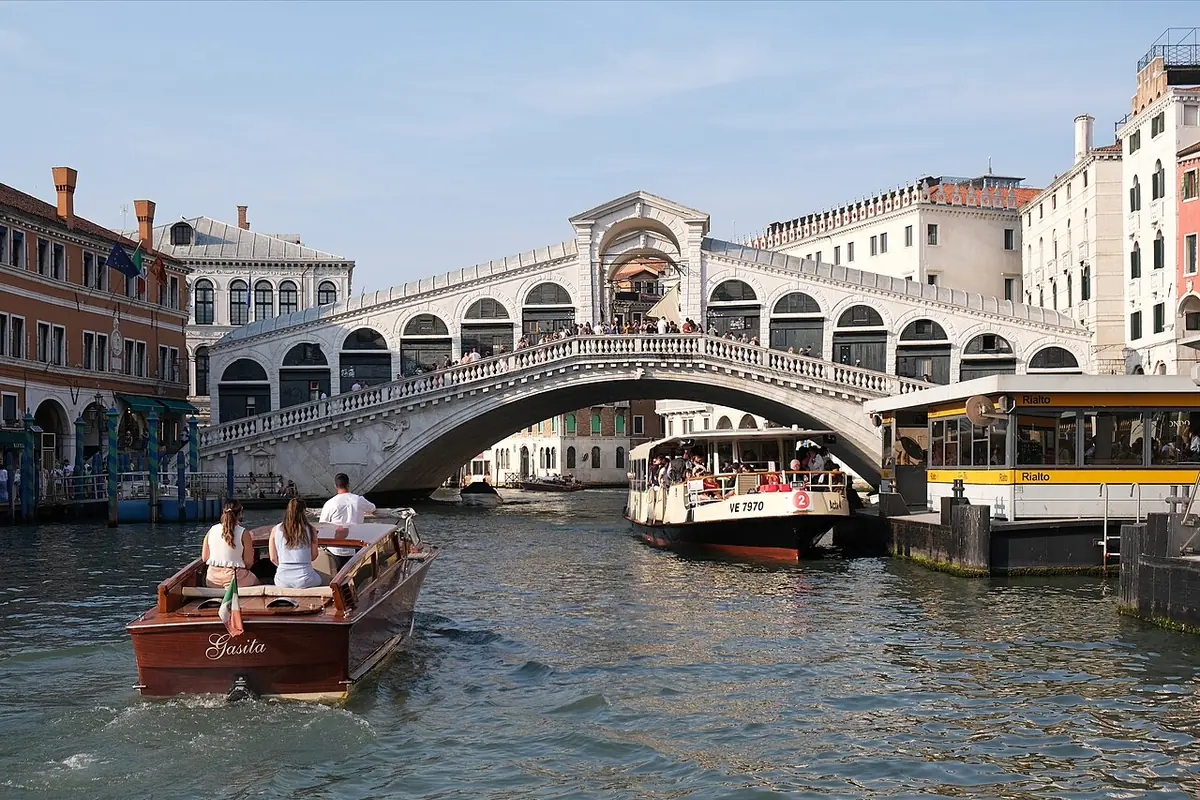

Wikivoyage notes that bicycles aren't allowed anywhere in the historic centre, even wheeled by hand. Stripped-down gondolas called traghetti still ferry people across the Grand Canal at a handful of crossing points, though some run only on weekday mornings. Road vehicles have no reason to be here at all — they stop at Piazzale Roma and Tronchetto.
Money and tipping
Italy has used the euro since 2002. Paying in euros rather than letting a terminal or ATM convert to your home currency is almost always the cheaper option. Bank-owned ATMs and Postamat machines often charge foreign cards no extra fee.
Tipping isn't customary here; leaving the change in a bar or café is common enough locally, and since tips generally can't be added to a card payment, keep some cash if you want to leave one. Many restaurants charge a coperto (cover) or a service charge, which must be shown clearly on the menu or before you order — a charge that wasn't disclosed can be contested. For a cheaper lunch, do what locals do: eat cicchetti standing at the bar, and look for a table in Dorsoduro or the back streets away from the main squares rather than right on a canal.
Tourist traps
Venice has run a day-tripper access fee on a trial basis; the Foreign Office notes simply that "if you are visiting Venice, you may need to pay an access fee," and points to the official fee site for the current dates and exemptions before you plan a day trip.
_at_night-msu-2021-6449-.jpg)
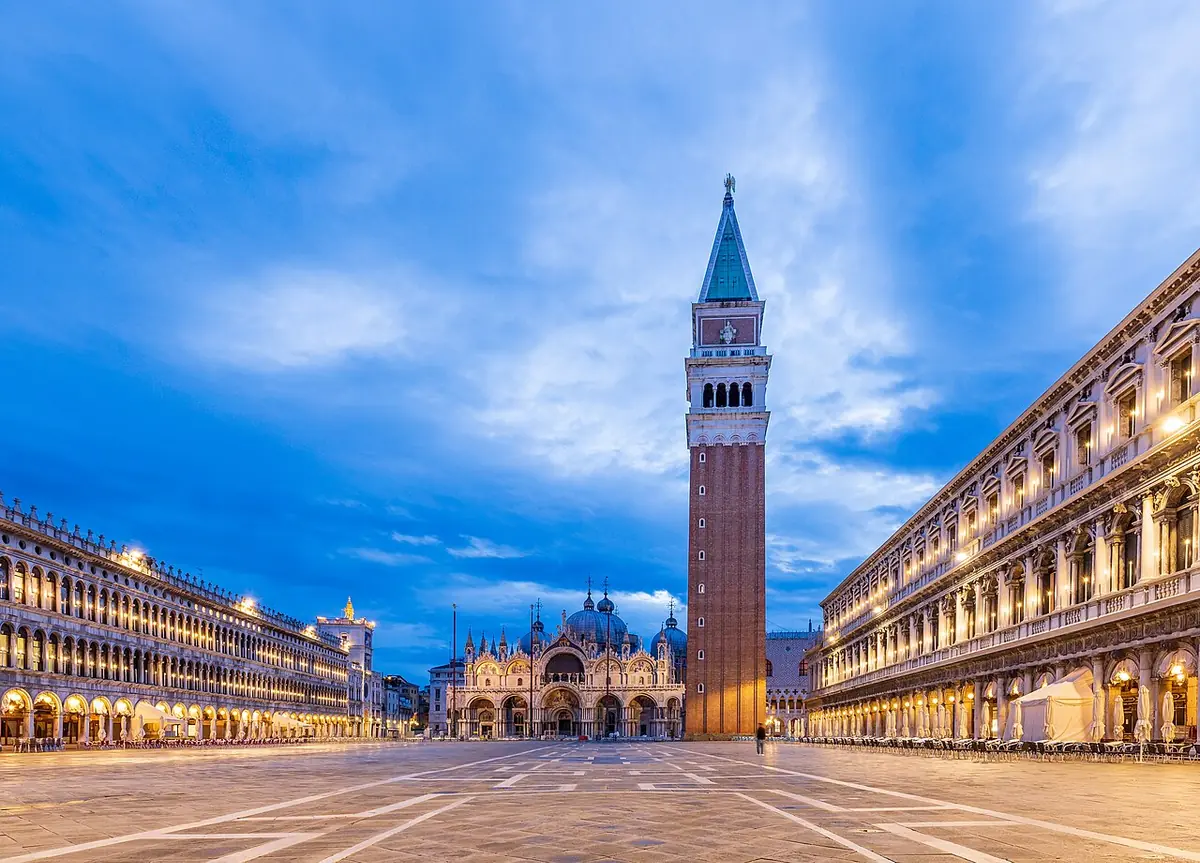
The Doge's Palace, on Piazza San Marco, sells its tickets only through its own official site — the same ticket also covers the Museo Correr, the National Archaeological Museum and the Monumental Rooms of the Marciana Library, and booking ahead online is the better route rather than queuing at the door. For a gondola, agree the price and the length of the ride before you set off; the price is per gondola, not per person.
Swimming in the canals is an offence, the Foreign Office confirms, and for good reason — the water carries untreated sewage, and the edges aren't built for it. The worst crowding is around San Marco, the Rialto Bridge and the direct routes from Santa Lucia and Piazzale Roma toward San Marco; visiting those spots early in the morning or late in the evening avoids the crush. Wikivoyage's advice is to follow only the official direction signs rather than graffiti arrows, which sometimes point the wrong way on purpose, and not to buy from unlicensed street traders — the Foreign Office confirms it's illegal and can bring a fine.
Staying safe
Crime levels in Italy are generally low, with petty theft like bag-snatching and pickpocketing more common in city centres, at major attractions and on public transport — advice that fits Venice well, since Wikivoyage notes pickpocketing here has increased in crowded areas in recent years, and that a couple of livelier squares can get rowdy at night. Don't accept drinks from strangers in bars, or leave your own unattended.
Away from the crowds, Wikivoyage warns unlit alleys at night can end directly at the water. For an emergency: police 112, ambulance 118, fire 115. On tap water, Veritas supplies the historic centre, the Lido and Pellestrina from one of Europe's largest aquifers, serving millions of visitors a year on top of residents — Wikivoyage adds that free drinking fountains are easy to find around the city.
Sources
- Wikivoyage — Venice
- Wikivoyage — Italy
- ATVO — Venice airport bus express
- Alilaguna — Lines
- ACTV — Venice urban services
- AVM — Vaporetto, validate your ticket
- AVM — Fines
- Fondazione Musei Civici di Venezia — Doge's Palace, visitor information
- European Commission — Italy and the euro
- EU, Your Europe — Paying in another currency
- Altroconsumo — Coperto at restaurants
- Gruppo Veritas — Water service, Venice and Mogliano
- FCDO — Italy travel advice, safety and security
- FCDO — Italy travel advice, getting help
- Venezia Unica — Access fee, official site
Travel information adapted from Wikivoyage, licensed under CC BY-SA 4.0.
Walk Venice with an audio guide in your pocket
Join the beta and these tips become a route you can actually walk.