Wrocław
History of the Wrocław Dwarves
Wrocław is famous for its dwarves — small bronze figures, rarely taller than knee height, tucked into doorways, window ledges, and street corners across the city. Depending on which count you believe, the city is home to several hundred of them, and locals will tell you nobody has ever managed a fully accurate tally, since new ones keep quietly appearing.
Where they came from: a joke aimed at a regime
The dwarves didn't start as tourism, and they didn't start as whimsy either. Their origin traces back to the 1980s and Poland's martial law era, when the Orange Alternative — Pomarańczowa Alternatywa — emerged in Wrocław as an anti-communist resistance movement built on absurdist street art and public performance rather than direct confrontation. That distinction mattered enormously in practice. Direct confrontation with a martial-law government got people arrested, beaten, or worse; a movement built on nonsense, jokes, and deliberately silly public happenings was much harder for the authorities to justify cracking down on without looking ridiculous themselves.
The tactic that became the movement's signature grew out of an ordinary, almost accidental act of graffiti removal. Anti-communist slogans and symbols were routinely painted over by the authorities across Polish cities during the 1980s, leaving blank patches of fresh paint on walls throughout the city center. Activists began returning to those blank patches and painting a small dwarf on top of them instead of a new political slogan — a gesture that was, on its face, meaningless. A dwarf isn't a threat. A dwarf isn't sedition. But a wall covered in painted-over political graffiti, patched with dozens of small painted dwarves, became its own kind of visible, undeniable statement: everyone in the city could see exactly how much censorship had been happening, spelled out in a trail of silly cartoon figures the police had no good way to justify painting over again. It turned state censorship into an ongoing joke at its own expense, repeated often enough that the dwarf itself became inseparable from the memory of the movement that used it.
The first bronze dwarf, and where it stands
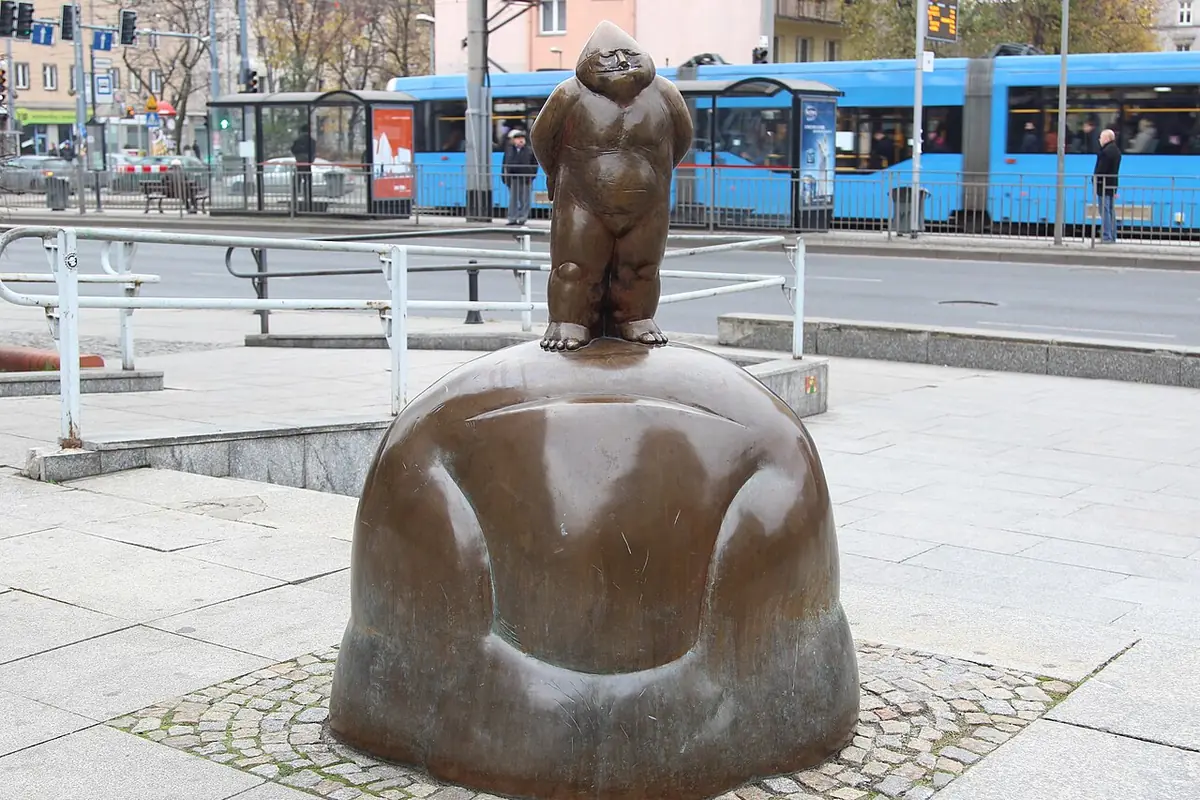
The figure that started the modern, permanent tradition is Papa Krasnal — "Papa Dwarf" — sculptor Olaf Brzeski's bronze memorial to the Orange Alternative movement itself, unveiled in 2001, nearly two decades after the movement's street-art campaign had faded along with martial law. It's a deliberately small figure: just forty centimeters tall, standing on a distinctive eighty-centimeter, semicircular plinth shaped like the tip of a human finger — as if some much larger hand had reached down and set the little figure carefully in place. That scale is not an accident. A monument built to honor a movement whose entire method was refusing to look like a conventional heroic monument would have been a contradiction if it had been cast as anything grand; the small, playful scale is the tribute staying true to what it's commemorating.
The location was chosen with equal care. Papa Krasnal stands on the pedestrian stretch of Świdnicka Street, beside a public clock and next to the underpass running beneath Kazimierza Wielkiego Street — the exact spot from which most of the city's anti-communist demonstrations set out during the martial law years, including the Orange Alternative's own street happenings. The dwarf therefore marks two things at once: a specific campaign of civic dissent, and the literal starting line of its public actions. Stand at that clock today and you're standing where columns of protesters once gathered before marching into the city center, whatever else might be going on around you now.
That makes Papa Krasnal a different kind of stop than the hundreds of pun-themed dwarves that followed it across the city. It isn't a business's decorative sign-off or a marketing flourish; it's a direct, purpose-built memorial to a specific 1980s resistance movement, planted at the exact spot where that movement's history actually happened, by a serious sculptor commissioned specifically for that purpose.
What you'll find beyond it
The hundreds of dwarves that followed Papa Krasnal across Wrocław tend to have a theme related to their location — a banker dwarf outside a financial building, a dwarf reading outside a library, that kind of visual pun repeated across the city in whatever form a local business or the city itself finds fitting. They're small enough that finding them becomes something close to a scavenger hunt, and most visitors end up spotting several purely by accident while walking somewhere else entirely, which is part of the appeal: they reward attention rather than announcing themselves the way a normal monument does.
Worth being straightforward about here: with several hundred dwarves reportedly scattered across the city and no complete official register, this guide anchors on the dwarf and the two nearby buildings that are verified and documented in the places catalogue, rather than listing others by name that can't be confirmed at a specific, checkable location. More of the city's dwarves are expected to be added here as they're verified — this is a starting point for a hunt, not a complete map of one.
The Old Town as the natural hunting ground
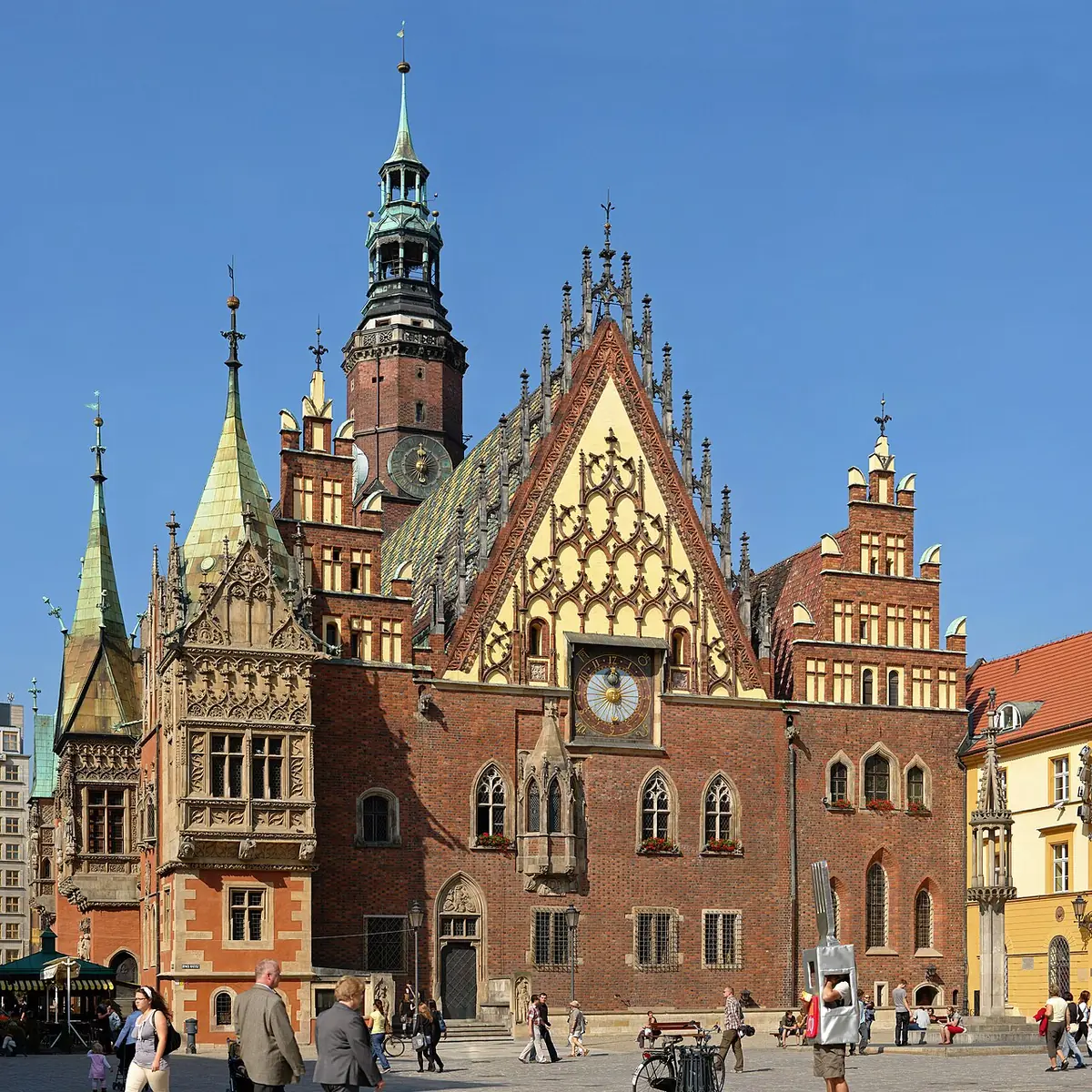
Most dwarf-spotting happens in the compact core of the Old Town, where dense pedestrian streets, doorways, and shopfronts give the sculptures plenty of places to hide in plain sight. The Old Town Hall — Wrocław's major Gothic landmark, standing at an angle at the center of the Market Square — is as good a starting point as any for a dwarf walk, both because it's the natural center of the Old Town's foot traffic and because Świdnicka Street, where Papa Krasnal stands, runs directly off the square it anchors.
The Old Town Hall itself is a genuinely long-running building project, not a single moment of construction. It began around the turn of the fourteenth century as a modest one-story structure with cellars and a tower, built to serve trade before it grew into a fuller seat of municipal power. New rooms were added as the city council's responsibilities expanded, and by the late fifteenth century prosperity had brought the Great Hall, treasury rooms, and a rebuilt Burghers' Hall. The city's coat of arms went up on the tower in 1536, the tower's upper section was rebuilt in 1558 and 1559, and by 1560 the building had essentially taken the outline still visible today — meaning the Town Hall you're standing in front of on a dwarf hunt is the product of roughly two and a half centuries of continuous additions, not one architect's single plan.
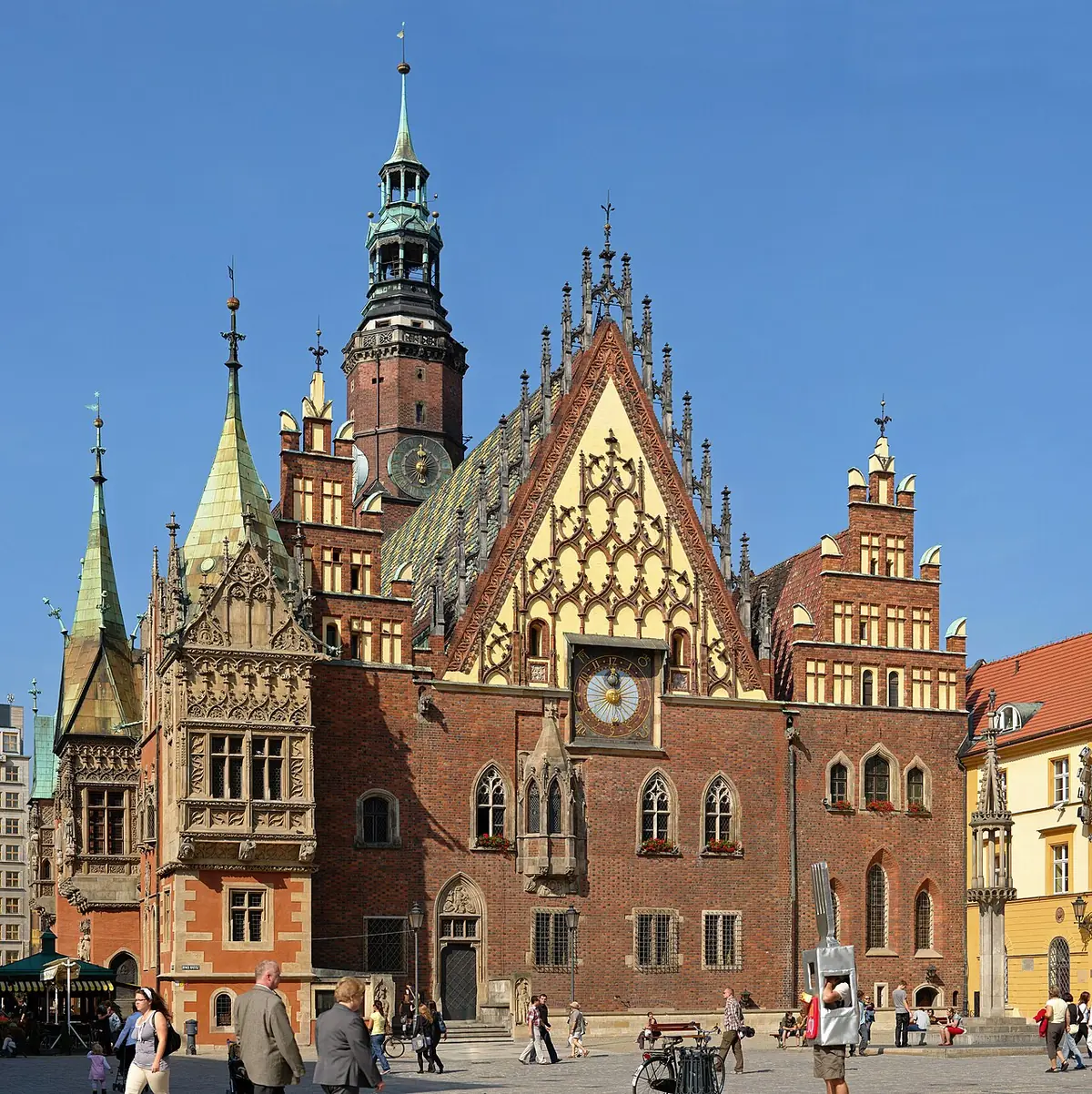
It came close to serious damage once more, much later: near the end of the Second World War, a bomb passed straight through the building's roof without exploding. Restoration began properly in the 1950s. Today the Town Hall houses the Museum of Bourgeois Art, hosts exhibitions and cultural events, and its basement contains Świdnicka Cellar — one of Europe's oldest restaurants, and, not coincidentally, the same "Piwnica Świdnicka" whose entrance faces the market square from the building described next.
A market-square townhouse worth a slower look
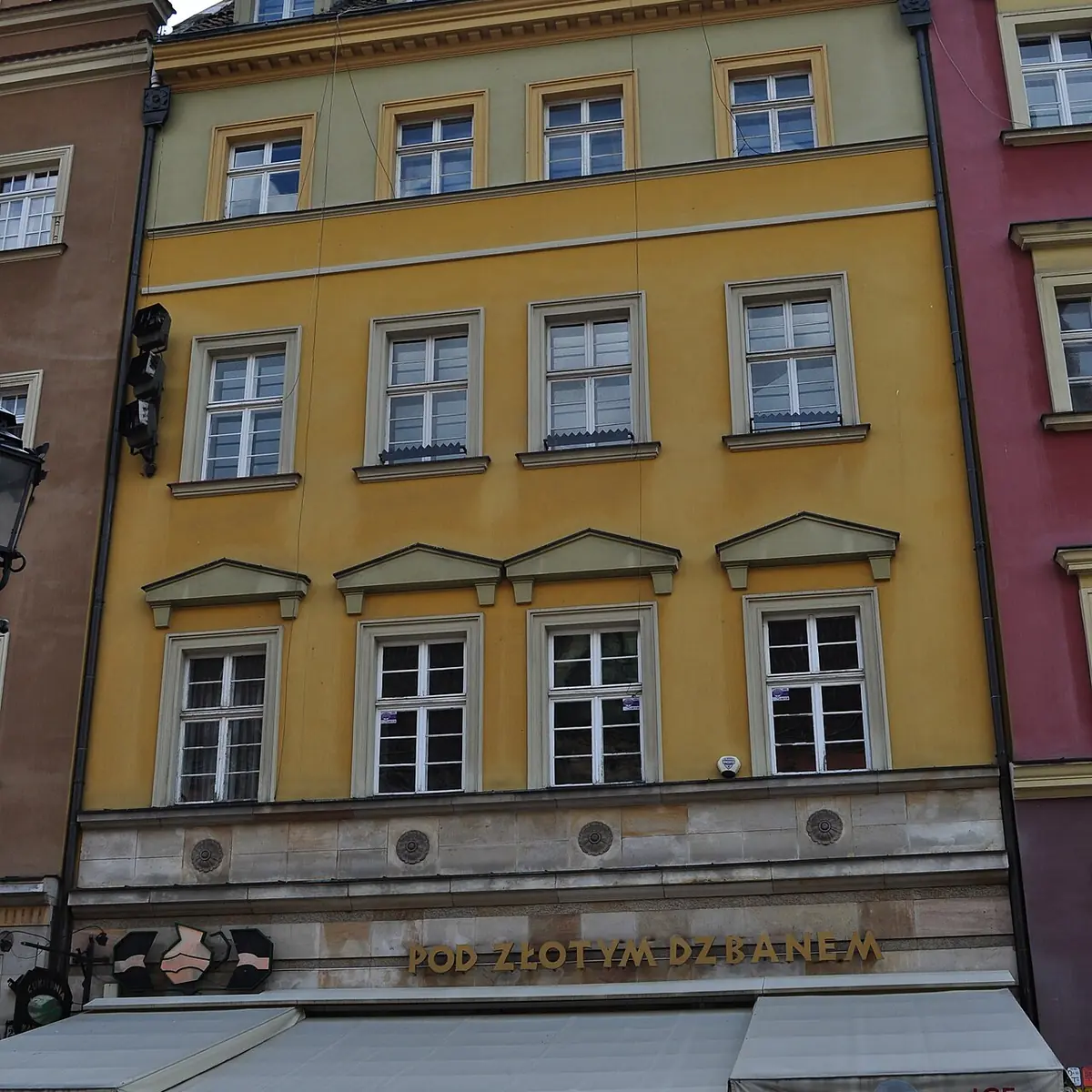
A few doors down from the Town Hall, at number twenty-two on the square's south side, stands Kamienica Pod Złotym Dzbanem — the House Under the Golden Jug — a medieval townhouse whose plain-looking frontage hides a genuinely layered building history. A single thirteenth-century house originally occupied the plot now split between numbers twenty-two and twenty-three; between the fourteenth and fifteenth centuries, builders filled the gap beside it and joined a newer house onto the older one, which is why the building reads as one continuous frontage today despite being, structurally, two different buildings from two different centuries stitched together.
The building's strangest surviving feature is out of sight entirely. In 1519, the rear wing on Junkierska Street held a brewery producing White Ram beer, and a tunnel ran from that brewery, underneath the front house, straight to the vestibule of Świdnicka Cellar across the square — allowing beer barrels to travel between the two without ever crossing the open market square above. That passage still survives today, repurposed as storage space, a small underground reminder that this square's business and its famous cellar restaurant were once physically connected below street level. The house suffered severe damage in 1945 and was rebuilt in the 1950s to recall its appearance around 1800, which is the version of the façade — sandstone-faced at ground level, with triangular pediments over the second-floor windows and four dormers breaking the roofline — that a dwarf-hunter walking the square sees today.
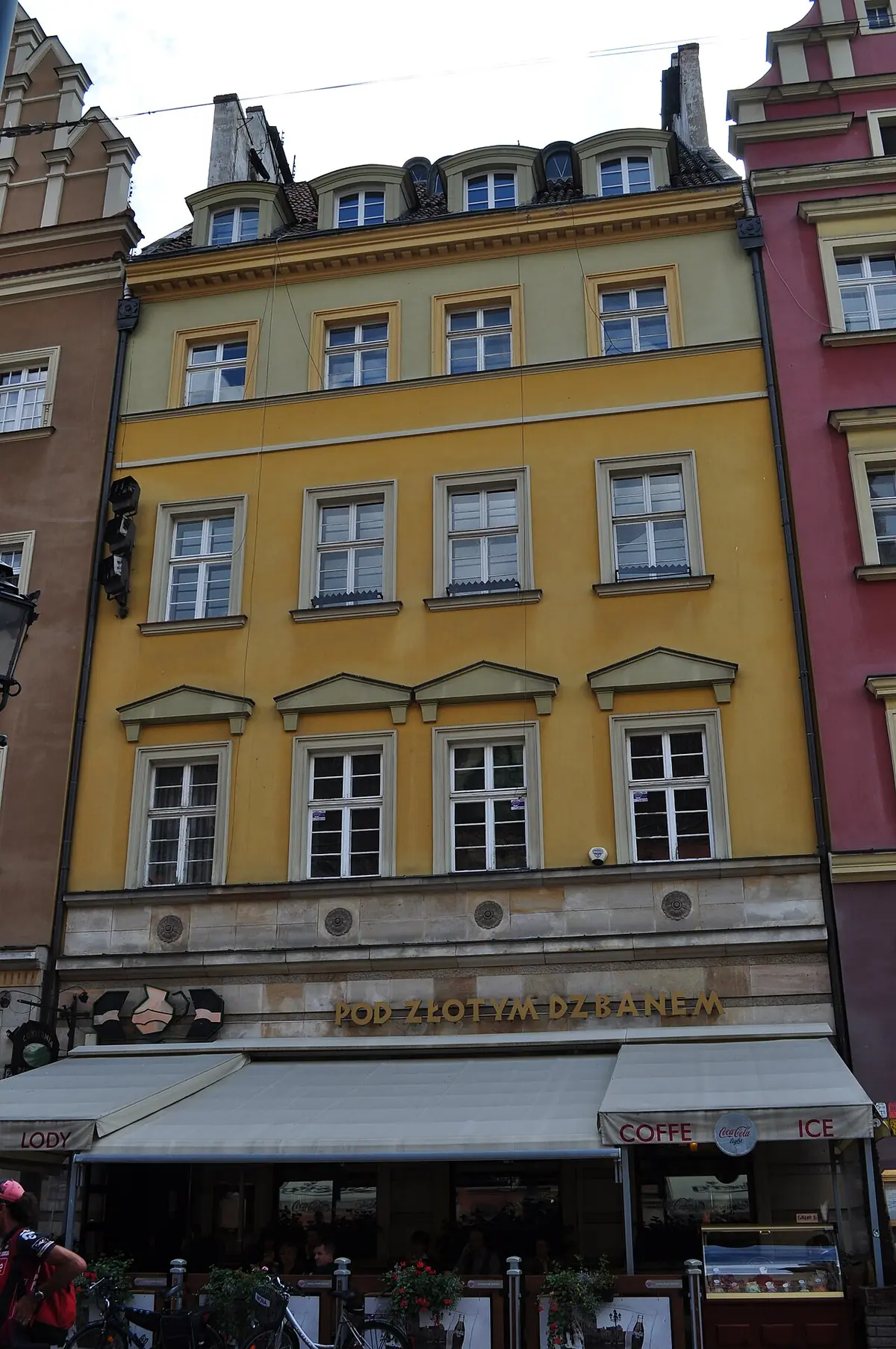
Buildings like this one are exactly why the Old Town rewards slow walking on a dwarf hunt rather than a quick pass-through: every townhouse ringing the square has its own centuries of rebuilding behind an ordinary-looking façade, and the small bronze figures tucked into their corners are, in a strange way, the newest layer on top of some of the oldest buildings in the city.
Why they've lasted
Most cities that adopt a mascot after the fact end up with something that feels bolted on — a marketing decision rather than a living tradition. Wrocław's dwarves have avoided that mostly because the tradition never actually stopped: new ones keep getting added by businesses, by the city, and occasionally by private individuals, decades after the political moment that started it all under martial law. That continuity is unusual, and it's a large part of why the dwarves read as a genuine piece of the city's identity rather than a costume it put on for visitors after the fact.
Walking a dwarf-heavy stretch of the Old Town is a good low-key way to see a lot of Wrocław's street-level architecture too, since spotting the sculptures naturally slows your pace and pulls your attention toward doorways, ledges, and shopfronts you'd otherwise walk straight past. It's a small irony worth sitting with for a moment: a resistance movement that began by mocking a regime's control over public space ended up producing the city's single most photographed, most merchandised, most tourist-friendly landmark category. That doesn't cheapen the original protest — if anything, it's a reminder that the joke worked exactly as intended. A dwarf painted over a censored slogan was never going to be treated as a threat worth erasing again, and forty years later, that same low-stakes, impossible-to-take-too-seriously quality is precisely what makes the tradition so easy for a visitor to enjoy without needing to know any of this history first.
Guided builds a walking route through Wrocław based on your interests and the time you have, and narrates each verified stop — including Papa Krasnal, the Old Town Hall, and the townhouses around the square — with GPS-triggered audio as you arrive, hands-free and fully offline.
Places in this story
See everything in Wrocław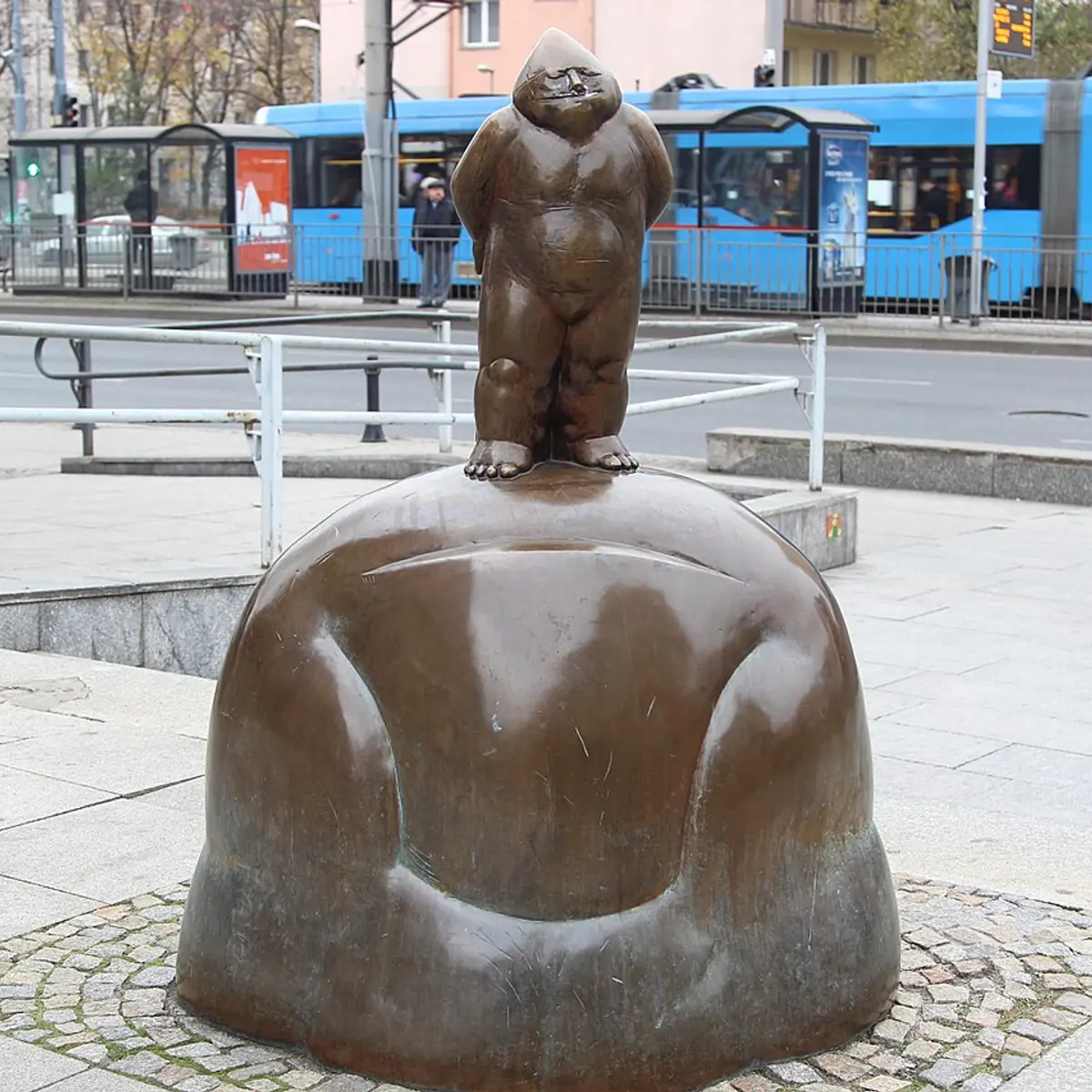
_Wroclaw_dwarf_01.JPG)

.jpg)
Walk Wrocław with an audio guide in your pocket
Join the beta and this story becomes a route you can actually walk.