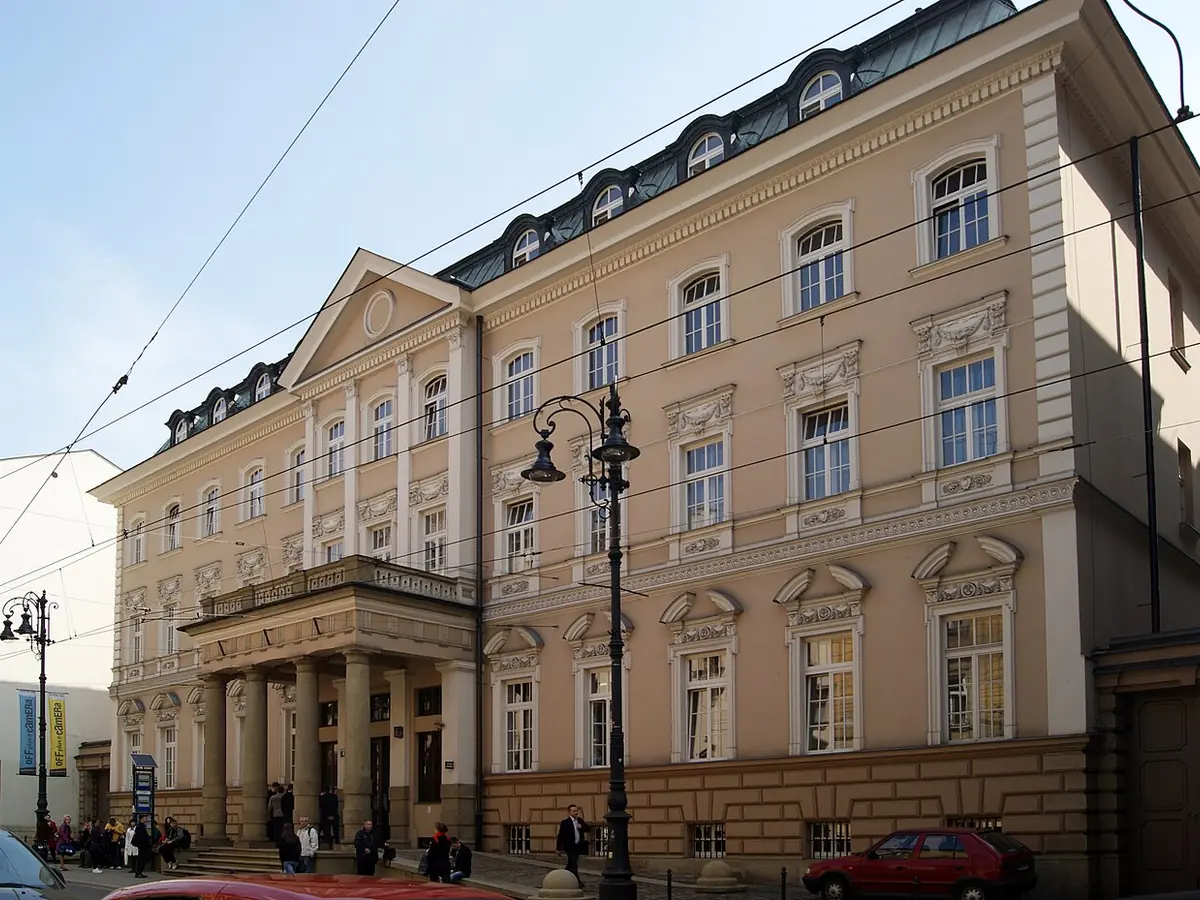
Wyższe Seminarium Duchowne Archidiecezji Krakowskiej, Kraków
Updated
Listen to how the story begins
0:00 / 0:45
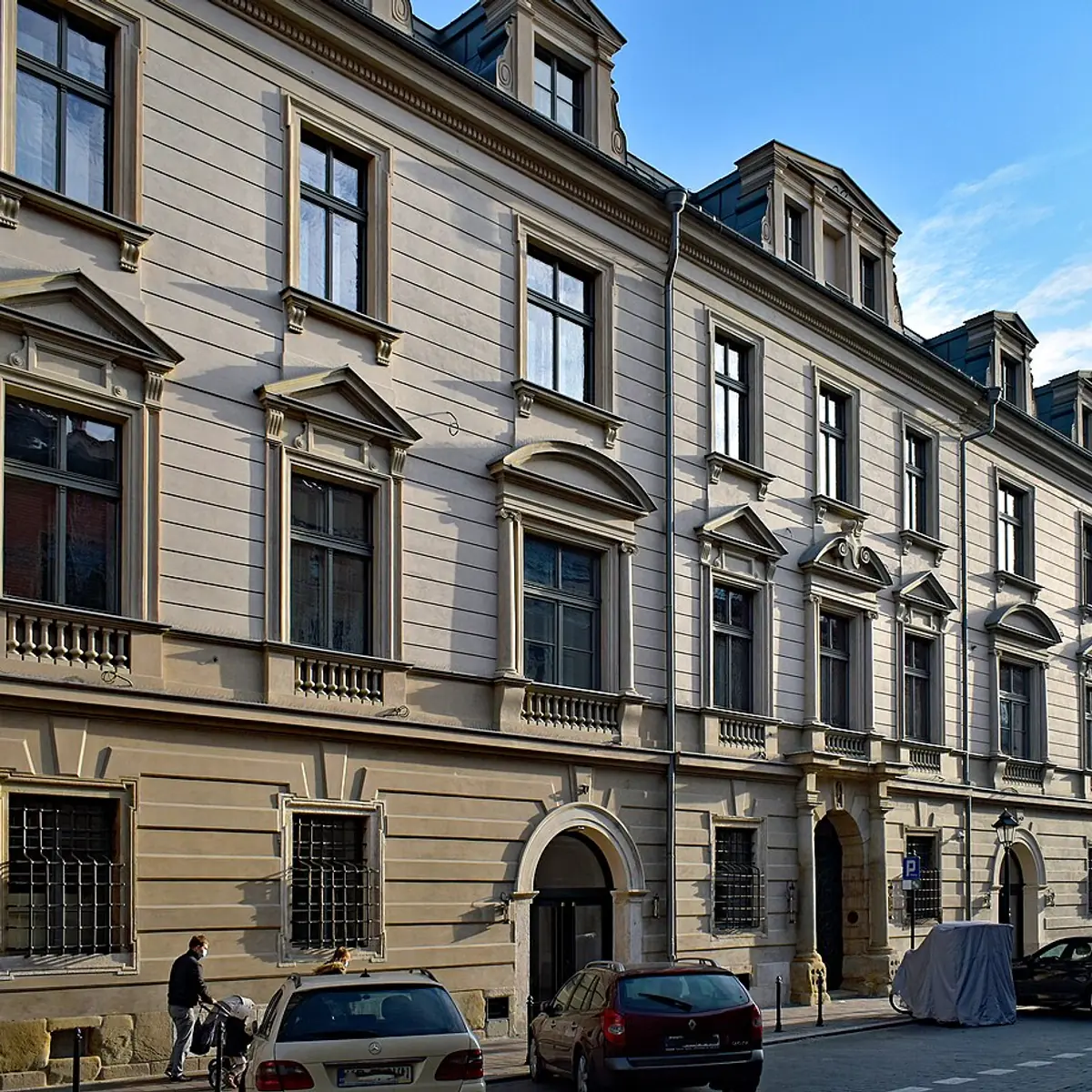
The building before you is the Higher Seminary of the Archdiocese of Kraków’s second house, but it began life in eighteen seventy-nine as the city residence of the Ogiński and Potulicki families. Filip Pokutyński designed the palace, giving this address on Józefa Piłsudskiego Street a distinctly urban aristocratic purpose. Its next chapter took an unexpected turn: Kraków’s equestrian societies moved in, along with the Kraków Resursa and the Horse Casino.
This was once a place for the city’s horse-riding world, not religious formation. The palace was destroyed by bombing during the Second World War. After the war, the Kraków Archdiocese acquired the ruins and the plot through the efforts of Cardinal Adam Stefan Sapieha.
Church authorities then rebuilt the palace faithfully. It first accommodated a lower seminary, before taking on its present role as part of the archdiocese’s higher seminary. Notice the formal street-facing presence of the building: its survival is not simply preservation, but a careful return from wartime destruction. The former palace is protected as an immovable heritage monument of the voivodeship.