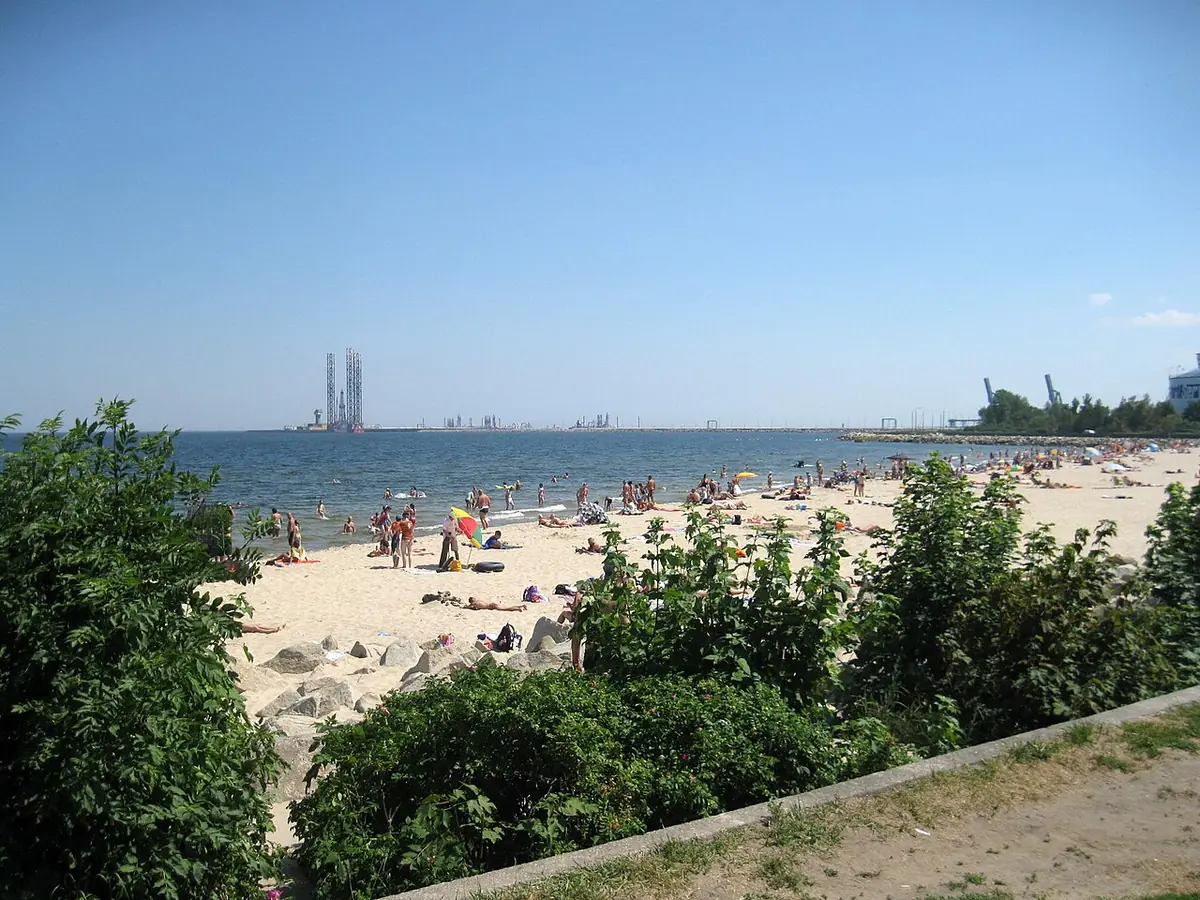
Westerplatte, Gdańsk
Westerplatte is the wooded peninsula at the meeting of the Dead Vistula, Gdańsk Bay, and the harbour channel. The ruins scattered among the trees belong to the Polish defenders’ barracks and guardhouses. The monumental shaft ahead was unveiled in nineteen sixty-six; it rises from an earth mound and takes the form of a notched bayonet driven into the ground.
This shore had a gentler past: it developed as a bathing resort, with a beach, parkland, spa facilities, and a seaside complex. Poland later operated a Military Transit Depot here within the Free City of Danzig, although its permitted garrison numbered only eighty-eight soldiers and it was forbidden to build fortifications. On the first of September nineteen thirty-nine, the German battleship Schleswig-Holstein opened fire on the Polish position, beginning the Battle of Westerplatte.
About one hundred and eighty Polish soldiers held out against five hundred and seventy German attackers for seven days. With ammunition and supplies exhausted, Major Henryk Sucharski surrendered; the German commander allowed him to retain his sword in captivity. The battlefield sites became a Polish Historic Monument on the first of September two thousand three.
Good for
History, Nature


.JPG)
More places in Gdańsk

itomasz przechlewski from Sopot, Poland (CC BY 2.0) Baszta Biała
history

iTomasz Sienicki [user: tsca, mail: tomasz.sienicki at gmail.com] (CC BY 3.0) Baszta Jacek
history

iGorwiu (CC BY-SA 3.0) Baszta Kotwiczników
history

iAndrzej Otrębski (CC BY-SA 4.0) Baszta Łabędź
history