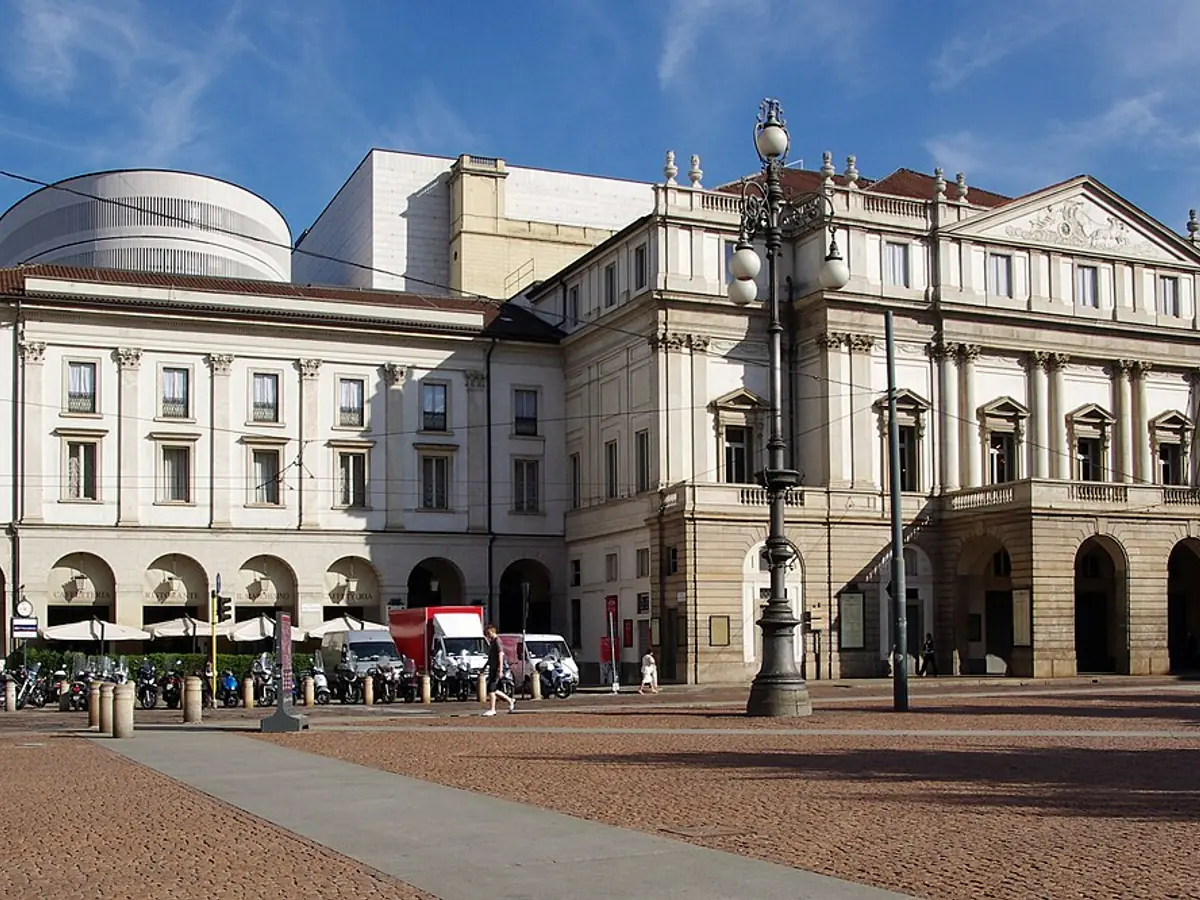
Teatro alla Scala, Milan
Teatro alla Scala is Milan’s historic opera house, designed by Giuseppe Piermarini in the neoclassical style associated with Milan. Its name recalls Santa Maria alla Scala, the church that previously occupied this site. The theatre opened on 3 August 1778 with Antonio Salieri’s Europa riconosciuta, created for the occasion.
That inauguration followed the destruction of Milan’s earlier court theatre in a fire during 1776, giving this building a dramatic beginning before its operatic life had even started. La Scala became a major stage for opera, ballet, and classical music, welcoming celebrated performers from Italy and abroad. Its resident institutions include the chorus, orchestra, ballet company, and Filarmonica della Scala, established in 1982.
The building also contains a theatre museum, with paintings, designs, statues, costumes, and documents tracing its history. There is a particularly vivid social story inside the auditorium: above the boxes, the loggione gathered audiences known for judging singers with exceptional intensity. A performance could bring ecstatic approval or merciless criticism.
In 2006, tenor Roberto Alagna left an Aida performance after being booed, and his understudy replaced him during the scene. That reputation makes La Scala not merely a grand theatre, but a place where the audience has long formed part of the drama.