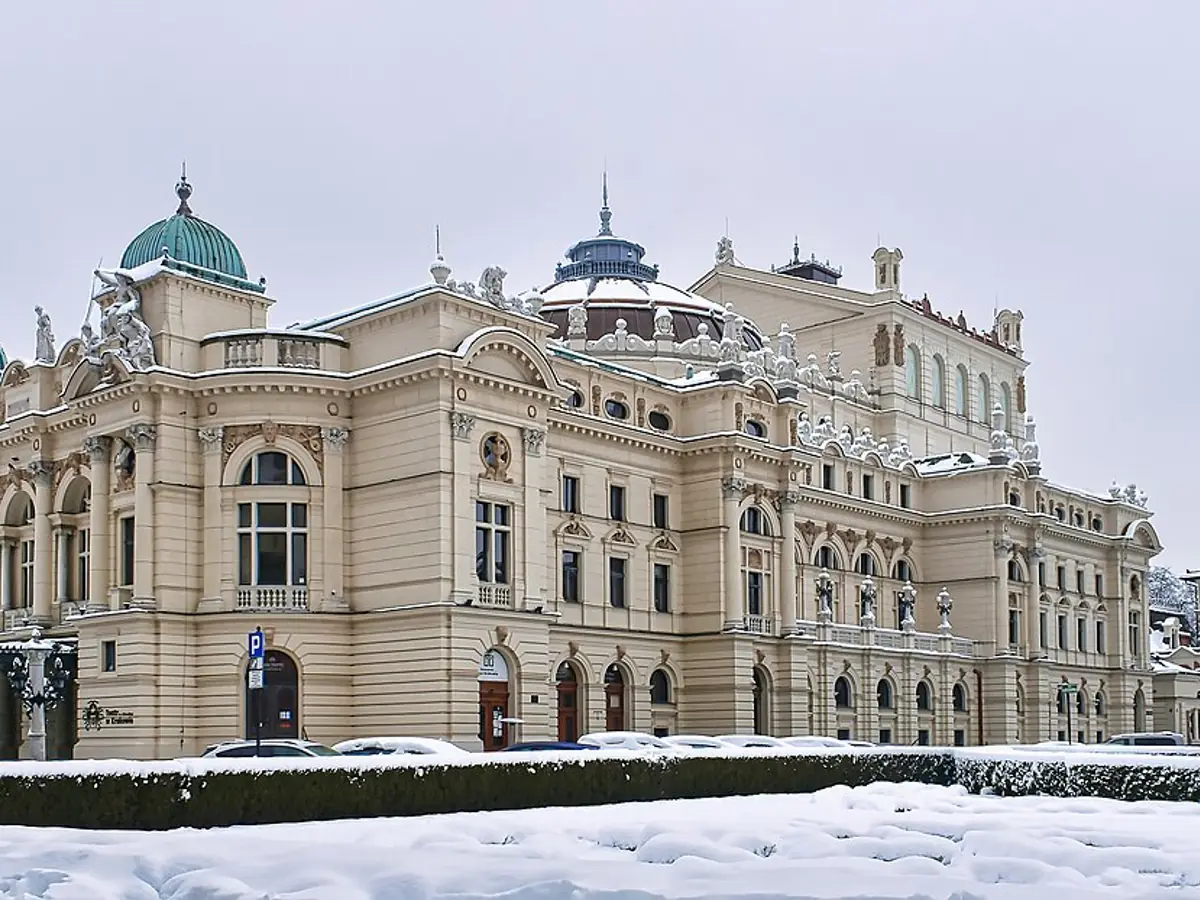
Teatr im. Juliusza Słowackiego, Kraków
Updated
Listen to how the story begins
0:00 / 0:45
The Juliusz Słowacki Theatre is the historic theatre and opera house filling this address on Holy Spirit Square. Its imposing exterior belongs to the Eclectic tradition, with Baroque influence, and Jan Zawiejski designed the building. It opened in 1893, originally under the name Municipal Theatre, and Kraków’s new stage was the city’s earliest building equipped with electric lighting.
In 1909, it took the name of Juliusz Słowacki, the Polish poet and playwright whose legacy became central to its identity. The building replaced a church and monastery associated with the Order of the Holy Spirit; that earlier complex gave the square its name. The demolition provoked fierce opposition, including Jan Matejko’s declaration that he would no longer exhibit his paintings in Kraków.
The theatre’s artistic importance grew through its connection with the Young Poland movement, the revival of Romantic drama, and major productions by Stanisław Wyspiański. Its landmark premiere of Wyspiański’s The Wedding took place here in 1901. The building was included with Kraków’s Historic Centre in the World Heritage Register in 1978.