Tadeusz Rejtan, Kraków
Updated
Listen to how the story begins
0:00 / 0:45
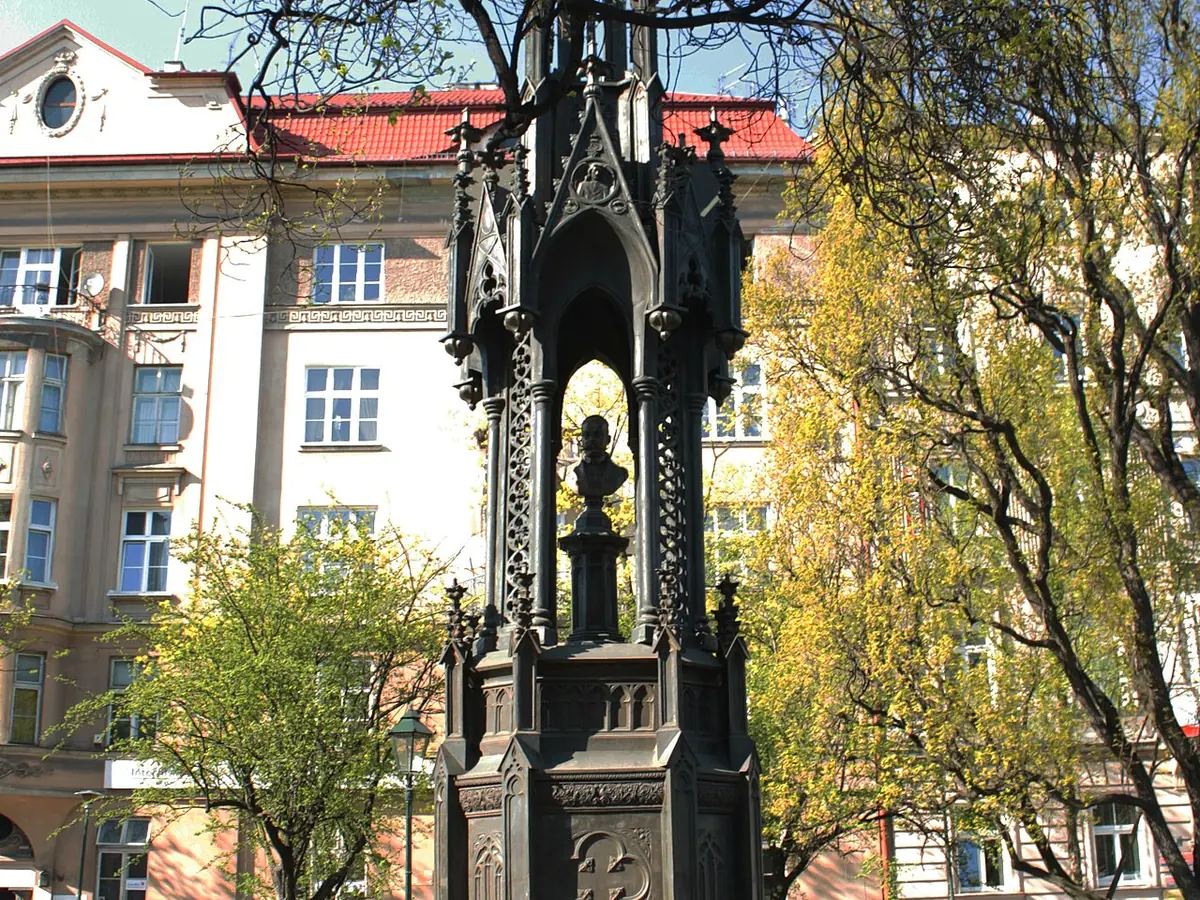
Before you is Kraków’s monument to Tadeusz Rejtan, set on Professor Władysław Bartoszewski Square where Basztowa, Dunajewskiego and Garbarska meet. The tall cast-iron Neo-Gothic shrine holds Rejtan’s bust: its medieval-inspired chapel shape has a curious reason. The original design was intended for his grave at Lachowicze, and that funerary look drew criticism when Kraków unveiled the monument in June 1890.
Rejtan was a nobleman and a Sejm deputy for the Nowogródek Voivodeship. In 1773, Russia, Prussia and Austria pressed the Polish–Lithuanian Commonwealth’s parliament to approve the First Partition. Rejtan fought the proposal through legal arguments and procedural obstruction, even seizing one of the marshal’s staffs.
When deputies moved to end the debate, he lay across the doorway with his chest bare, trying to keep them in the chamber. They stepped over him, and the partition was approved despite his resistance. The Rejtan family gave Kraków this monument in the late nineteenth century.
A windstorm destroyed it in 1946; the bust entered the National Museum’s collection. The monument returned here in 2007, rebuilt from archival evidence and its twin at Warsaw’s Powązki Cemetery. Notice the face: one lock of hair deliberately differs from the surviving original, the restorer’s discreet mark that this is a replica.