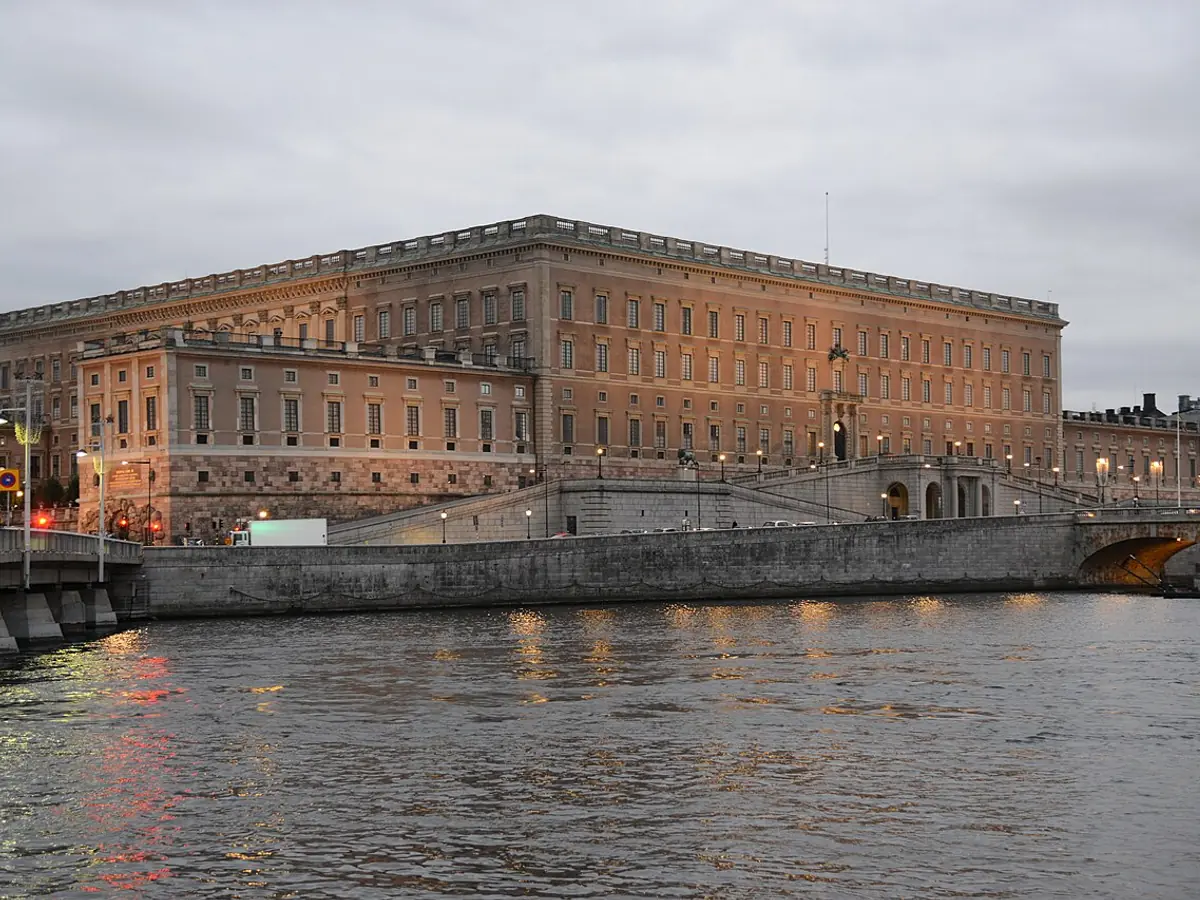
Stockholms slott, Stockholm
Stockholm Palace is the grand royal building enclosing this part of Gamla stan, and it still serves as the official residence of Sweden’s monarch. The King uses it for state representation, while the royal household and court carry out their work here. The building you see is the work of Nicodemus Tessin the Younger, completed under Carl Hårleman, with a baroque design and richly developed interiors.
Look at the palace façade and its stern, carefully ordered rhythm. Beneath this present building lie remnants of the earlier Tre Kronor Castle. That medieval fortress occupied this site from the later part of the thirteenth century, until fire destroyed it on 7 May 1697.
Construction of the replacement stopped in 1709 during the Great Northern War and resumed in 1727. The palace became usable in 1754, when Adolf Frederick and Louisa Ulrika moved in, though interior work continued into the 1770s. The scale is difficult to take in from the street: the palace contains 1,430 rooms, including 660 with windows.
Among them are ceremonial apartments, a chapel, the Hall of State, the Treasury, and museums that preserve parts of the older castle. The palace is a state-listed historic building, but its most striking story remains the transformation of a fire-destroyed fortress into the working royal palace before you.
_(24831039126).jpg)