Padrão dos Descobrimentos, Lisbon
Updated
Listen to how the story begins
0:00 / 0:45
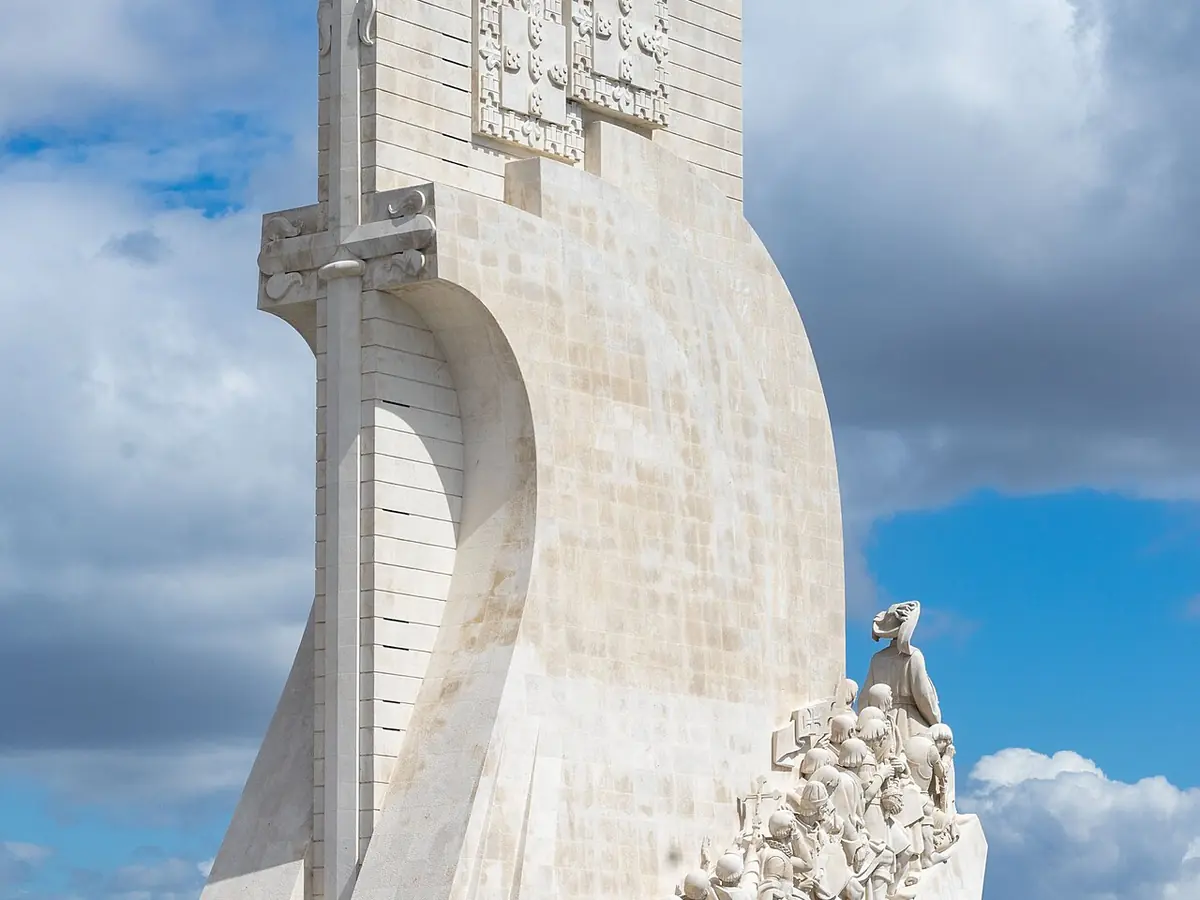
The Padrão dos Descobrimentos is a monumental prow rising beside the Tagus, devoted to Portugal’s maritime expansion during the fifteenth and sixteenth centuries. Its design came from architect Cottinelli Telmo, with the sculptural work created by Leopoldo de Almeida. The structure takes its ship-like form from a caravel, with ramps converging at the figure of Henry the Navigator, who holds a model vessel.
Along those ramps, 33 figures portray people connected with the Portuguese voyages, including rulers, navigators, mapmakers, artists, scholars and missionaries. The monument you see today was rebuilt in reinforced concrete and Leiria stone between 1958 and 1960, after an earlier temporary version made for the Portuguese World Exhibition of 1940. It opened in 1960 and later gained an interior cultural centre with exhibition rooms, an auditorium and access to a lookout.
The broad paving before it carries a compass rose measuring 50 metres across, with a 14-metre map tracing routes taken by Portuguese ships. Read the monument as a carefully staged procession: Henry leads the imagined movement towards the unknown sea, while the accompanying figures gather behind him in a single sculptural surge.