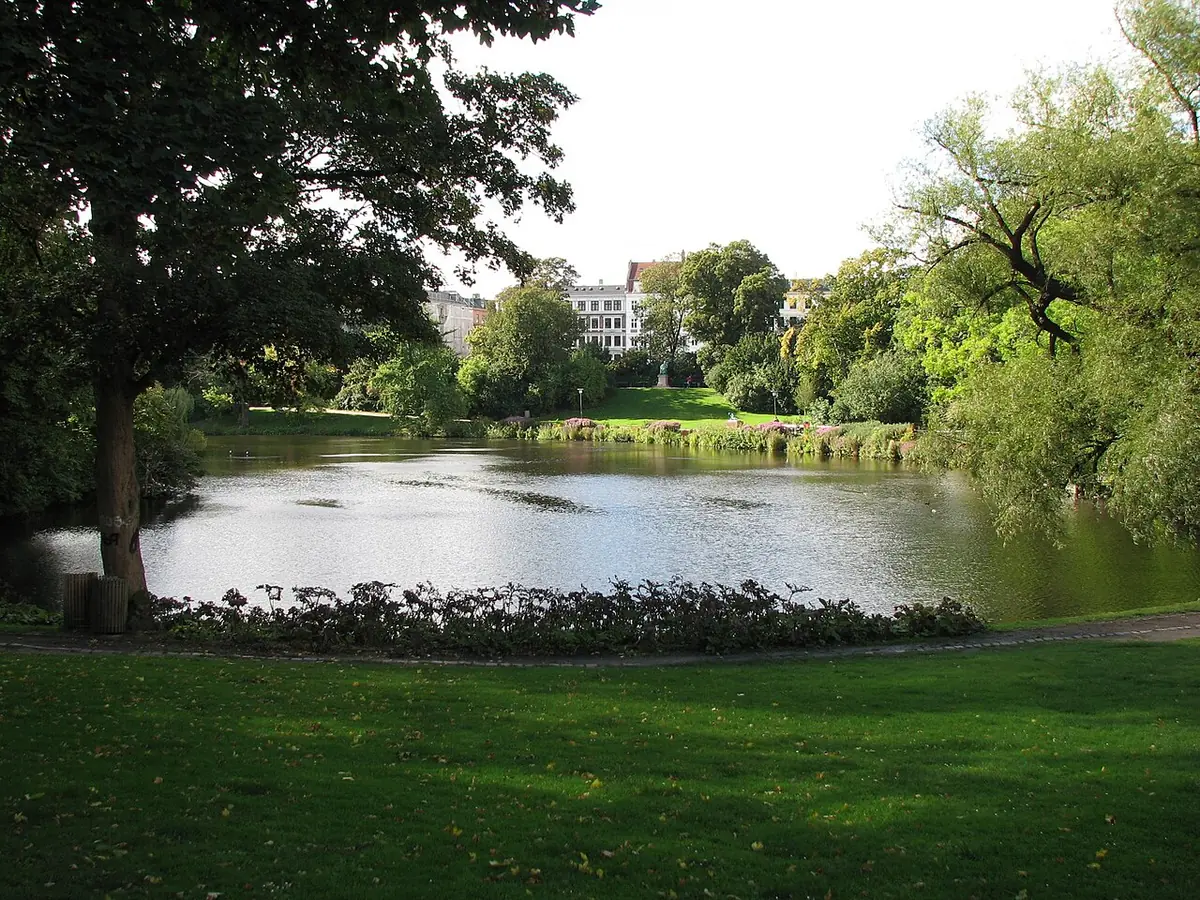
Ørstedsparken, Copenhagen
Ørstedsparken is a public park shaped by Copenhagen’s former fortifications. An old moat now stretches through it as an elongated lake, while the vanished defensive bastions survive as gentle rises in the landscape. The park took its name from brothers Hans Christian Ørsted and Anders Sandøe Ørsted, whose monuments stand here.
The most scientifically dramatic memorial is Hans Christian Ørsted’s monument, created by Jens Adolf Jerichau in 1876. In the bronze figure, Ørsted joins wires from a battery to make a magnetic needle move. At the monument’s base, three Norse goddesses of destiny accompany the scene: one records the past, another spins fate, and the last waits for what is still to come.
The park opened in 1879 after Henrik August Flindt designed its layout. It also contains many classical replicas, including The Dying Gaul, Apollo Belvedere, and The Wrestlers.