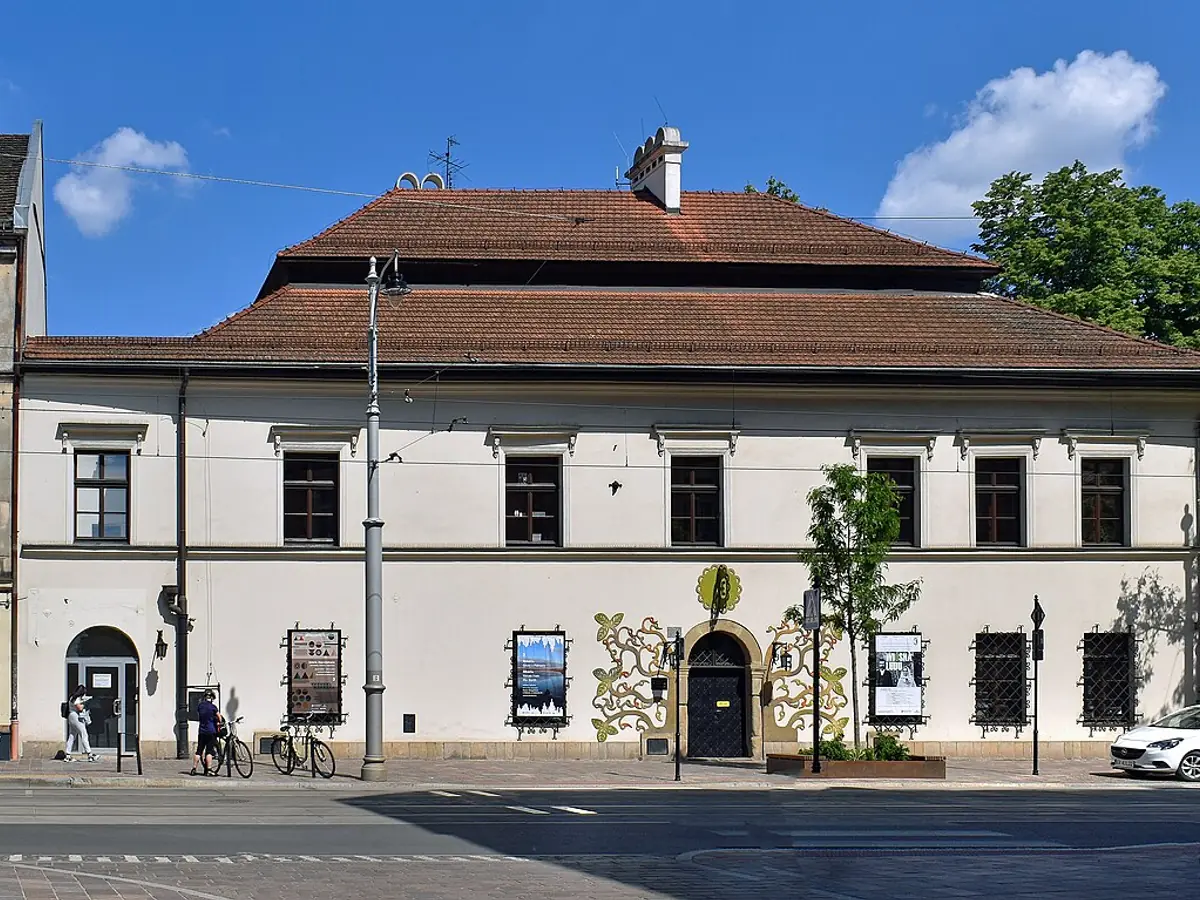
Muzeum Etnograficzne (Dom Esterki), Kraków
Updated
Listen to how the story begins
0:00 / 0:45
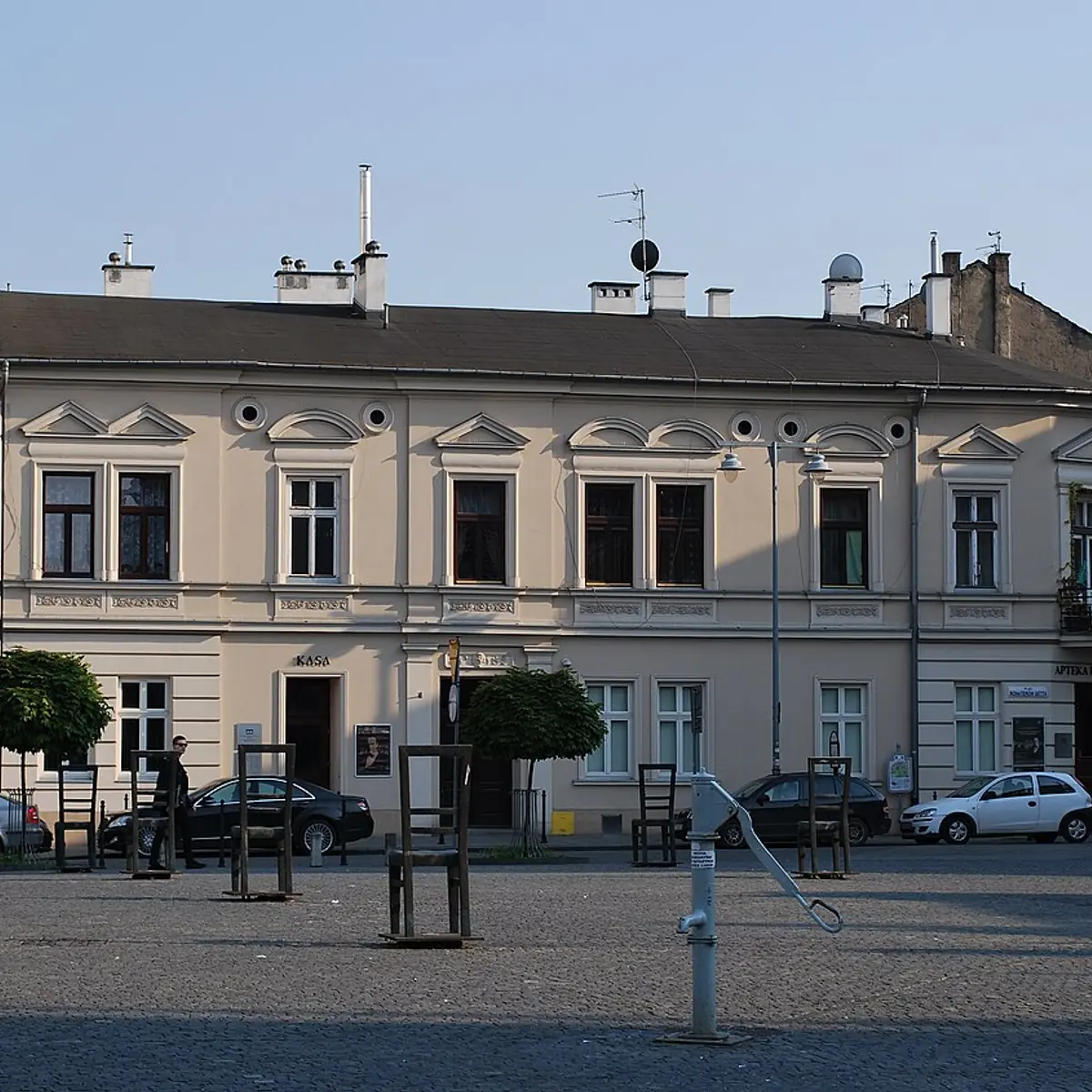
The Ethnographic Museum occupies Dom Esterki, a historic townhouse on the corner of Krakowska and Trynitarska streets in Kazimierz. This is the only surviving former dwelling that originally faced Kazimierz’s market square; today, Plac Wolnica preserves only a small piece of that old square. The present house was created by joining two smaller buildings, and its oldest cellar sections date to the fourteenth century.
Its fabric has been altered in almost every century since, most recently in eighteen seventy-six, while the broad appearance you see now largely comes from the turn of the eighteenth and nineteenth centuries. Gothic carved-stone details from around fourteen thirty still survive, alongside later medieval work. Inside, late-eighteenth-century wooden ceilings, painted wall decoration, and ceiling rosettes remain.
In the sixteenth century, the property belonged to Bartolomeo Berrecci, architect and builder at the court of King Sigismund the Old, then passed to Berrecci’s daughter Anna. Its distinctive broken, “Kraków” roof is a rare surviving example of a classical-era roof form. The name recalls local legend: Esterka was the Jewish beloved of King Casimir the Great. After a major restoration from nineteen seventy-eight to nineteen eighty-five, this building became a branch of the nearby Ethnographic Museum; decades earlier, it housed the Esterka coffee bar.