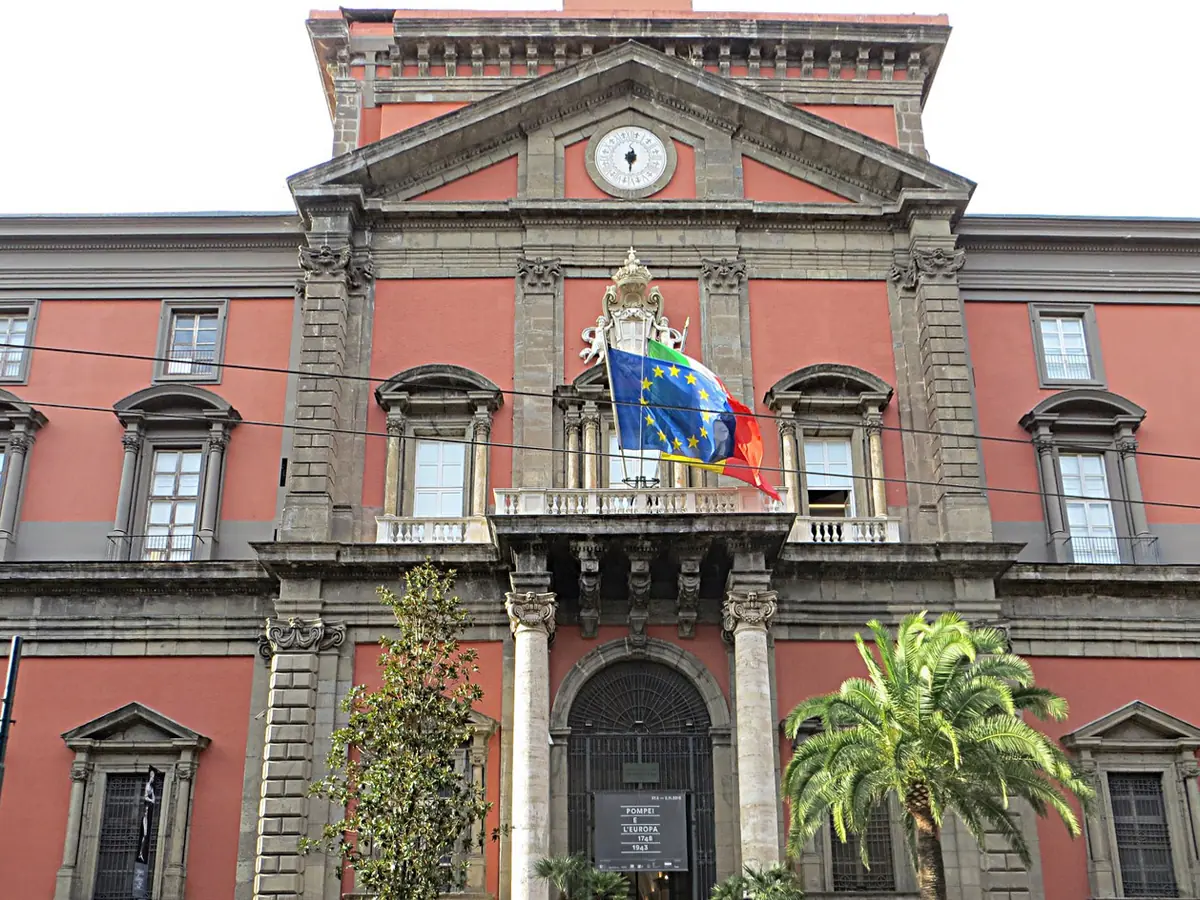
Museo archeologico nazionale di Napoli, Naples
The National Archaeological Museum of Naples fills a former university building, and its galleries bring together sculpture, mosaics, frescoes and objects from across the ancient Mediterranean. The building began as a cavalry barracks in 1585, then served as the seat of the University of Naples from 1616 to 1777, before undergoing substantial changes during the nineteenth century as a museum. Its collections are anchored by the Farnese holdings and by discoveries from Pompeii, Herculaneum and Stabiae.
Look for the Farnese Bull, a monumental marble group described as the largest single sculpture recovered from antiquity. Nearby, the Farnese Atlas carries an image of the constellations across the globe on his shoulders; it is the oldest surviving depiction of Atlas and the oldest known view of the Western constellations. The museum also preserves the Alexander Mosaic from Pompeii’s House of the Faun, showing the clash between Alexander and Darius.
In another part of the collection, papyri carbonized by Vesuvius preserve texts from the Villa of the Papyri. This is archaeology not as a single ruin, but as a vivid gathering of worlds recovered from buried cities.
.jpg)