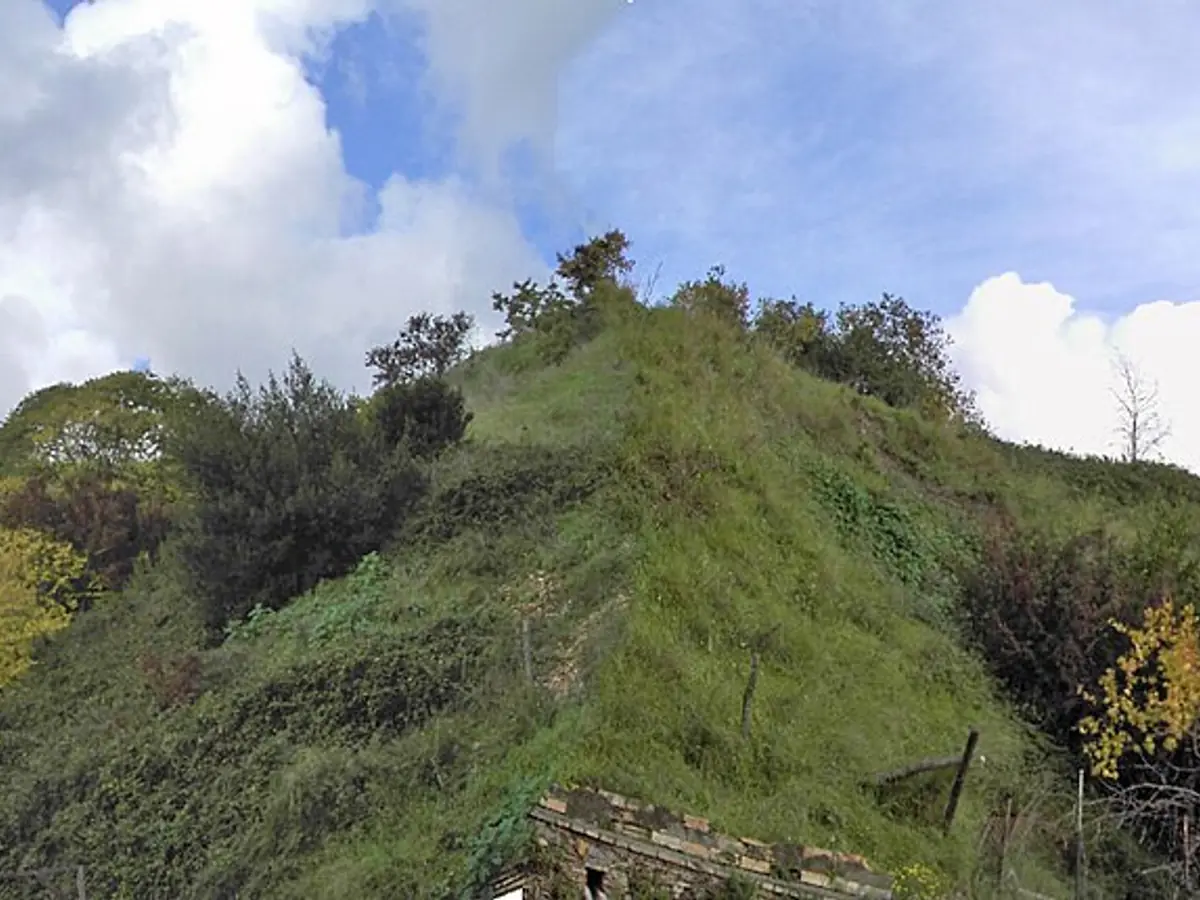
Monte Testaccio, Rome
Monte Testaccio is an artificial hill made from the shattered remains of ancient Roman amphorae. Its familiar Roman nickname, Monte dei Cocci, means a mound of fragments, and the scale is extraordinary: the hill covers about 2 hectares, rises roughly 35 metres, and contains the remains of an estimated 53 million vessels. Nearly all carried olive oil.
The broken pottery came from the river port nearby, where oil was unloaded before the empty containers were discarded here. This was not a casual heap. Excavation revealed stepped terraces, retaining walls built from nearly intact amphorae, and layers of fragments arranged to keep the mass stable.
Lime was spread through the deposits to counter the smell of leftover oil. Some vessels carried painted or stamped notes recording their weight, merchants, officials, and place of origin. Those markings turn this mound into an archive of Rome’s state-controlled food supply.
At its busiest, as many as 130,000 amphorae were deposited here each year, representing an enormous flow of oil into the imperial capital. The dumping ended around the 260s, but the mound still preserves the physical evidence of that supply system in every broken curve of pottery.