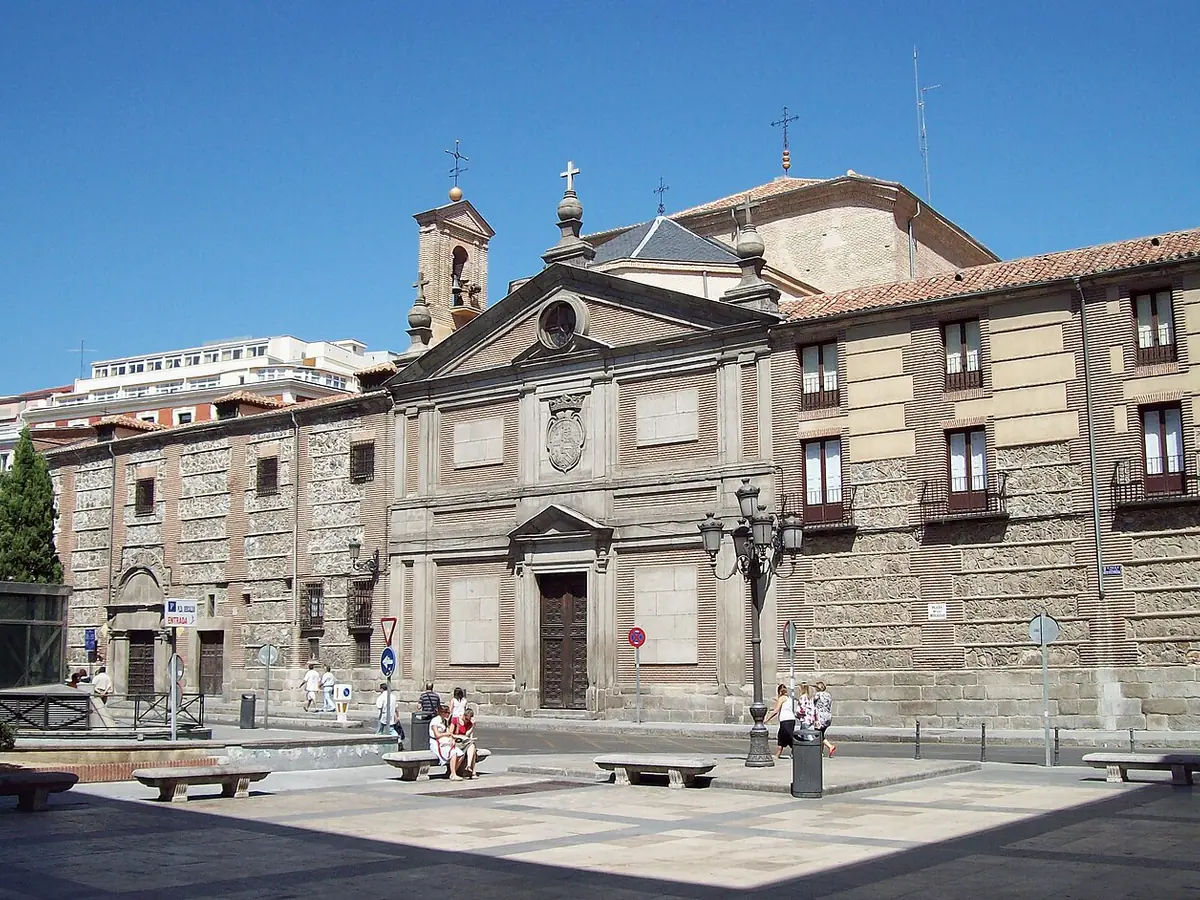
Monasterio de las Descalzas Reales, Madrid
The Monasterio de las Descalzas Reales is a royal monastery and historic site, with a museum occupying part of this former palace. Joanna of Austria founded the convent in 1559 for nuns of the Poor Clare order, and she was eventually buried here. The building belongs to Renaissance architecture, and its interior preserves an extraordinary accumulation of art and devotional objects.
Noblewomen who entered the community brought dowries, helping the convent become among the wealthiest in Europe. The collection includes relics associated with Christ’s cross and the bones of Saint Sebastian, alongside Titian’s Caesar’s Money, tapestries based on designs by Rubens, and works connected with Brueghel the Elder. From 1587 until his death in 1611, the composer Tomás Luis de Victoria served here, becoming the monastery’s organist from 1606.
The church was begun by Antonio Sillero; Juan Bautista de Toledo designed its facade in 1559. Fire destroyed the great altar retable and many paintings in 1862. What you can see now is therefore both a surviving royal foundation and a place shaped by loss, preservation, and an unusually rich artistic inheritance.
_07.jpg)