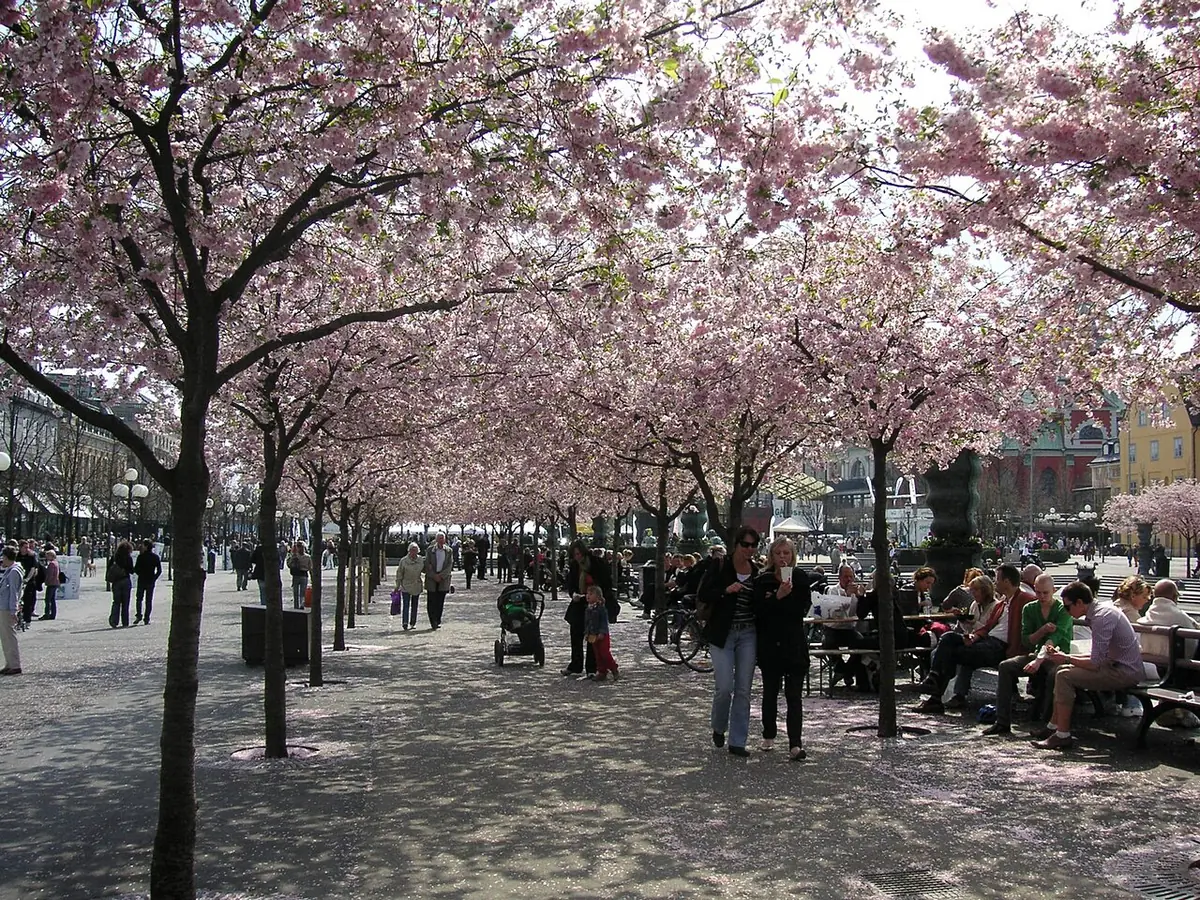
Kungsträdgården, Stockholm
Kungsträdgården is the open public park spread through central Stockholm, known locally as Kungsan. Its cafés, restaurants, galleries, concerts, and seasonal skating make it a lively meeting place, but its history is far less relaxed. The site began as a royal kitchen garden, recorded in 1430, and later became an enclosed pleasure garden that ordinary people could not enter.
The long avenues and mature trees you see belong to a later transformation, after the garden had been stripped of much of its greenery and turned into an open gravelled space. Between the statues of Charles XII and Charles XIII stands Molin’s Fountain, created by Johan Peter Molin. Its figures come from Norse mythology: Ægir and Rán appear with their nine daughters, listening to the river spirit Nix play a harp.
The fountain’s design links Stockholm’s setting between Lake Mälaren and the Baltic Sea. The trees here also carry political history. During the Battle of the Elms on May 12–13, 1971, protesters chained themselves to trees to oppose plans for the metro station. Their action saved the elms and helped end a period of large-scale demolition in central Stockholm.