Krypta św. Leonarda, Kraków
Updated
Listen to how the story begins
0:00 / 0:45
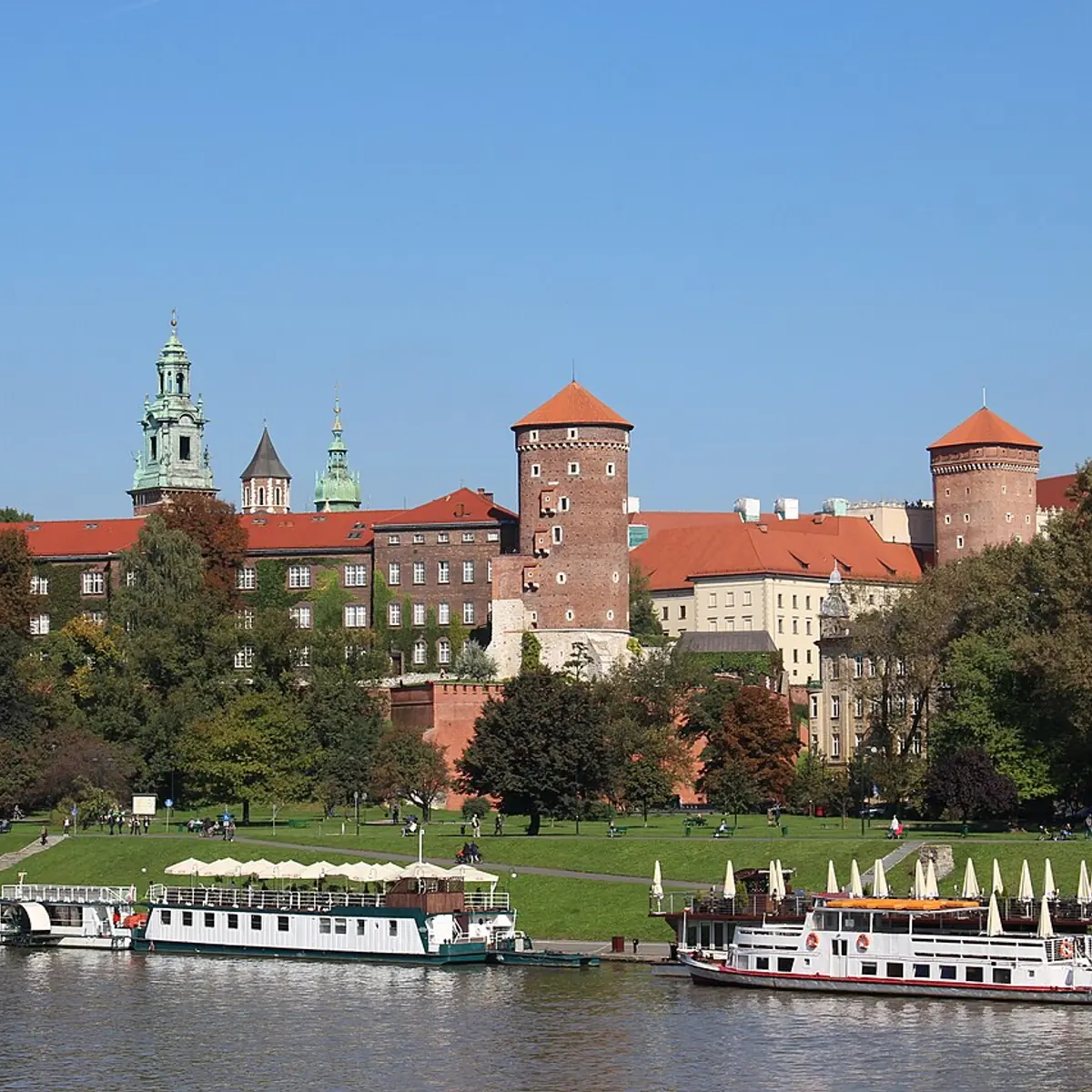
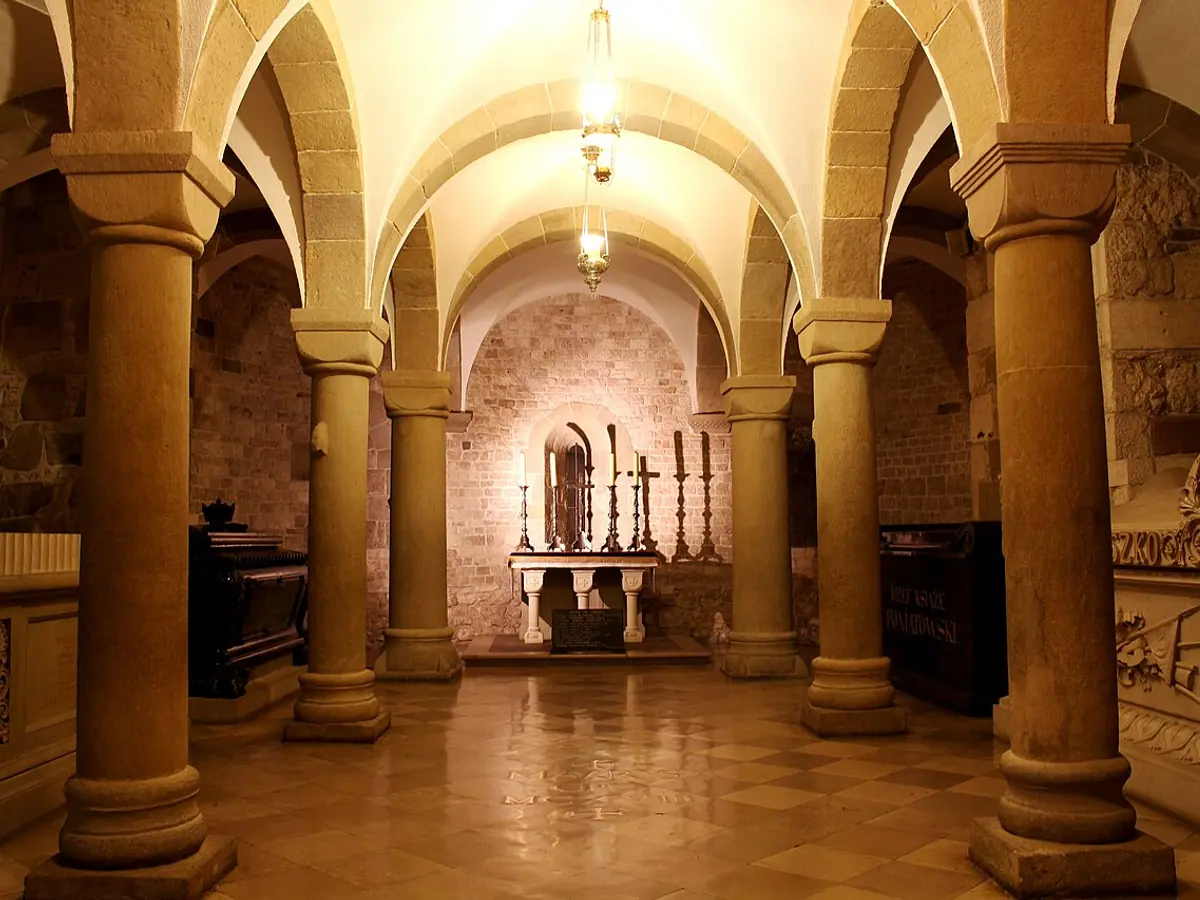
St Leonard’s Crypt lies beneath Wawel Cathedral: a Romanesque burial chamber dating from the turn of the eleventh and twelfth centuries, and a surviving part of the earlier Hermanowska Cathedral. Romanesque is the solid, early-medieval style that draws on ancient Roman forms. Eight columns support the whole crypt, giving this small space the weight and rhythm of a much older cathedral.
At the centre of the floor is the grave of Bishop Maurus, who died in eleven eighteen; archaeologists uncovered his burial chamber during work here in nineteen thirty-eight. In the apse, the stone altar follows a design by the French architect Eugène Viollet-le-Duc, while the step before it preserves thirteenth-century paving. Notice, too, the lamps made in the form of royal crowns.
This crypt became one of Poland’s great royal and national burial places. Among those resting here are King John the Third Sobieski, the commander at the Battle of Vienna; Prince Józef Poniatowski; the American Revolutionary War general Tadeusz Kościuszko; and General Władysław Sikorski. On the second of November nineteen forty-six, a day after becoming a priest, John Paul the Second celebrated his first Mass at this altar.