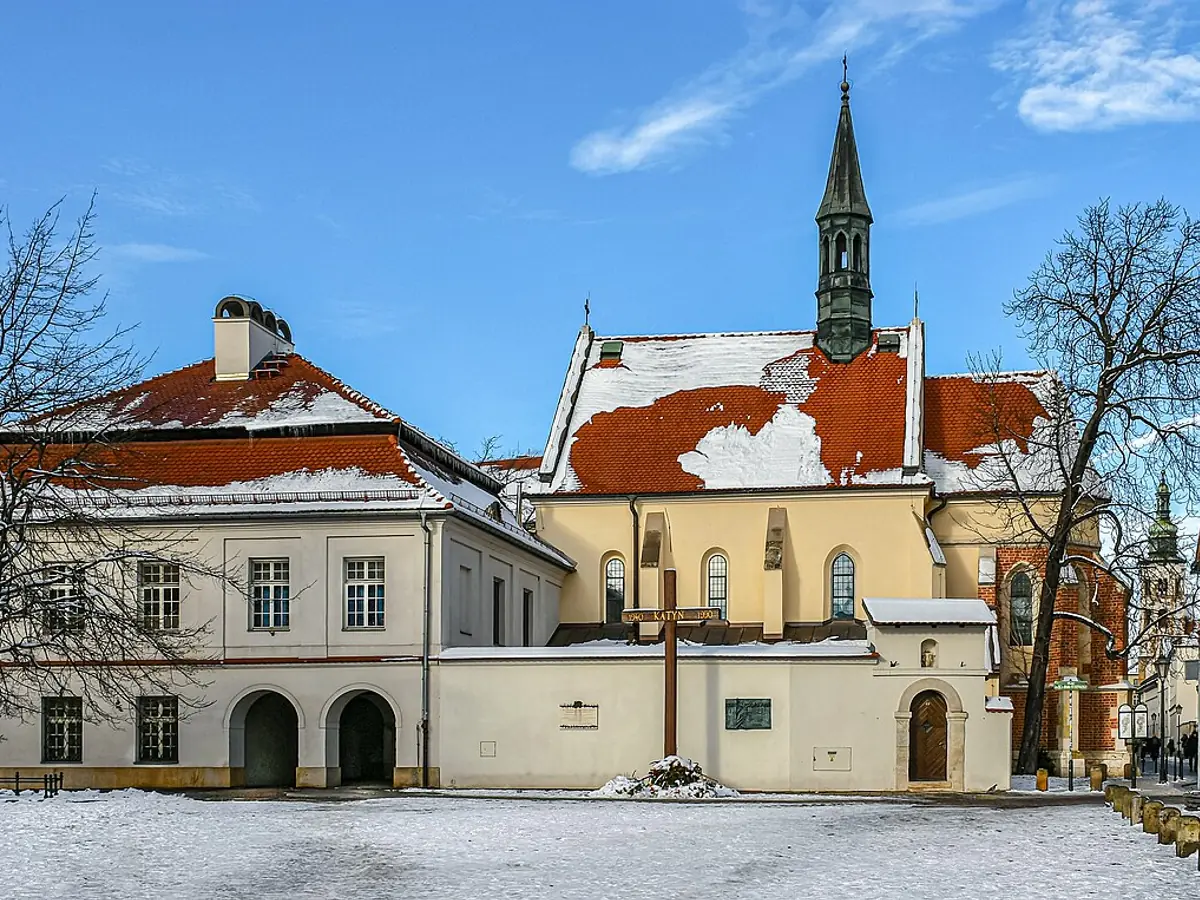
Kościół pw. Świętego Idziego, Kraków
Updated
Listen to how the story begins
0:00 / 0:45
Church of St Giles is the Dominican Roman Catholic church before you, on Grodzka Street at the foot of Wawel. The building you see is Gothic, the medieval European tradition of pointed forms and soaring structures, and it was raised in the first half of the fourteenth century. Tradition reaches farther back: Duke Władysław Herman is credited with founding a church here late in the eleventh century in thanksgiving for the birth of his son, Bolesław the Wrymouth, after prayers and gifts sent to the abbey of Saint-Gilles in Provence.
Yet archaeologists have found no Romanesque remains beneath today’s church, so the earliest structure on this site may itself have been Gothic. This modest church has repeatedly had to defend its space. By the early twentieth century, later additions crowded around it.
A municipal plan to clear them in about 1905 provoked a major preservation dispute involving Kraków artists and heritage advocates; some buildings came down, while others survived briefly. During the German occupation, two large neighbouring townhouses on Grodzka Street were demolished on German orders. Notice the Katyń Cross in the square outside.
Erected in 1990, it commemorates Poles murdered by the Soviet NKVD in the 1940 Katyń massacre. Inside, an image of Saint Giles once drew pilgrims who left offerings in gratitude for healings they credited to his intercession.