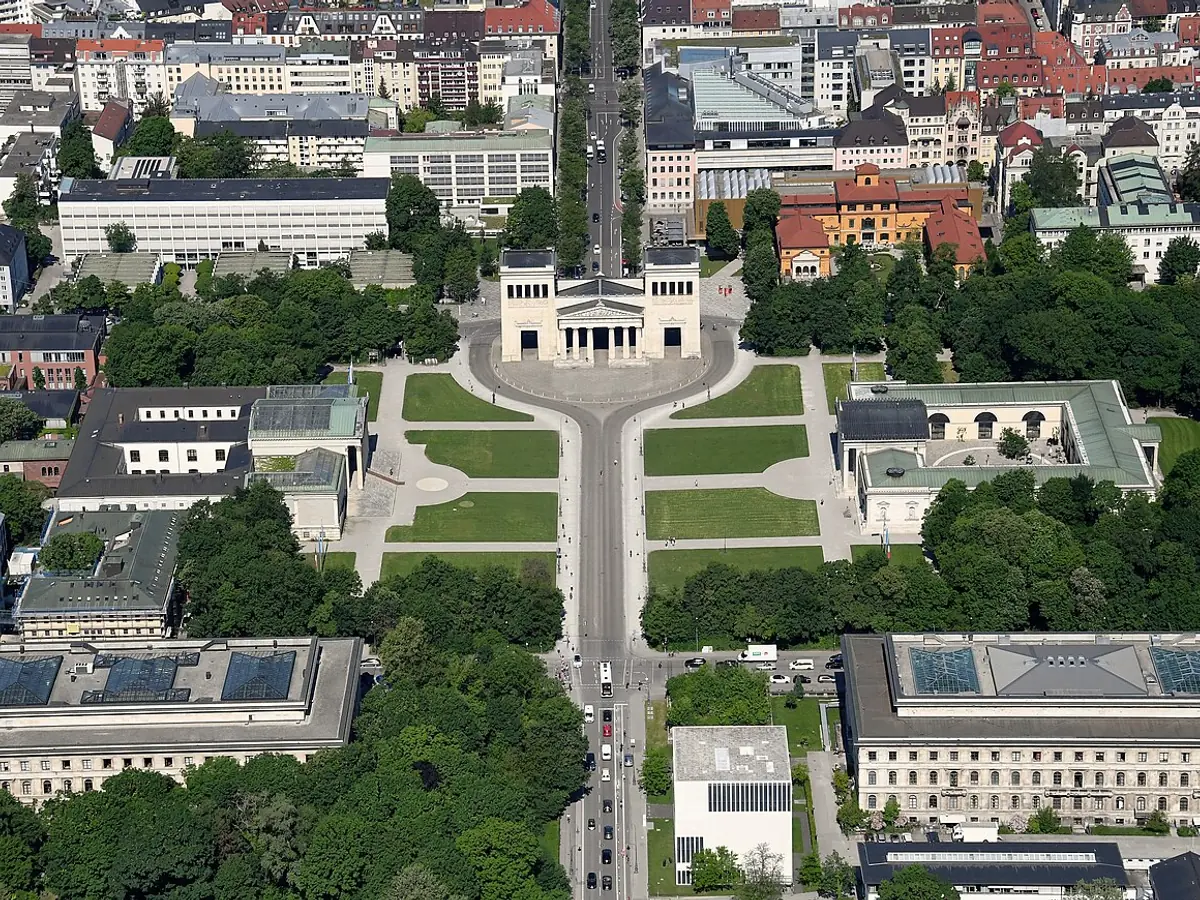
Königsplatz, Munich
Königsplatz is a monumental square shaped by Greek Revival design, with the Propyläen Gate framing the space and the Glyptothek and Staatliche Antikensammlungen facing one another across it. These buildings turn the square into an open setting for Munich’s museum quarter, the Kunstareal. Karl von Fischer conceived the layout with Friedrich Ludwig von Sckell, and Leo von Klenze carried it forward; Georg Friedrich Ziebland designed the Staatliche Antikensammlungen.
The museums were built between 1816 and 1845, while the square’s shallow depression helps the buildings appear more elevated. Look at the Propyläen: its form follows the gateway tradition of the Athenian Acropolis, and its sculptural programme commemorates the Greek struggle for independence from 1821 to 1829. This place also carries a difficult history.
On 10 May 1933, Nazi-organised book burning took place here. During the Third Reich, the square hosted Nazi mass rallies, and two memorial temples stood at its eastern end for the remains of 15 men killed in the 1923 Beer Hall Putsch. The US Army demolished those temples in 1947, but their platforms remain. After the war, Königsplatz was restored toward its earlier appearance.
.jpg)