Kongens Have, Copenhagen
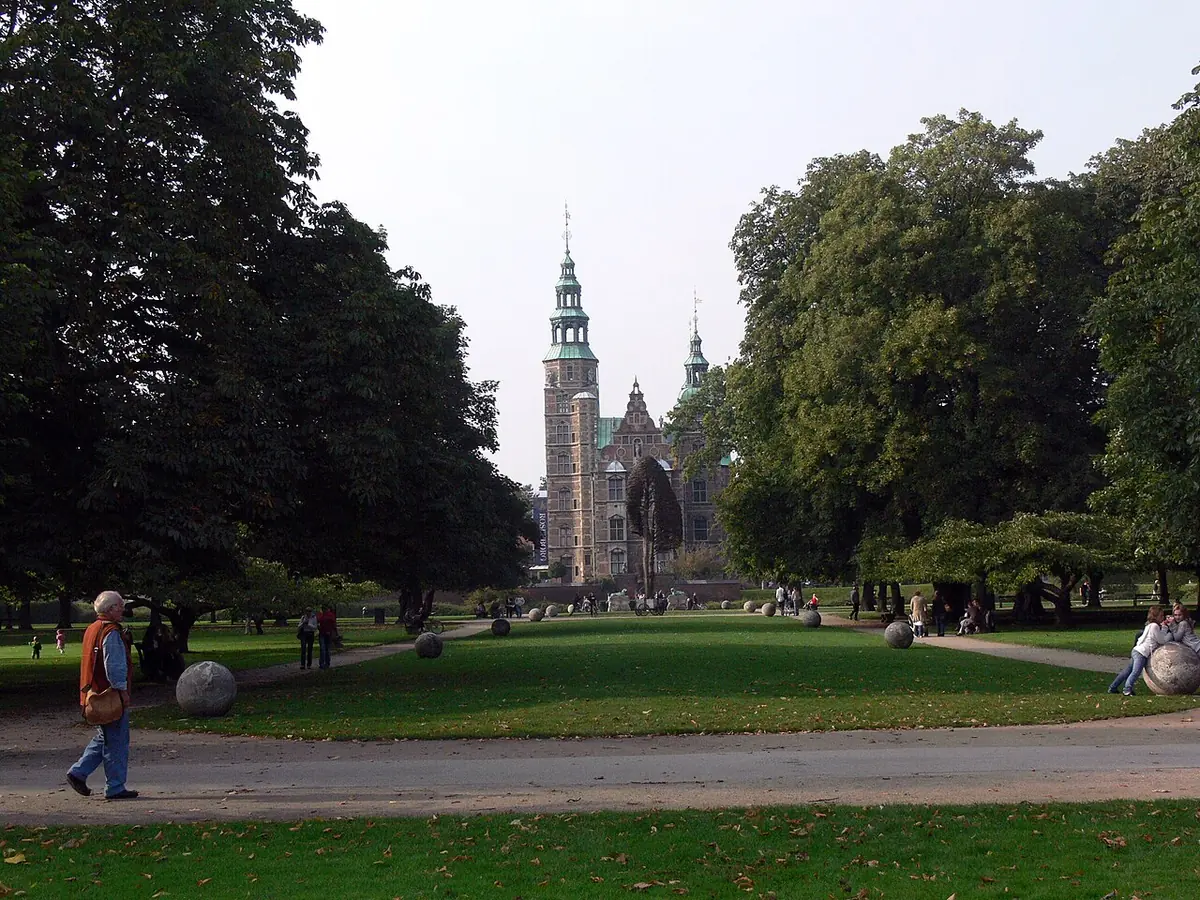
Kongens Have is a historic royal garden, now a public park filled with buildings, monuments, and sculpture. Its story begins in 1606, when King Christian IV created a pleasure garden beyond Copenhagen’s fortifications to supply the royal household with fruit, vegetables, and flowers. The small pavilion here grew into Rosenborg Castle, completed in 1624.
After about 1710, the royal family largely abandoned the castle and garden, and the grounds opened to the public. Their present structure still carries the work of gardener Johan Cornelius Krieger: the Knight’s Path and Lady’s Path are diagonal lime-tree avenues crossing near the centre, while other paths form a grid. Follow the avenue called Kavalergangen with your eyes to its far end, where the Hercules Pavilion takes its name from the Hercules sculpture set in a deep niche between Tuscan columns.
Orpheus and Eurydice occupy the smaller niches beside it; all three figures were made by Giovanni Baratta. The park also preserves the oldest sculpture in the garden, The Horse and the Lion, commissioned by Christian IV from Peter Husum in 1617 and completed in 1625. Its fallen horse and human-faced lion embody a Persian legend about the struggle between light and darkness. This garden is still used for exhibitions, concerts, and other summer events.