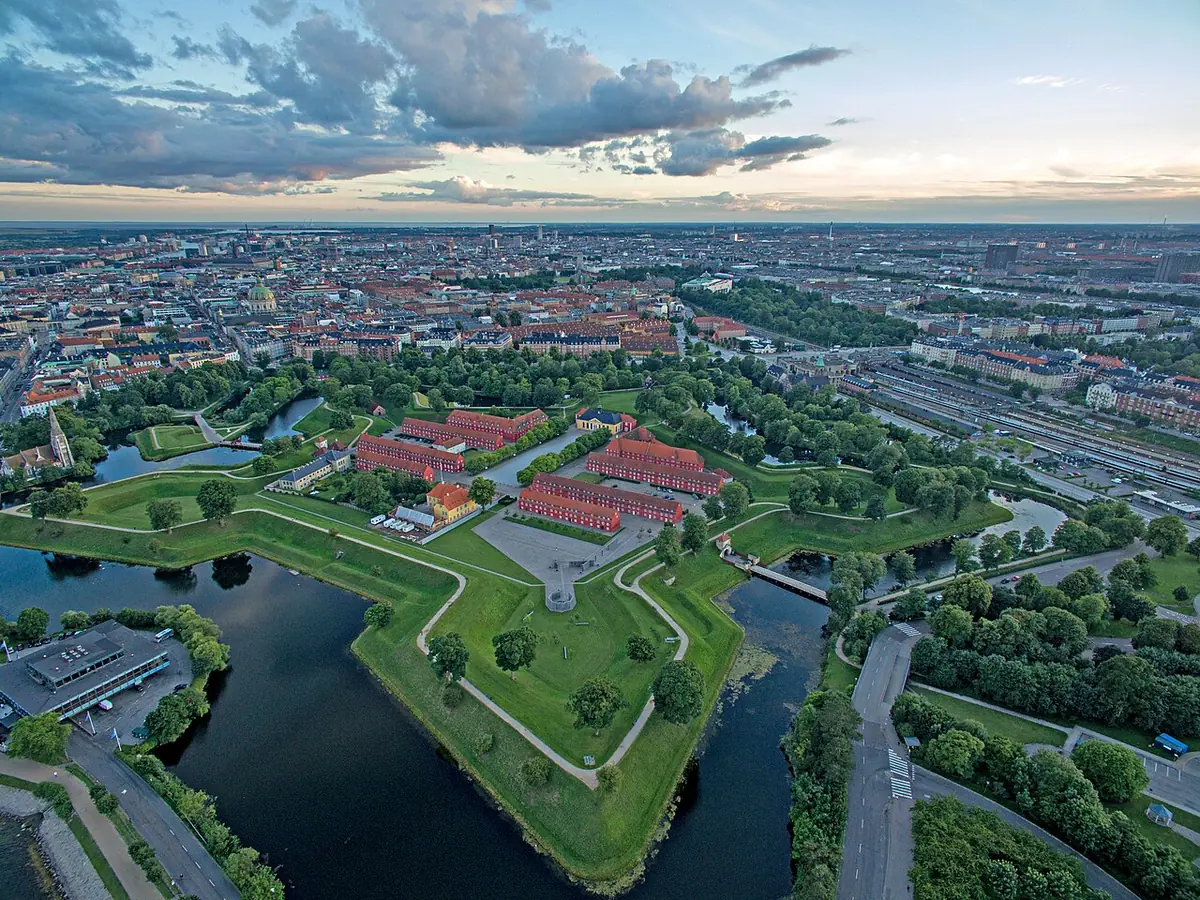
Kastellet, Copenhagen
Kastellet is a citadel shaped as a pentagonal fortress, with bastions marking its corners. It belongs among Northern Europe’s best-preserved fortresses and also functions as a public park and historic site. The surviving complex includes the Citadel Church, a prison, barracks, storehouses, and a windmill.
The windmill on the King’s Bastion dates from 1847 and replaced an earlier mill destroyed by a storm. Its practical purpose was vital: a fortified city needed dependable flour and grain supplies during a siege. The church was built in 1703–4 in a heavy Baroque manner, and openings allowed prisoners to hear services from their cells.
That connection between worship and confinement gives the site an especially stark detail. Struensee waited here before his execution, while John Norcross endured an extraordinary imprisonment: he spent 32 years at Kastellet, including 16 years in a wooden cage. The entrance gates date from 1663, and the Commander's House was built in 1725 by Elias Häuser. Across the grounds, military use and open parkland still occupy the same carefully engineered stronghold.