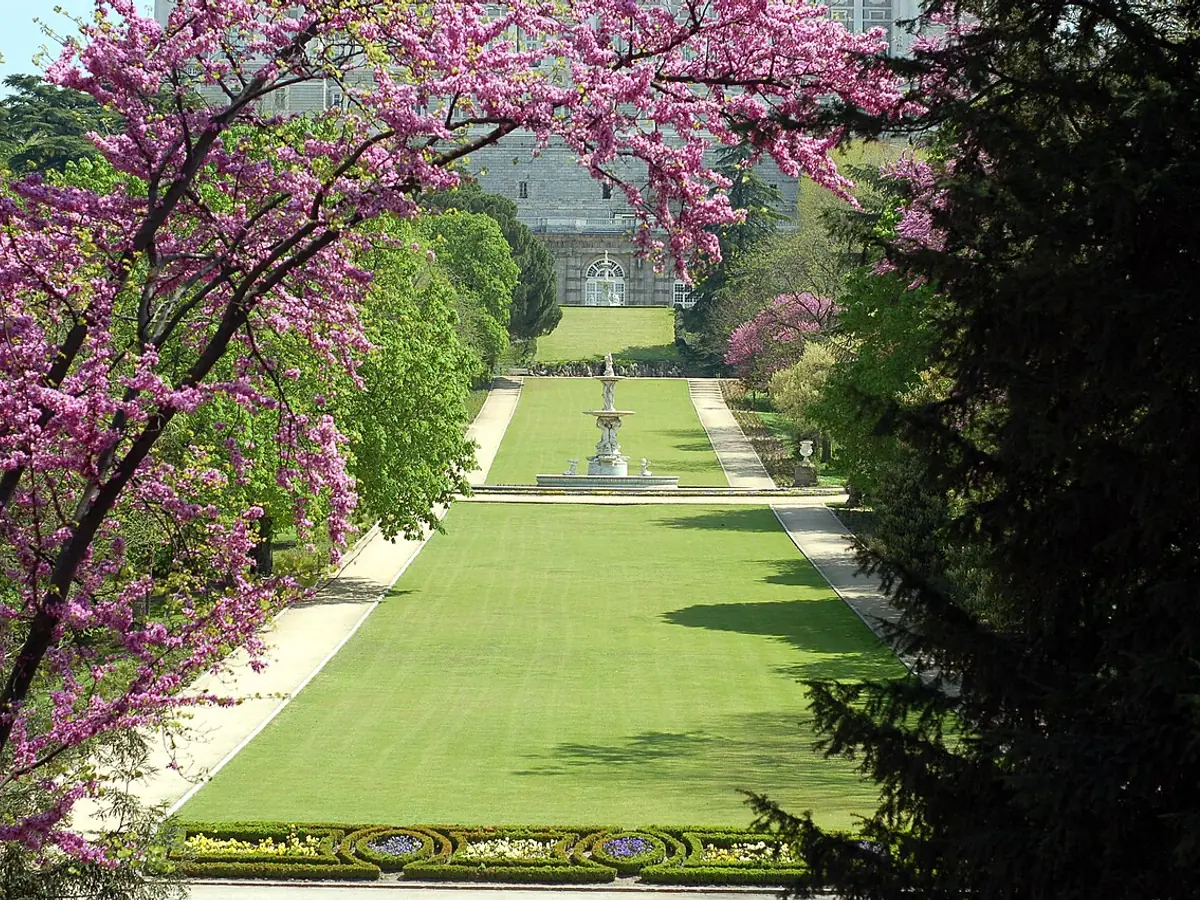
Jardines del Campo del Moro, Madrid
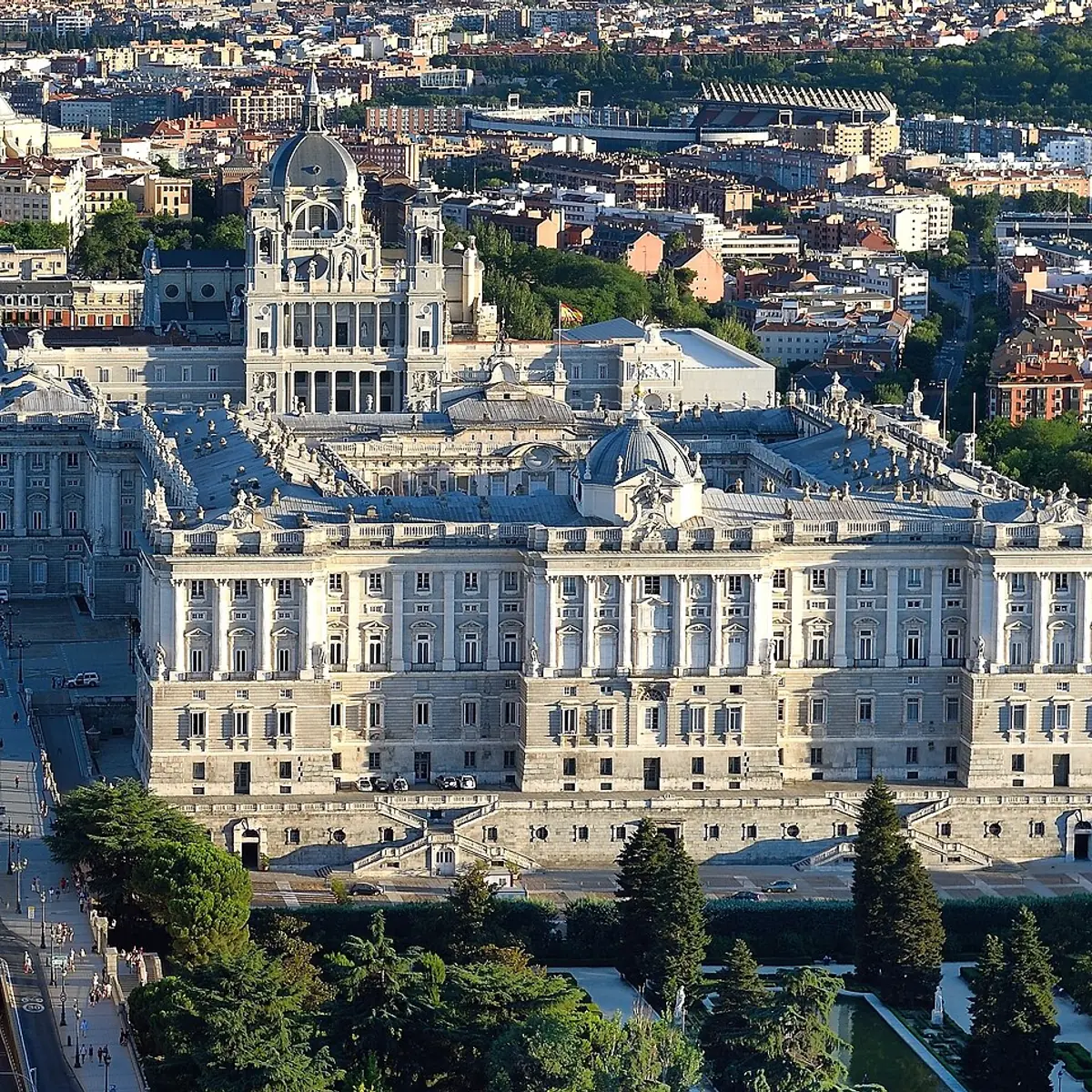
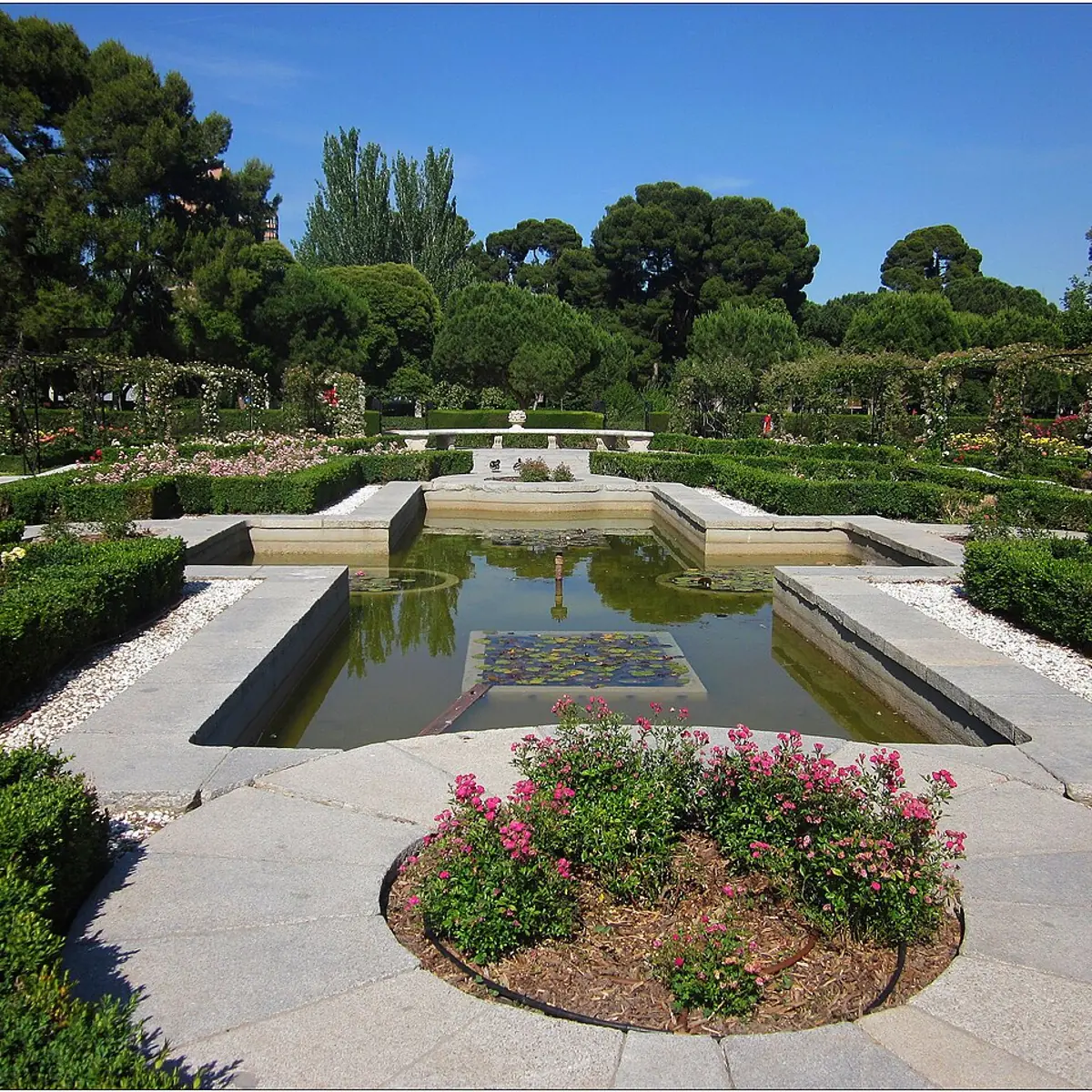
The Campo del Moro is a historic garden spread below Madrid’s Royal Palace, shaped by the steep hollow between the palace and the Manzanares valley. Its defining challenge became its character: the pronounced change in level delayed the garden’s creation, then gave its avenues and wooded landscape their dramatic setting. Narciso Pascual y Colomer designed the grounds in 1844, while Ramón Oliva later transformed the original formal plan into a more romantic landscape.
The main avenue is marked by the Fountain of the Shells, brought from the palace at Boadilla del Monte, and the Fountain of the Tritons, transferred from the gardens of Aranjuez. Planting resumed in the final decade of the nineteenth century, when 9500 trees and 20 800 shrubs were added, including 12 000 roses. The garden’s name comes from a documented historical episode: in 1109, the Muslim commander Ali Ben Yusuf attacked Madrid and his troops camped here during the attempt to retake the city. Look toward the stone boundary and its wrought-iron fence; the enclosure retains a distinct sense of separation from the palace above.
_04.jpg)