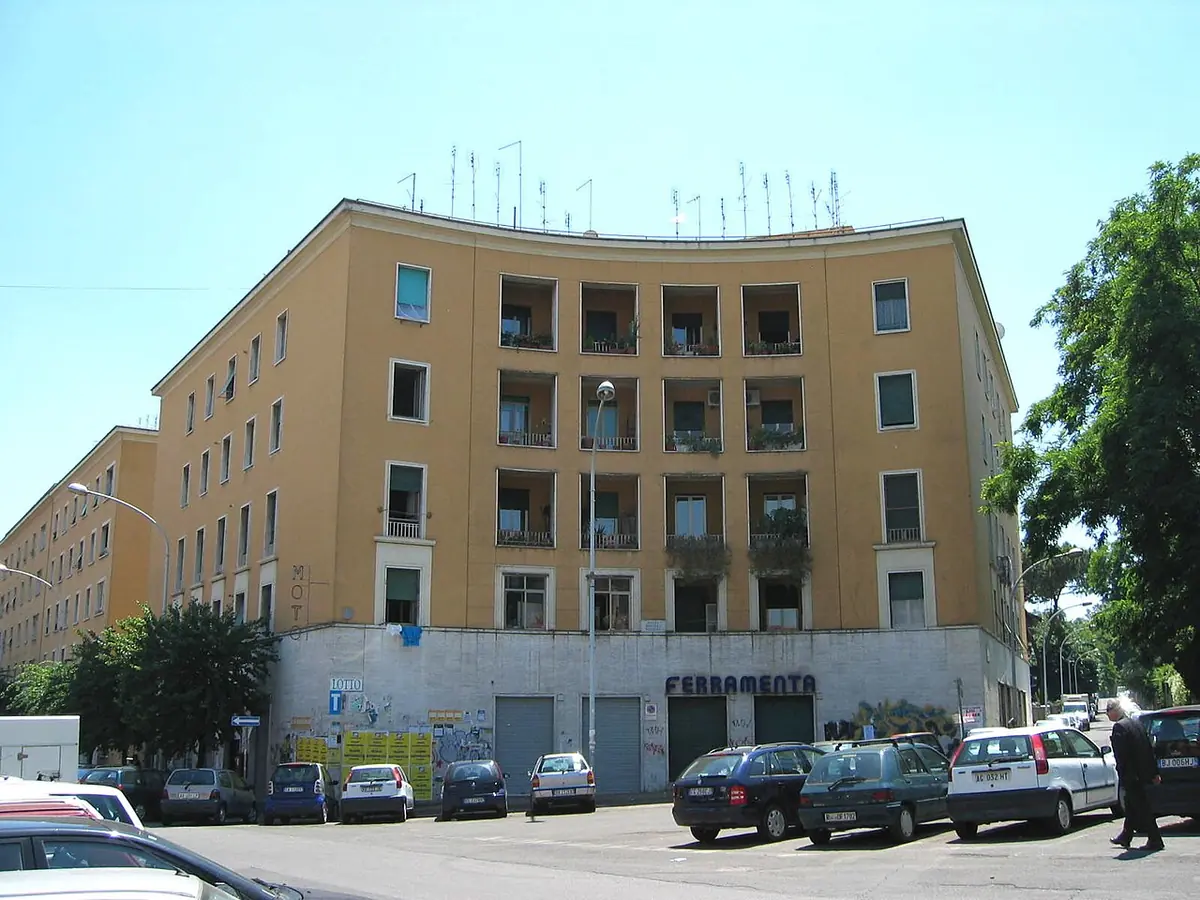
Garbatella, Rome
Garbatella is a hillside district planned as a garden suburb, and its character emerges as you walk among shared courtyards rather than along a single grand monument. The settlement began on 18 February 1920, above the basilica of Saint Paul, with planners drawing on the English garden-city movement. In the older quarters, each housing unit gathers several buildings around a communal garden.
These planted spaces still serve as informal meeting places for the families who live around them. The district expanded rapidly: by 1930, it had the highest population density anywhere in Rome. As you continue, look for Teatro Palladium, now operated by Roma Tre University, and the district’s Metro Line B stop.
Near Via Cristoforo Colombo, the headquarters of the Lazio regional council gives the neighbourhood a much larger civic presence. Commodilla Park offers a remarkable change of scale and age: beneath it lies a small underground basilica from the late fourth century, opening into catacombs decorated with painted biblical scenes. Garbatella remains a lived-in district, with around 45,000 residents, where gardens designed into housing still shape everyday community life.