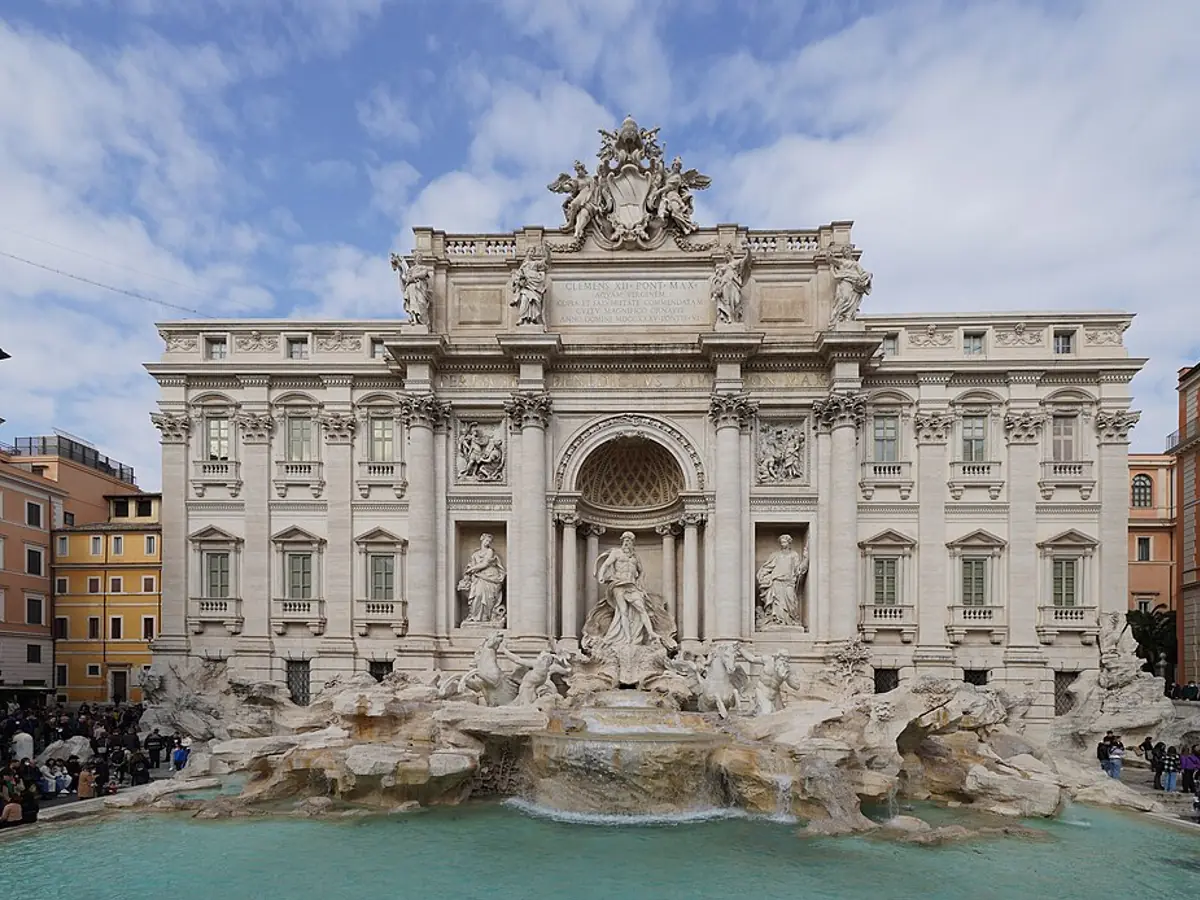
Fontana di Trevi, Rome
Updated
Listen to how the story begins
0:00 / 0:45
The Trevi Fountain is a monumental waterwork built into the façade of Palazzo Poli. Its theatrical design turns stone, flowing water, and sculpture into a single scene: Tritons lead sea horses beside Oceanus, while Abundance and Salubrity occupy the flanking niches. Above them, reliefs connect the fountain with the ancient water supply that still feeds it.
Nicola Salvi created the design, and Giuseppe Pannini brought the work to completion in 1762. Construction began in 1732, and the finished fountain rises 26.3 metres and stretches 49.15 metres across. Its travertine came from quarries near Tivoli.
The fountain marks the endpoint of the Acqua Vergine, a watercourse restored from the ancient Aqua Virgo, which once supplied Agrippa’s baths and remains in service today. A detail with an unexpectedly human story sits among the ornament: Salvi concealed an unattractive barber’s sign behind a sculpted vase. Romans called that vase the Ace of Cups because its shape recalled a tarot card.
The fountain was completed after Salvi’s death, and its official inauguration took place on 22 May 1762. Coins thrown into the water are tied to the hope of returning to Rome, with about 3,000 euros arriving each day.