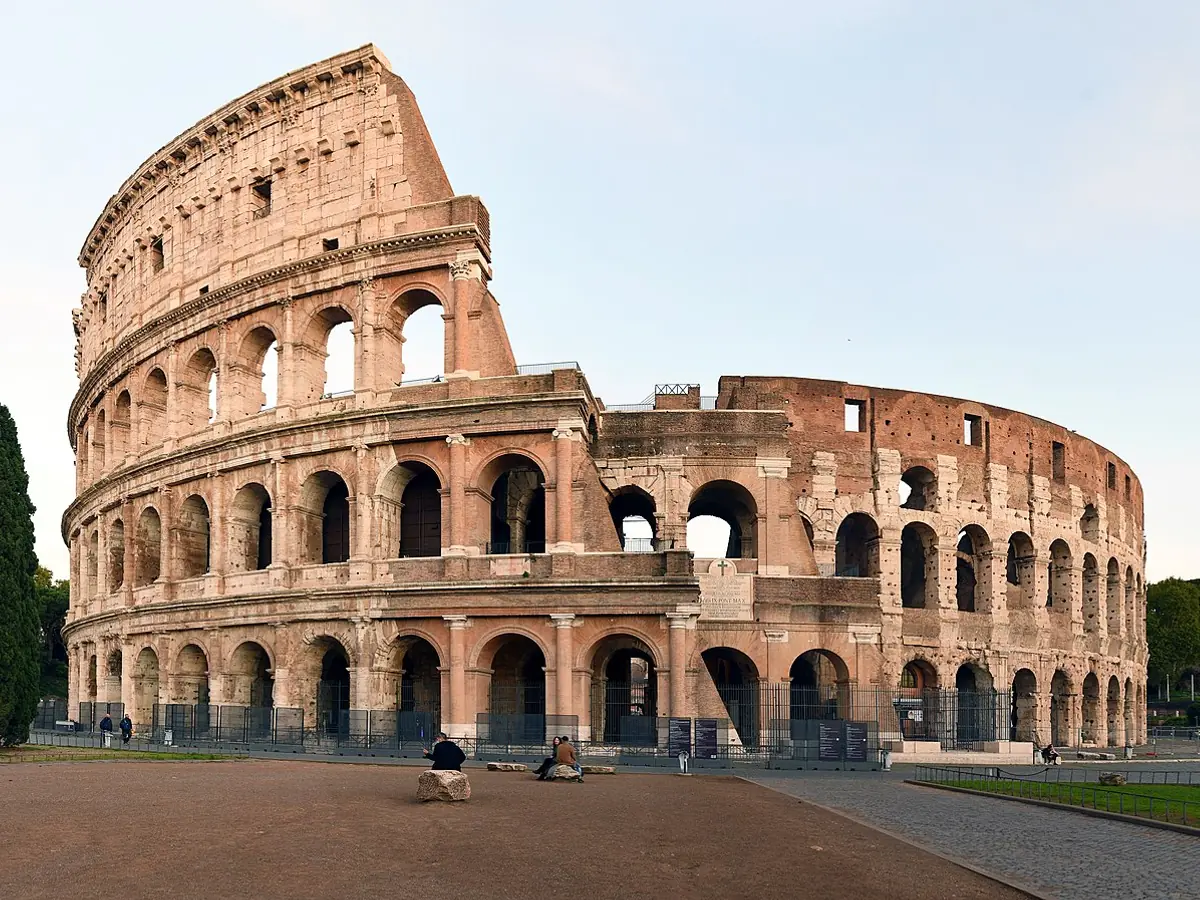
Colosseo, Rome
Updated
Listen to how the story begins
0:00 / 0:45
The Colosseum is an immense elliptical amphitheatre, and its surviving arcades still reveal the scale of Roman public entertainment. As you walk around the outer circuit, notice how the curved structure gathers repeated arches and passages into a single monumental form. No ancient amphitheatre exceeded its size, and it still stands as the largest surviving example of its kind.
Construction began under Emperor Vespasian in 72 and the building opened under Titus in AD 80; Domitian later altered it. Travertine, Roman concrete, and volcanic tuff give the ruin its varied texture. At different periods, crowds numbering from 50,000 to 80,000 watched gladiatorial contests, animal hunts, executions, battle re-enactments, mythological dramas, and even mock naval battles.
After entertainment ended in the early medieval period, the structure served changing purposes, including homes, workshops, a fortress, a quarry, and a Christian shrine. Its modern name connects it with the colossal statue of Nero that once stood nearby. Keep following the oval perimeter: the damaged stone is not merely a remnant of spectacle, but the trace of a building repeatedly adapted across centuries.