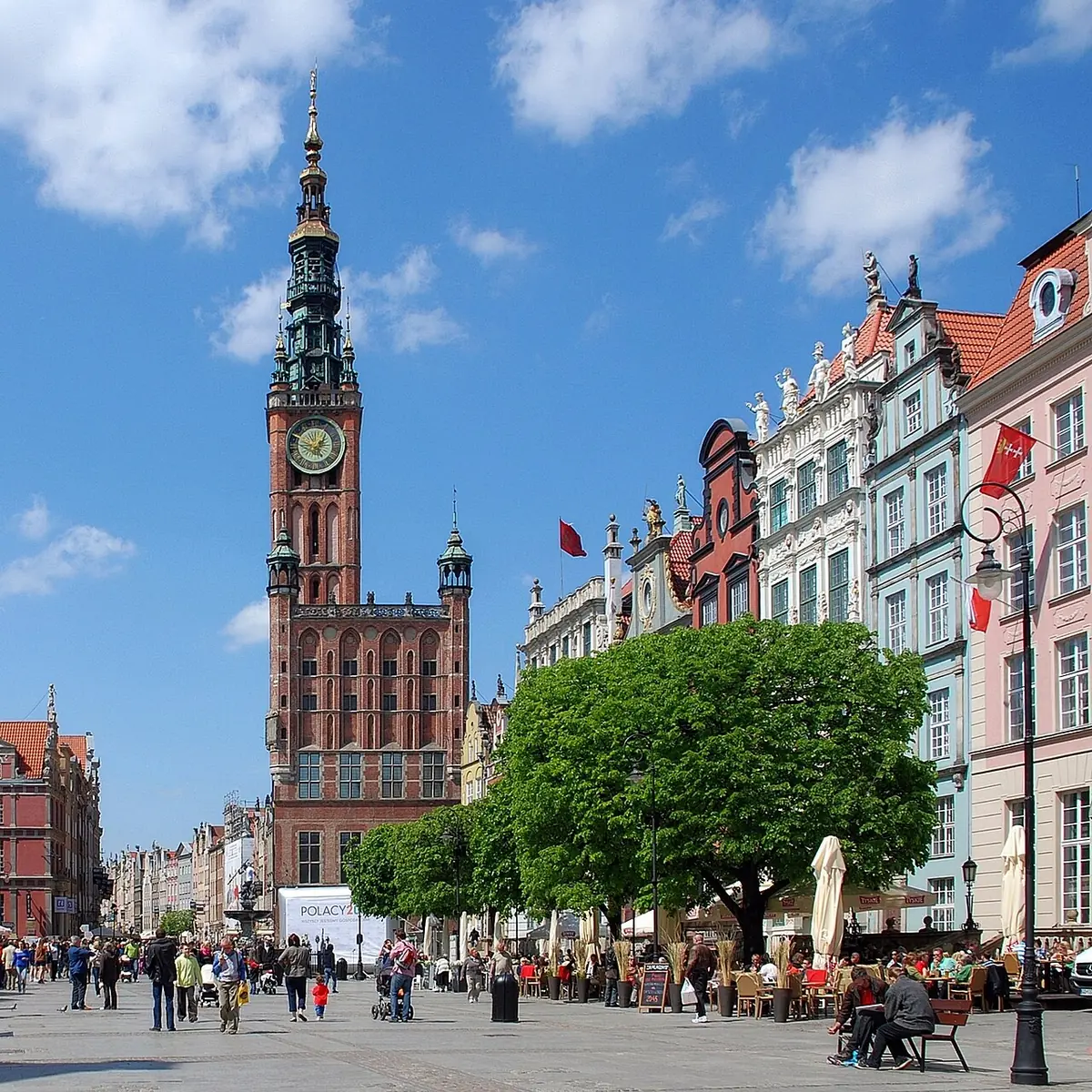
Dwór Artusa, Gdańsk
Updated
Listen to how the story begins
0:00 / 0:45
Dwór Artusa rises from Długi Targ as a richly dressed civic building. “Northern Mannerism” is its architectural style, a fashion for theatrical ornament and intricate display. “It served merchants as a gathering house and a focus for the city’s social life.”
Its name comes from the medieval Arthur legend, whose chivalric ideal lent prestige to meeting houses of urban elites. Here, prosperity came with a strict door policy: “craft workers, market sellers, and wage labourers were excluded.” Those admitted enjoyed music, singing, acrobats, jugglers, gambling, and feasts that could stretch across several days.
Business was formally meant for the space outside, leaving the hall for sociability and spectacle. Notice the sculpted façade around the portal. “Abraham van den Blocke remade the façade in Dutch Mannerist style during sixteen seventeen.”
Antique commanders, emblems of strength and justice, and Fortuna on the gable turn commerce into a public statement of power. War scarred this building, yet “on the twenty-eighth of March nineteen forty-five, Polish tank soldiers Bronisław Wilczewski and Zbigniew Michel replaced the Nazi flag with the Polish flag on its roof.” Rebuilt after the fighting, Dwór Artusa now welcomes visitors as part of the Gdańsk History Museum.