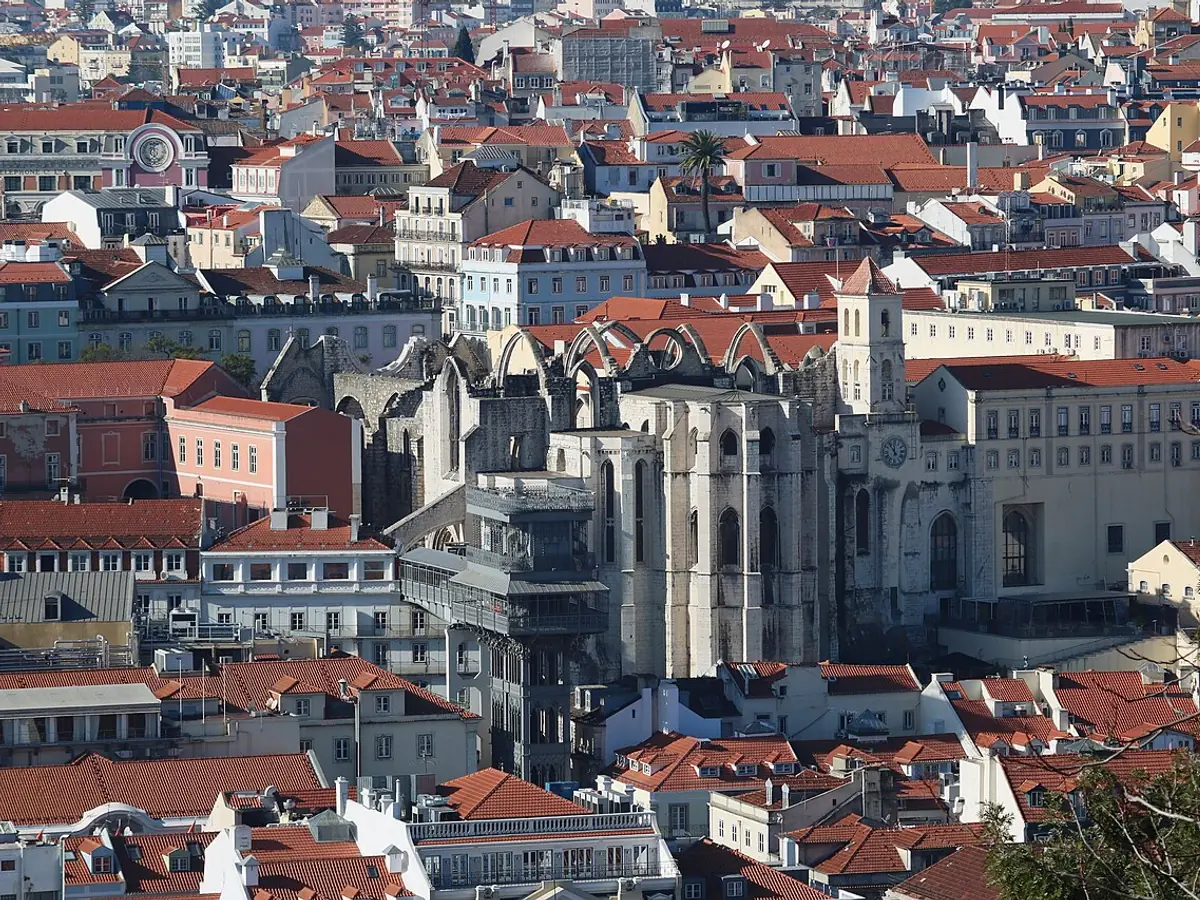
Convento do Carmo, Lisbon
Updated
Listen to how the story begins
0:00 / 0:45
Convento do Carmo is a ruined Gothic church attached to a former Carmelite convent, and its open stone framework is the clearest surviving reminder here of Lisbon’s earthquake of 1755. The convent began in 1389 under the direction of Nuno Álvares Pereira, Portugal’s Constable, who later entered religious life here after giving his wealth to the community. Look at the façade’s portal, where carved capitals and layered arches remain beneath a damaged rose window.
Along the southern side, five flying buttresses strengthen the wall; they were added in 1399 after part of the structure collapsed during construction. Inside, the nave has three aisles, but its stone roof disappeared in the earthquake. What remains overhead are the pointed arches that once supported it, turning the church into a vast, open-air ruin.
The space now houses the Carmo Archaeological Museum. Its collection includes prehistoric objects from a fortified site near Azambuja, Gothic tombs, Roman and Visigoth remains, and a tomb made for King Ferdinand I. The living convent buildings later became military headquarters, and during the Carnation Revolution in 1974 Marcelo Caetano took refuge here before surrendering to António de Spínola.