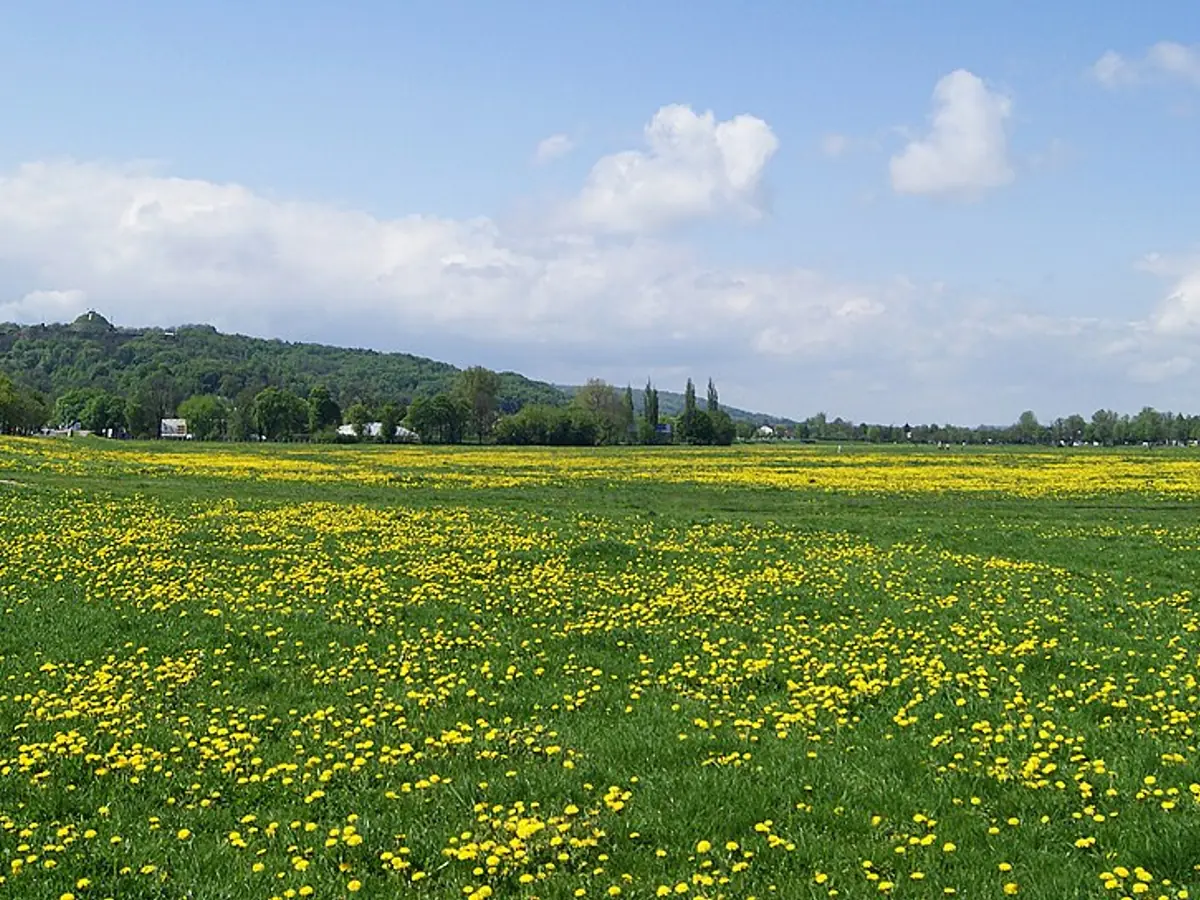
Błonia Krakowskie, Kraków
Updated
Listen to how the story begins
0:00 / 0:45
Błonia Krakowskie is a historic city park made not of flowerbeds or formal paths, but of a single immense meadow. It covers forty-eight hectares and lies about seven hundred metres west of Kraków’s Old Town. Let the uninterrupted grassland give you its scale: this open ground has held both ordinary rural life and some of the city’s largest public moments.
Its recorded story starts in 1162, when the nobleman Jaksa z Miechowa gave this land to the Norbertine nuns in return for a blessing before his journey to the Holy Land. In 1366, the nuns exchanged the meadow with the city for a manor on Floriańska Street. Nearby villagers then brought cattle here to graze.
For centuries, spring floods from the Rudawa left this area marshy; drainage transformed it into a venue for crowds. In 1809, Polish commanders arranged a salute here for Napoleon’s troops. The last cattle grazed on Błonia in the 1970s. Since then, vast Masses celebrated by Pope John Paul the Second, concerts, festivals, and exhibitions have made this meadow Kraków’s great outdoor gathering place.
_view_to_W,Krakow,Poland.jpg)