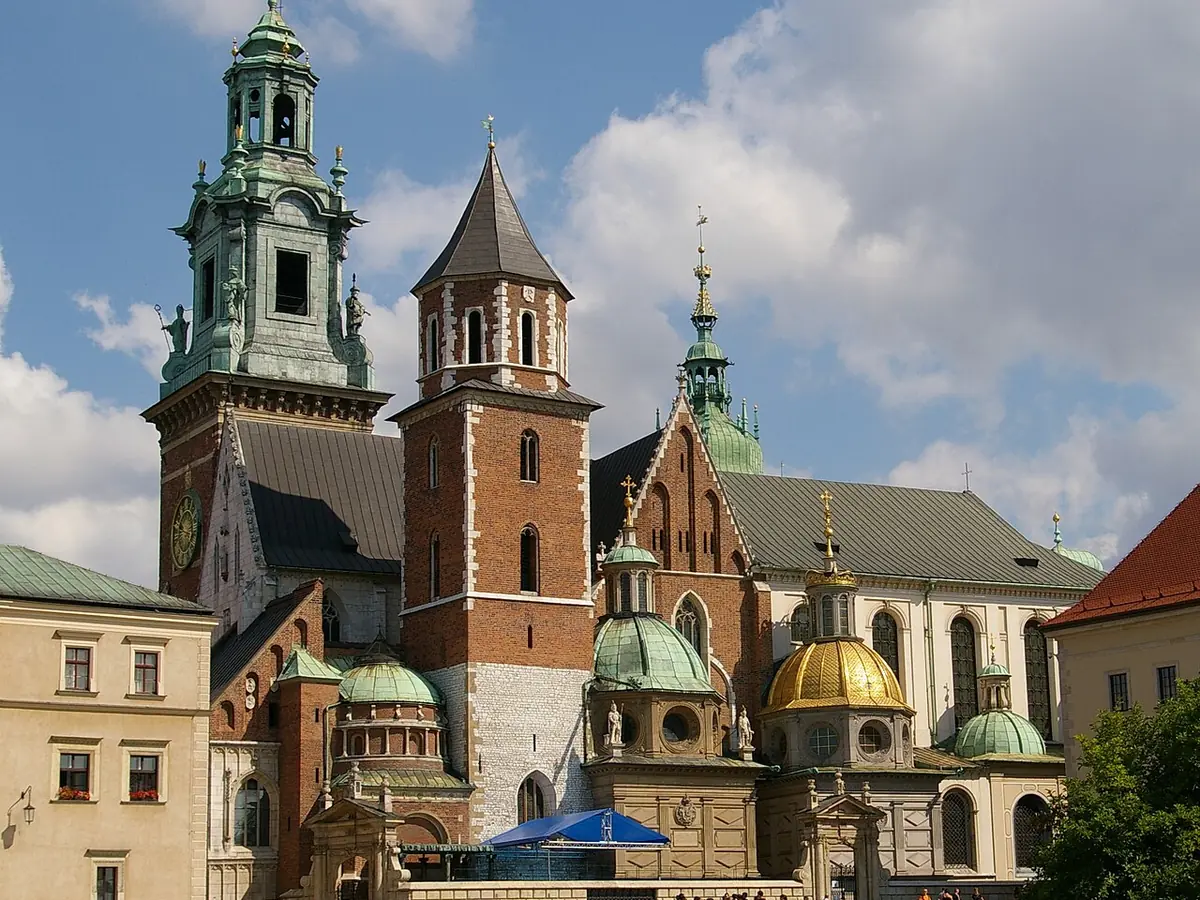
Bazylika archikatedralna Świętych Stanisława i Wacława, Kraków
Updated
Listen to how the story begins
0:00 / 0:45
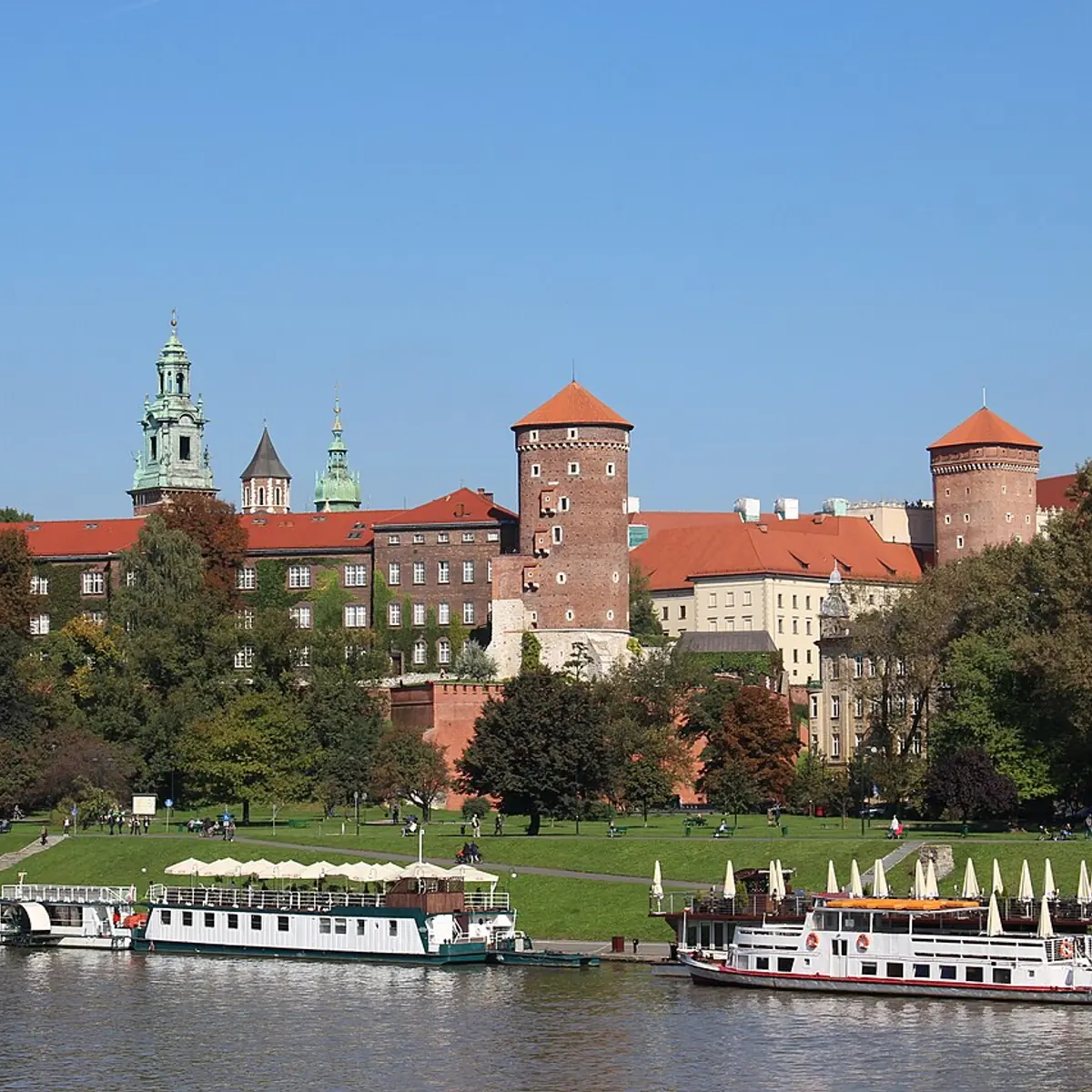
Wawel Cathedral is the great church before you, dedicated to Saints Stanislaus and Wenceslaus. It is nearly 1,000 years old and belongs to the Wawel Castle complex, where Polish monarchs were crowned. The building you see is the current Gothic cathedral, raised from the 14th century onward after earlier churches on this site were destroyed.
Its appearance gathers Romanesque, Gothic, Renaissance, Baroque, Neoclassical and Neogothic elements, so the façade and interior tell a story of continual change rather than a single moment in history. Look at the chapels attached around the exterior, especially the golden-domed Sigismund's Chapel. This church is also a royal burial place: its crypts and chapels hold kings, queens, military leaders, poets and statesmen, creating a national pantheon within the cathedral.
Coronations took place here from 1320 until 1764, before the high altar, with the crown regalia kept in the treasury. The cathedral remains the seat of the Archbishop of Kraków and an active setting for major religious ceremonies. In the Wawel Crypt, Karol Wojtyła celebrated his first Mass as a priest on 2 November 1946. He later became Pope John Paul II, and in 1958 he was ordained Kraków's auxiliary bishop in this cathedral.