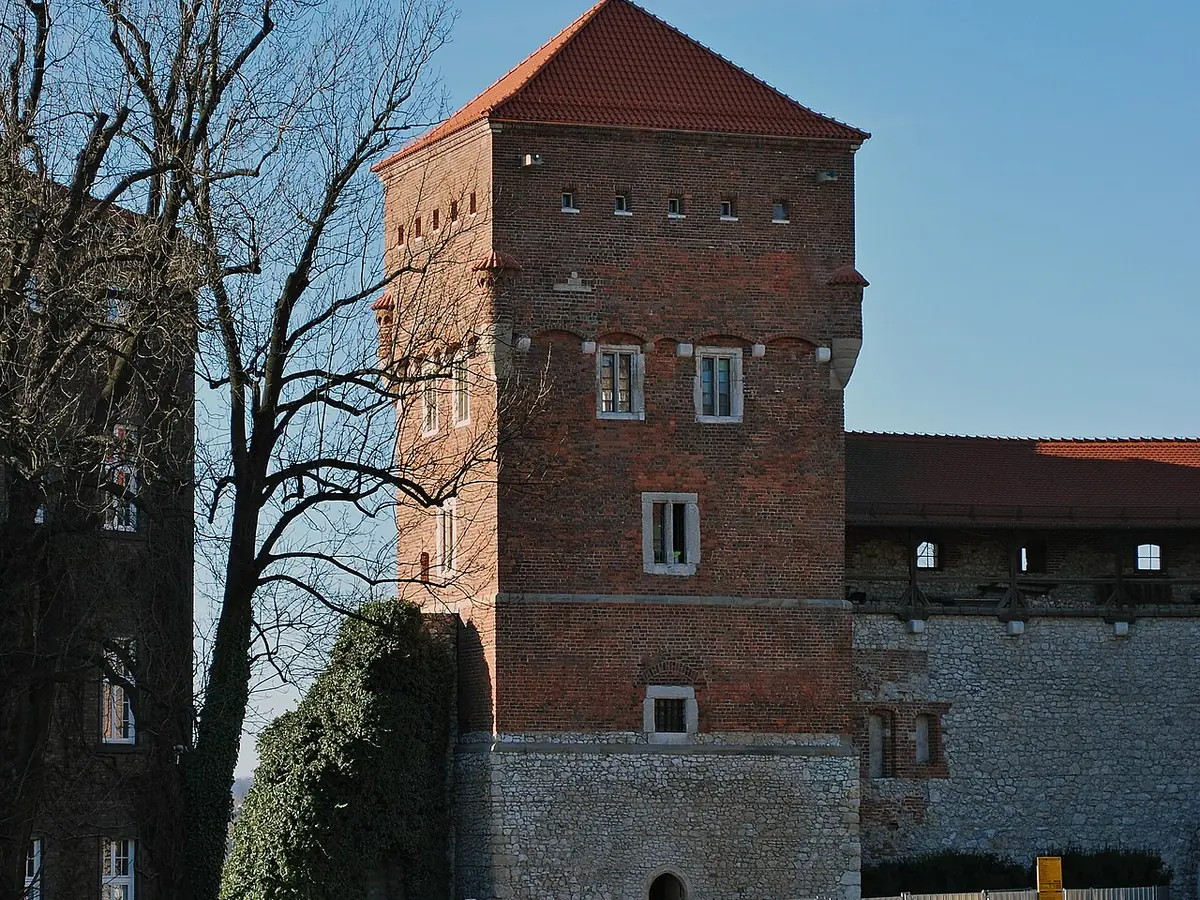
Baszta Złodziejska, Kraków
Updated
Listen to how the story begins
0:00 / 0:45
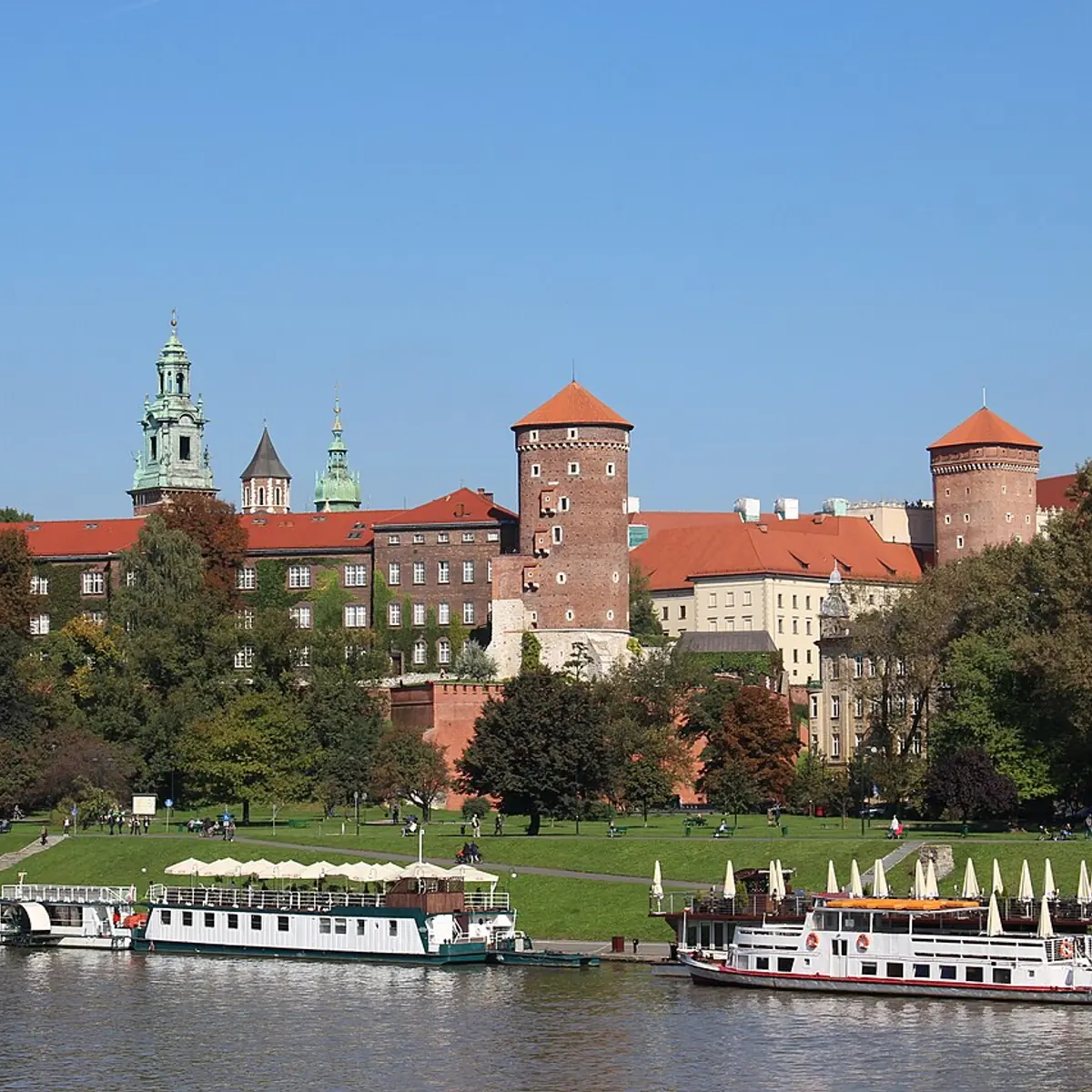
Baszta Złodziejska is one of only three Wawel towers that survive intact, standing on the western part of the hill. It began in the fourteenth century as part of the Gothic defensive wall: Gothic means the medieval manner of pointed forms and fortified masonry. In the sixteenth century, fires repeatedly damaged the tower, and each time it was repaired.
Notice the roof at the top. It is a four-sided roof, restored during work in two thousand fourteen and two thousand fifteen to recover the tower’s original covering. The Austrians had reshaped the building in eighteen fifty-three, adding a brick battlement along its crown.
A staircase followed a year later, then disappeared in nineteen forty-six. The restoration of nineteen fifty through nineteen fifty-one instead returned the tower to its eighteenth-century appearance, under Witold Minkiewicz’s direction. Its stern exterior conceals a harsher past below: the underground level preserves a prison cell. Today, the tower also holds archaeological objects unearthed during excavations across Wawel.