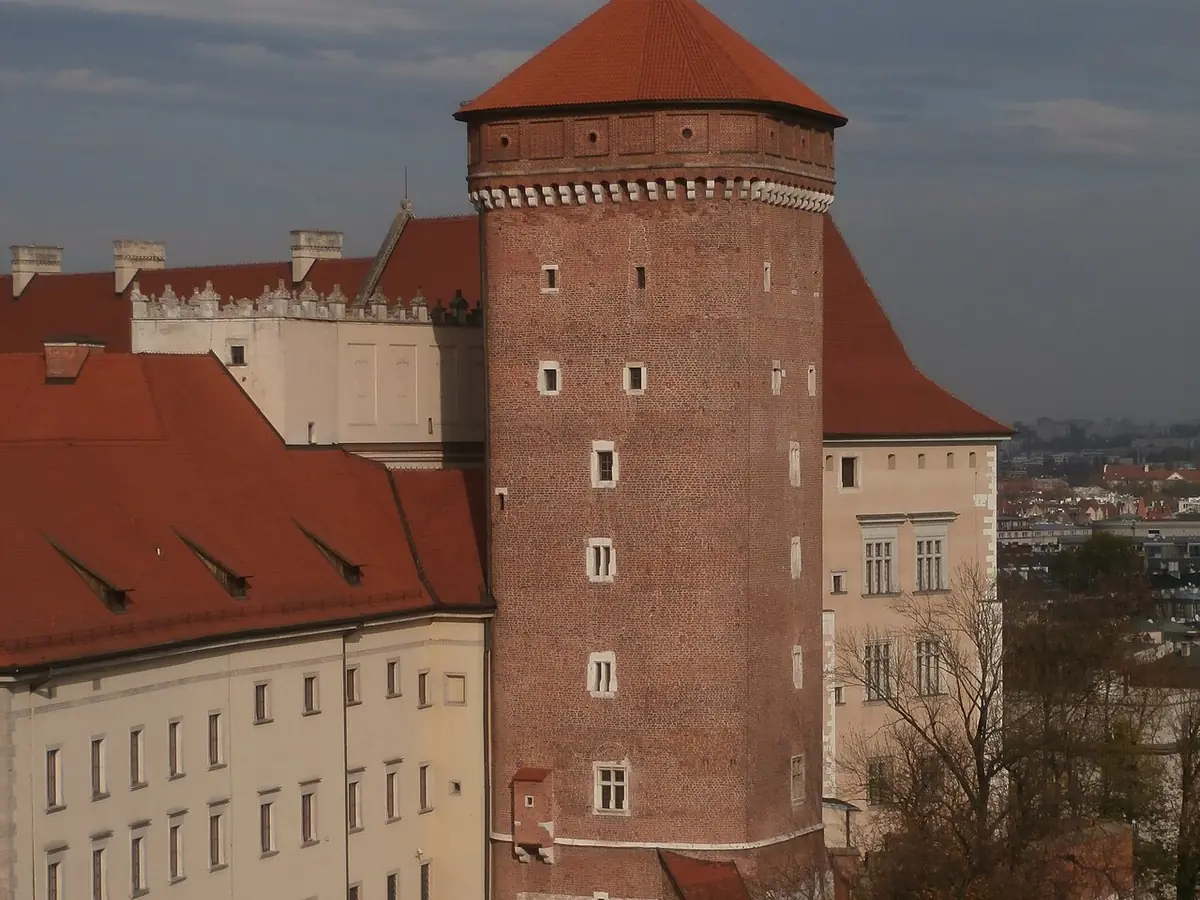
Baszta Senatorska, Kraków
Updated
Listen to how the story begins
0:00 / 0:45
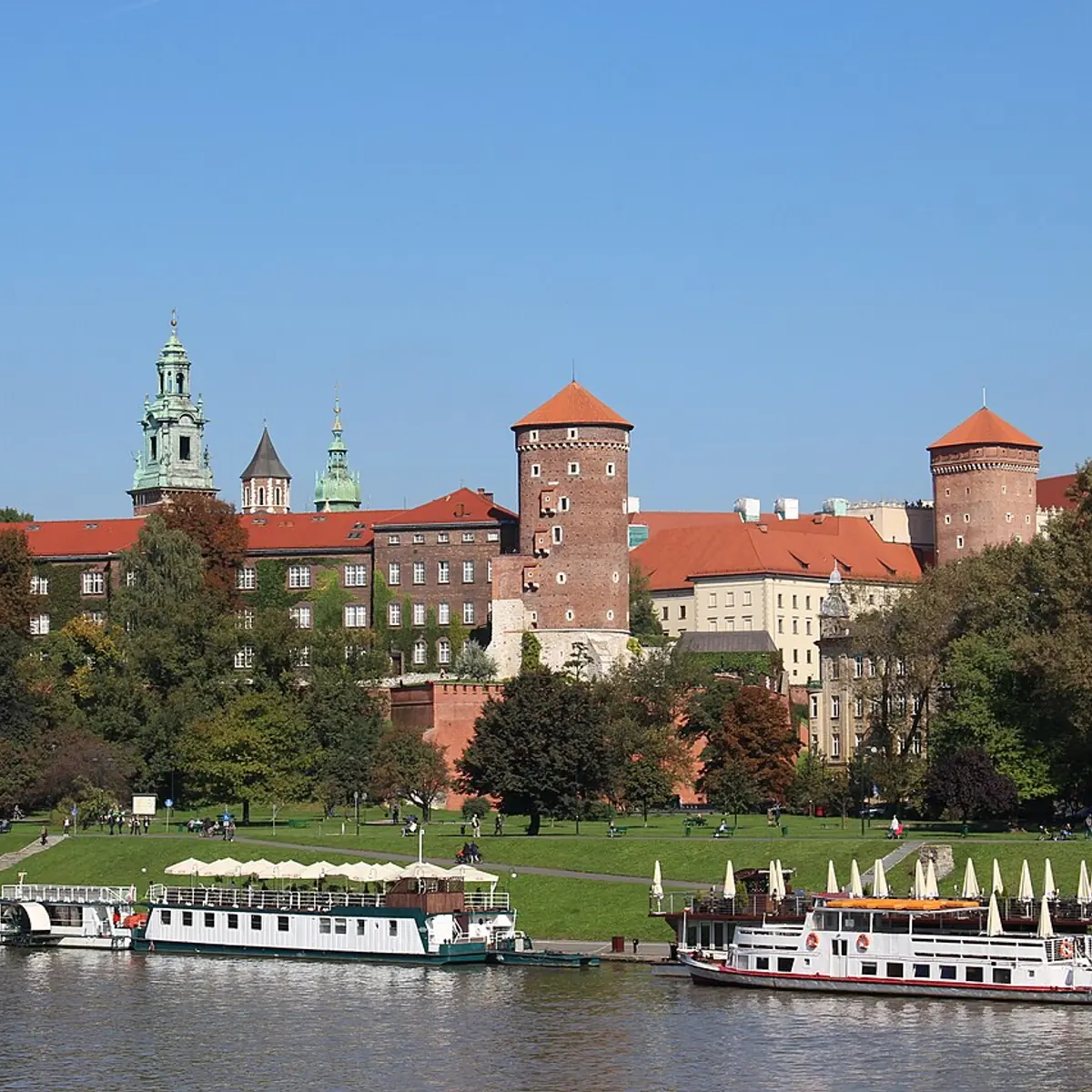
Baszta Senatorska is the tallest of Wawel’s three completely preserved defensive towers. Notice the steep tiled roof above its brick upper storeys: this tower began as an answer to a new military problem, the spread of artillery. It was built between 1447 and 1460, during the reign of Casimir IV Jagiellon, with stone below and brick above.
Stairs ran inside the thickness of its walls, keeping movement protected. The tower was soon raised and given a lofty roof, but its form changed repeatedly. In 1534 it was linked to the Royal Palace’s south wing, and its lower levels were adapted to include rooms for the young Sigismund Augustus, later king of Poland.
Fire destroyed it in 1536; repairs followed from 1540 to 1543. Another fire damaged it during the Swedish occupation in 1656. Its oldest name, Lubranka, honoured Grzegorz of Lubraniec, the castle’s general prosecutor.
The present name eventually prevailed after several others. Austrian alterations removed the pitched roof around 1858, and later occupation-era changes damaged historic fabric. The roof and the projecting latrine bay were finally reconstructed in 2002 and 2003. Together with the Sandomierz Tower, it forms Wawel’s distinctive pair of artillery towers.