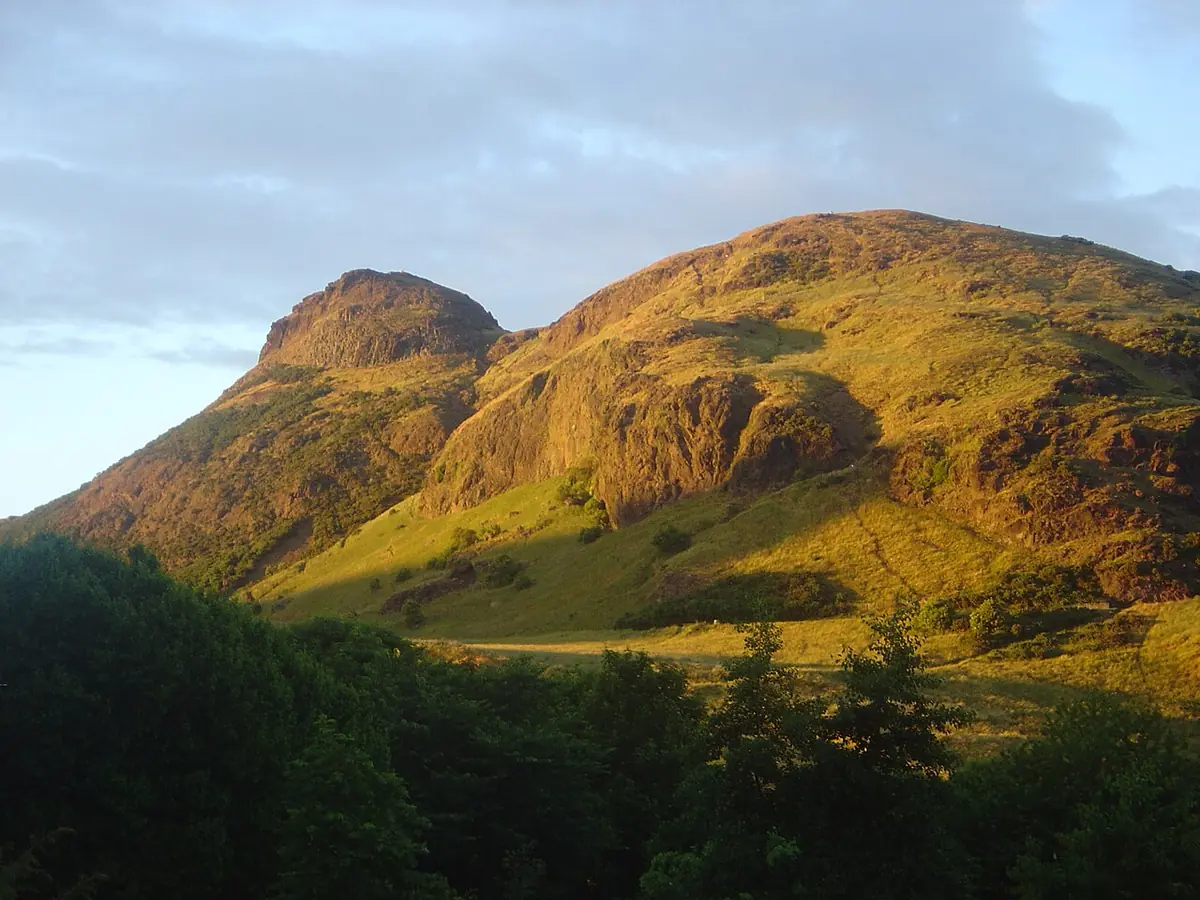
Arthur's Seat, Edinburgh
Arthur’s Seat is the rugged volcanic hill rising through Holyrood Park, and its summit reaches 250.5 m above sea level. This is an ancient volcano that stopped erupting long ago, now shaped into a powerful natural landmark above Edinburgh. From the open slopes, you get broad views across the city and beyond, while the climb remains relatively accessible for hillwalkers.
The rock has a deeper story: ice moving across the landscape wore away softer material and revealed the crags, while leaving the long ridge of Salisbury Crags. That exposed geology helped James Hutton develop ideas about how molten rock and sedimentary layers formed at different times. Look toward the hill’s summit area, where the remains of a prehistoric hill fort occupy the high ground.
Arthur’s Seat also carries a mystery from its crags: in 1836, boys found 17 tiny coffins containing wooden figures inside a cave. Their purpose remains unknown. As local legend has it, this hill may have been connected with King Arthur’s Camelot, but the strongest story here is the meeting of volcano, ice, science, and city views.