Madrid
Madrid Travel Tips: Getting Around, Money and Tourist Traps
Last checked
Madrid is compact and walkable, but its airport has two widely separated terminal complexes, its ticketing runs through a small reloadable card, and its grandest squares draw a predictable set of street scams worth knowing in advance.
Arriving
Adolfo Suárez Madrid–Barajas (MAD) sits about 12 km from the city, split across two widely separated terminal complexes, T1-T2-T3 and T4-T4S. Metro line 8 serves both, with stations at Aeropuerto T1-T2-T3 and Aeropuerto T4, open 06:00 to 01:30; you need a Multi card loaded with a valid ticket, and entering or exiting at either airport station costs an extra supplement — tourist tickets already include it, but single tickets and supplements are only valid on the day you buy them. Line 8 reaches Nuevos Ministerios in about 15 minutes from T1-T2-T3.
The Cercanías C1 and C10 trains serve T4 only, connecting to Chamartín and Atocha; a free inter-terminal bus links the other terminals to T4. The Exprés Aeropuerto bus 203 runs 24 hours a day, stopping at Atocha, Cibeles, O'Donnell, T1, T2 and T4 — by day it starts from Atocha, by night from Plaza de Cibeles. Pay on board by contactless card or phone, or in cash. Tourist travel tickets aren't valid on this line.
Madrid's official taxis are white with a red diagonal stripe and the city crest on the front door, with a green roof light meaning free; they take cash and cards, and the airport-to-city fare is a flat rate, day or night, to anywhere inside the M-30 ring road. The official taxi app is TXMAD.
Madrid's two mainline stations are Puerta de Atocha, about 1 km south of the centre, and Chamartín — both connect to the Metro and Cercanías.
Getting around
Wikivoyage describes Madrid as "a very safe city" with people in the streets at almost any hour, "so you can walk across the city generally without fear."
Metro and bus tickets load onto a reloadable Multi card, sold at Metro station machines — one card can carry up to ten matching single tickets plus airport supplements, so a group travelling together can share one card as long as everyone boards and alights together. The Tourist Travel Pass gives unlimited travel for 1 to 7 consecutive days: zone A covers the municipality, zone T the whole region, though it isn't valid on the Airport Express bus.
Since 1 June 2026, Metro turnstiles also accept a contactless bank card or phone directly, without needing a Multi card first — in this initial phase it buys single tickets only. The Metro runs about 06:00 to 01:30; EMT buses cover what it doesn't, and the "Búho" night buses leave from Plaza de Cibeles.
Uber and Bolt both operate in Madrid and serve the airport; Wikivoyage also lists Cabify as running here.
Money and tipping
Spain has used the euro since 1 January 1999. If a card terminal or ATM offers to charge you in your home currency, decline — the European consumer body BEUC warns that converting through the merchant's own bank typically costs more. Spanish ATMs charge their own usage fee and show it before you confirm, so it's worth comparing two or three machines if you have a choice. If someone approaches you at a cash machine, Wikivoyage's advice is blunt: press CANCELAR and take your card back.
Tipping isn't customary in Spain. At mid-range or better restaurants, leaving 5–10% in cash for genuinely good service is reasonable, and locals often just leave loose change. By law, bars and restaurants must offer free tap water alongside any paid drink order.
Tourist traps
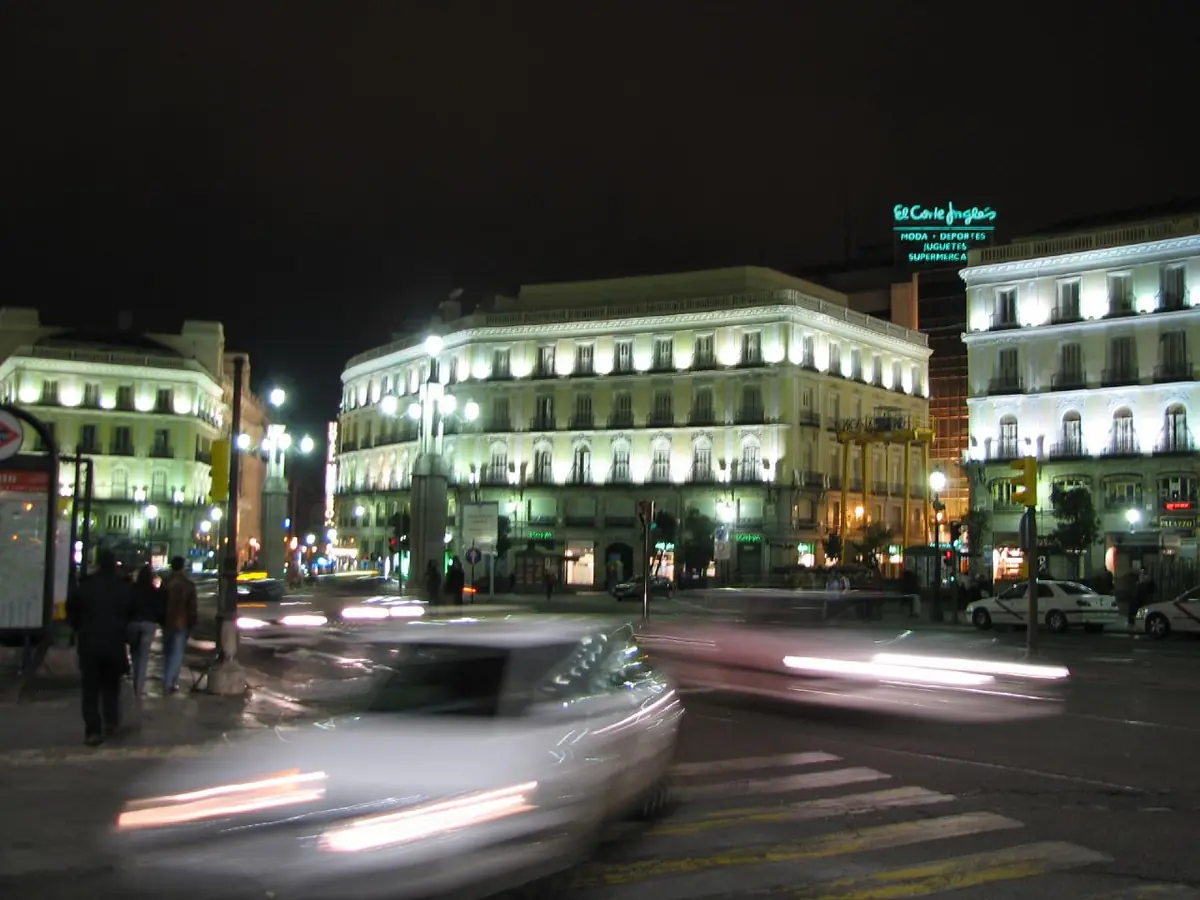
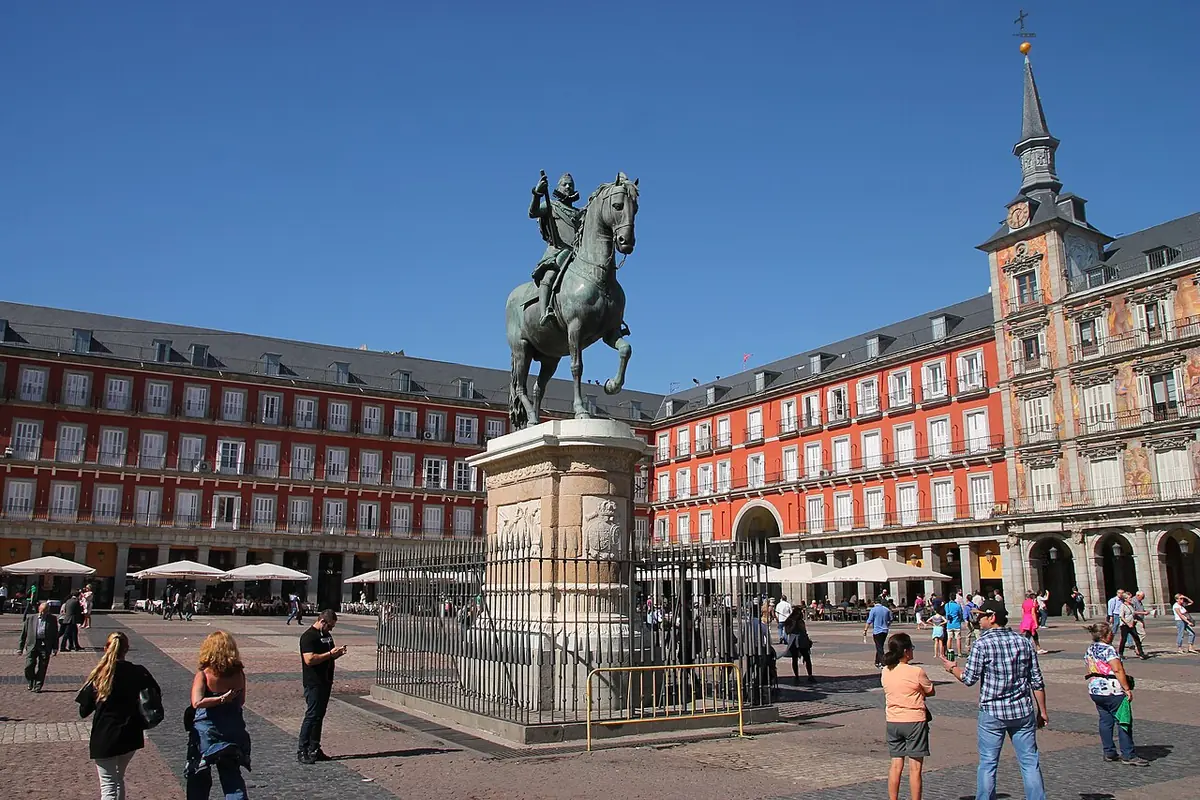
Around Puerta del Sol and Plaza Mayor, many restaurants and cervecerías put out picture boards of paella on the pavement — Wikivoyage calls these "usually of bad quality" and points instead to La Latina, especially Calle Cava Baja, for better food.
_03.jpg)
.jpg)
Puerta del Sol and Plaza Mayor are also, in Wikivoyage's words, "Meccas for scams": be wary of anyone offering a massage on the street, which is often an extortion attempt, and of people asking you to sign a petition in exchange for a "donation." Ordinary street vendors around Sol are usually harmless. Elsewhere, never leave a phone or wallet unattended on a bar or restaurant table — Calle de las Infantes, near Gran Vía, is flagged for exactly this kind of distraction theft.
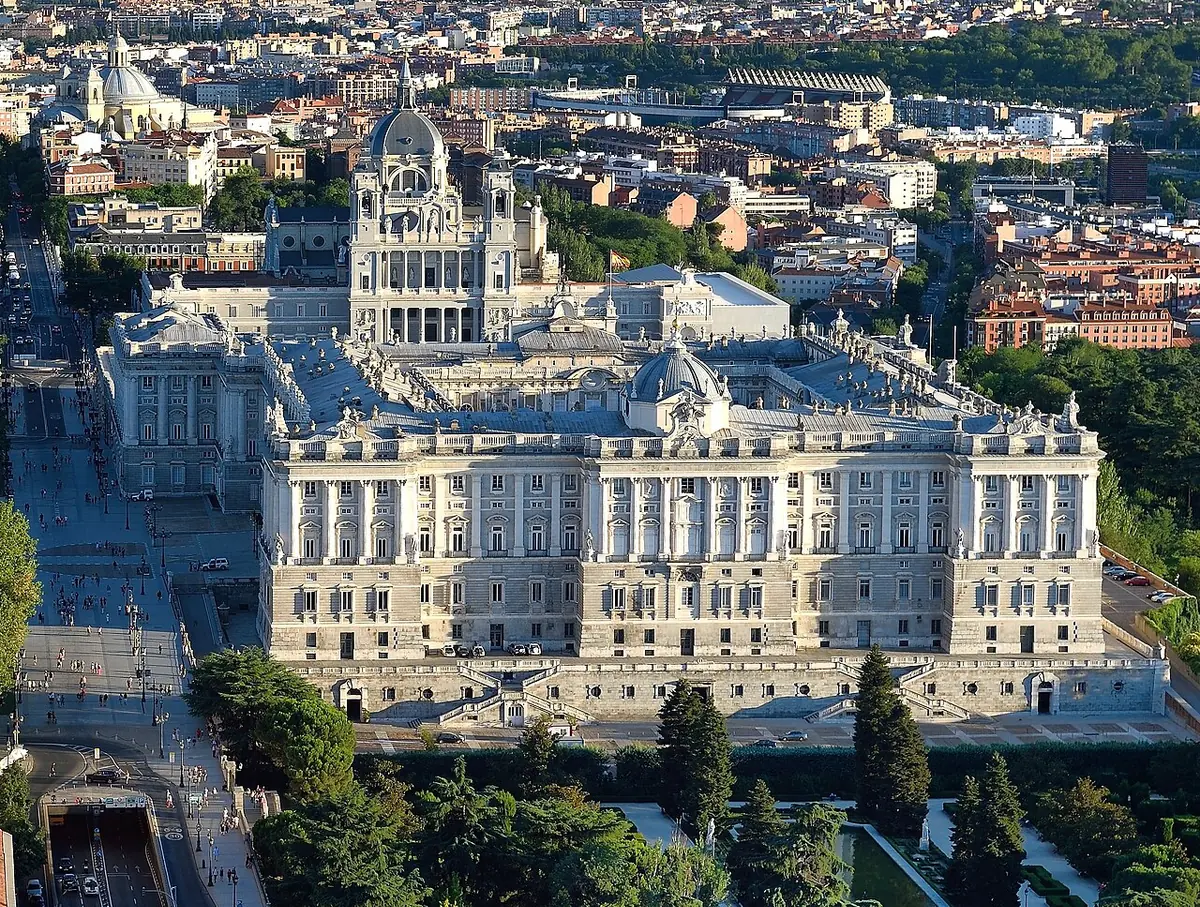
For the Royal Palace and other Patrimonio Nacional sites, book directly at tickets.patrimonionacional.es.
.jpg)
The Museo del Prado's official site is museodelprado.es, and the Museo Reina Sofía has its own official booking page too — avoid anything that isn't one of the museum's own domains.
Some taxi drivers take a longer route through busier avenues to run up the fare — Wikivoyage calls it "la vuelta al ruedo" — though the flat airport fare removes that risk on the one journey most visitors actually take by taxi.
Staying safe
Pickpocketing and bag-snatching are common in Madrid, especially at weekends, on holidays and during festivals. Canadian travel advice names specific hotspots: Madrid-Barajas airport, including the car rental desks, Atocha station, Gran Vía, Plaza Cibeles and Paseo del Prado, Puerta del Sol and Plaza Mayor and their surrounding streets, and Retiro park.
Thieves sometimes work by asking for directions or claiming you have a stain on your clothes while an accomplice goes through your bag. People posing as plainclothes police may ask for your passport, ID or wallet — real officers ask to see ID, never for your wallet, so ask to see an official badge first.
SATE, the Foreign Tourist Assistance Service, helps visitors report crimes and offers help in English. Street drinking is banned in Madrid, with fines for breaking the rule. The emergency number is 112, and operators usually speak English.
On tap water, Wikivoyage says Spanish tap water is "safe and of a drinkable quality." Madrid's water company, Canal de Isabel II, runs millions of analytical checks a year, and Madrid residents drink less bottled water than anywhere else in Spain.
Sources
- Wikivoyage — Madrid
- Wikivoyage — Madrid/Retiro-Paseo del Arte
- Wikivoyage — Spain
- Turespaña (spain.info) — Adolfo Suárez Madrid-Barajas Airport
- Metro de Madrid — Airport fares and supplement
- Metro de Madrid — Bank-card payment at turnstiles
- esMADRID — Airport Express shuttle
- esMADRID — Taxis in Madrid
- Patrimonio Nacional — Royal Palace and other sites, tickets
- Museo Reina Sofía
- Government of Canada — Spain travel advice
- FCDO — Spain travel advice, safety and security
- European Commission — Spain and the euro
- BEUC — Dynamic currency conversion
- Spanish Government — Free tap water in hospitality, Law 7/2022
- Comunidad de Madrid — Canal de Isabel II, water quality
Travel information adapted from Wikivoyage, licensed under CC BY-SA 4.0.
Walk Madrid with an audio guide in your pocket
Join the beta and these tips become a route you can actually walk.