Edinburgh
Edinburgh Travel Tips: Getting Around, Money and Tourist Traps
Last checked
Edinburgh's Old and New Towns are compact enough to see mostly on foot, but a visit runs more smoothly once you know how the airport buses and tram connect to the centre, how contactless ticketing works on Lothian Buses, and which sights need advance booking.
Arriving
Edinburgh Airport (EDI) is Scotland's main airport, with a single terminal and no railway station of its own — the nearest stations are Haymarket and Waverley in the city centre. The Airlink 100 bus, run by Lothian Buses, goes from the airport to Haymarket, Princes Street and Waverley Bridge up to every 10 minutes, 24 hours a day; you can pay by contactless card or device, the Bus & Tram app, a Ridacard, or exact cash.
The tram stop sits right outside the terminal, and the journey to the city centre, via Haymarket, Princes Street and St Andrew Square, takes about 30 minutes, continuing on to Newhaven in 54. Trams run from every 7 minutes; buy a ticket at the stop machines or tap a contactless card or device on the platform before boarding, since there are daily and weekly caps.
For a taxi, the airport's official taxi company is Capital Cars, with its rank in the East Terminus a short walk from arrivals; other operators must use the designated pick-up and drop-off zones in the car parks instead. Most visitors from Europe, the USA, Canada and Australia also need a UK Electronic Travel Authorisation — apply only through GOV.UK, which warns that other websites may charge more for the same thing.
Getting around
Walking should be your first choice in the centre — most sights sit on or near the Royal Mile in the Old Town or Princes Street in the New Town, with hills and the occasional bridge crossing over a lower street with no way down to it. Wikivoyage places Edinburgh Waverley, the main station, between the Old and New Towns, next to Princes Street Gardens and below Edinburgh Castle, with Haymarket as the second city-centre station to the west.
On Lothian Buses, TapTapCap means your contactless card or device is your ticket: tap once when you board, with no need to tap off, and your trips are capped daily and weekly. The same contactless tap-on works on Edinburgh Trams, Airlink and East Coast Buses, though one card or device covers one person only. Single bus tickets are flat-fare with no free transfers, and drivers give no change. Uber and Bolt both operate in Edinburgh around the clock; driving in the centre, especially the Old Town, is best avoided altogether.
Money and tipping
The currency is the pound sterling, and three banks are authorised to issue their own banknotes in Scotland: Bank of Scotland, Clydesdale Bank and the Royal Bank of Scotland. In Scotland, only Royal Mint coins are legal tender, not banknotes, though shops can and do choose to accept notes anyway. If you're heading elsewhere in the UK, Wikivoyage suggests swapping Scottish notes for Bank of England ones before you go, since shops in England can be wary of them and they're hard to change abroad; carry a contactless card as a backup, since some merchants are card-only.
As with any card terminal or ATM abroad, decline an offer to be charged in your home currency and choose pounds instead — the EU consumer body BEUC notes that the merchant's own conversion typically costs more. About 10-15% for good table service is customary but never mandatory; if an "optional" service charge is already on the bill, there's no need to tip on top, and tipping in pubs isn't customary at all. By law, tips and optional service charges must go to staff.
Tourist traps
Edinburgh Castle's official tickets are sold on edinburghcastle.scot, through Historic Environment Scotland's own ticket shop; the castle warns that tickets often sell out well in advance, especially in summer, that none are available at the gate once sold out online, and that visitors should be aware of lookalike sites selling fake tickets.


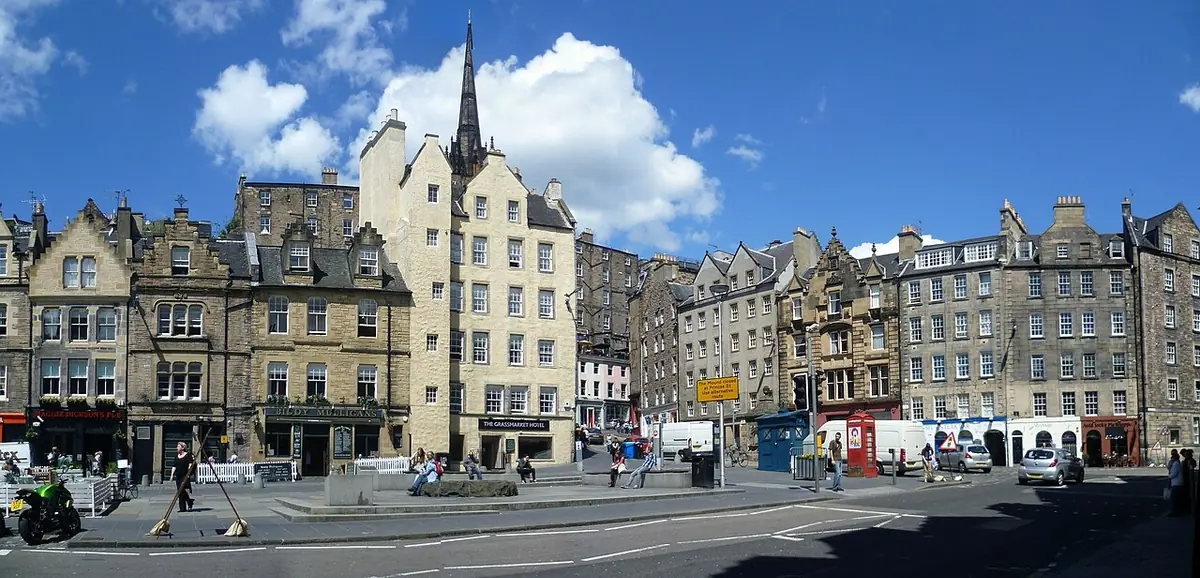
Wikivoyage calls the Royal Mile near the castle mostly an overpriced tourist trap for shopping, suggesting Cockburn Street, Victoria Street and the Grassmarket instead for independent shops. It also notes that the airport's currency-exchange desks give notably weaker rates than the official rate, calling that poor but typical for a UK airport — a card or an ATM is the better option. The hop-on hop-off sightseeing buses aren't covered by any day ticket.
.jpg)
Staying safe
Edinburgh is generally a safe destination, per Wikivoyage, though it's worth watching your valuables in crowded places where pickpockets operate, and keeping clear of drunk crowds after football matches and at pub closing time. Call 999 for an emergency — a crime in progress or a life in danger — and 101, free and available around the clock, for non-emergencies and advice.
Scotland's tap water ranks among the best in the world, according to the drinking-water regulator: in 2025, 99.88% of nearly 138,000 regulatory tests on samples from consumers' taps met the required standard. Beyond the castle's own warning about fake ticket sites, no other official Edinburgh-specific scam warning was found, so take the usual city precautions rather than anything more.
A viewpoint worth knowing about on the way between the Old Town and Calton Hill or Arthur's Seat: both offer views back across the centre, and both sit on open parkland rather than ticketed grounds.
Sources
- Wikivoyage — Edinburgh
- Wikivoyage — United Kingdom
- Lothian Buses — Airport buses
- Lothian Buses — TapTapCap contactless
- Edinburgh Airport — Trams
- Edinburgh Airport — Taxis
- Edinburgh Trams
- Edinburgh Castle — Tickets
- GOV.UK — Electronic Travel Authorisation (ETA)
- Bank of England — Scottish and Northern Ireland banknotes
- Bank of England — What is legal tender
- BEUC — Paying abroad may be costing you more than it should
- Scottish Government / DWQR — Drinking water in Scotland 2025
Travel information adapted from Wikivoyage, licensed under CC BY-SA 4.0.
Walk Edinburgh with an audio guide in your pocket
Join the beta and these tips become a route you can actually walk.