Piazza Navona, Rome
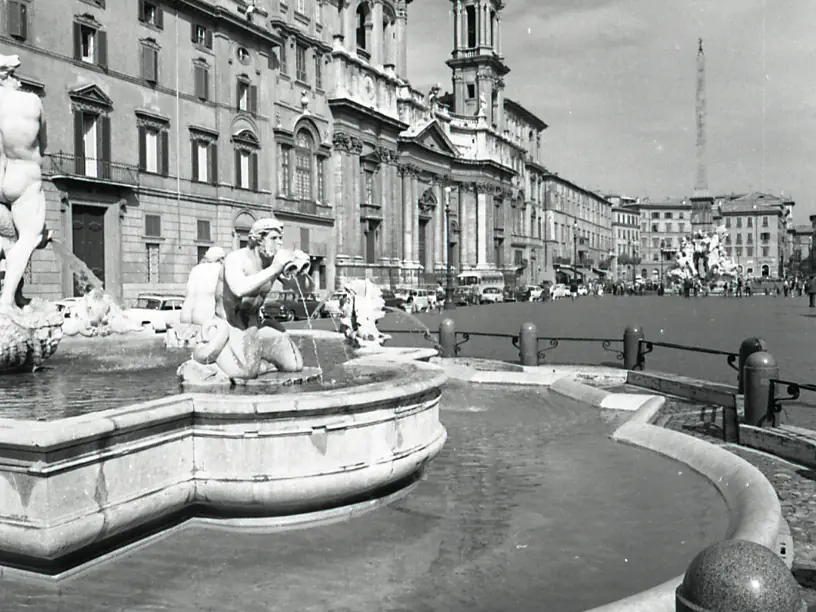
Piazza Navona stretches around you as a long oval public square, preserving the footprint of an ancient sports arena. In the early imperial era, Emperor Domitian built a stadium here in eighty AD; Romans gathered there for athletic contests, and its association with games gave the place its earlier name, Circus Agonalis. The arena later decayed and supplied stone for other construction, yet its unusual outline endured.
The square became civic space near the close of the fifteenth century, when Rome’s market arrived from the Campidoglio. Its great theatrical transformation came under Pope Innocent the Tenth, whose Pamphili family made this piazza a Baroque display ground: Baroque means architecture designed for drama, movement, and spectacle. The family palace faces the square, while Bernini’s Fountain of the Four Rivers, completed in sixteen fifty-one, occupies the central space before Sant’Agnese in Agone.
An obelisk crowns the fountain; it was brought here in fragments from the Circus of Maxentius. The fountains punctuate the oval. At the southern end, the Fountain of the Moor combines Giacomo della Porta’s basin and Tritons with Bernini’s later figure wrestling a dolphin.
Neptune’s fountain marks the northern end. This was once a place of summer play as well: during August weekends over more than two centuries, water flooded the piazza for Pamphili celebrations.
Good for
History, Architecture, Culture, Famous landmarks


_-_BEIC_6329173.jpg)
More places in Rome
iTanne2 (CC BY-SA 4.0) Castel Sant’Angelo
history
iDguendel (CC BY 3.0) Fontana di Piazza Santa Maria in Trastevere
history
iThis Photo was taken by Wolfgang Moroder. Feel free to use my photos, but please mention me as the author and send me a message. This image is not in the public domain. Please respect the copyright protection. It may only be used according to the rules mentioned here. This specifically excludes use in social media, if applicable terms of the licenses listed here not appropriate. Please do not upload an updated image here without consultation with the Author. The author would like to make corrections only at his own source. This ensures that the changes are preserved.Please if you think that any changes should be required, please inform the author.Otherwise you can upload a new image with a new name. Please use one of the templates derivative or extract. (CC BY-SA 3.0) Obelisco del Quirinale
history
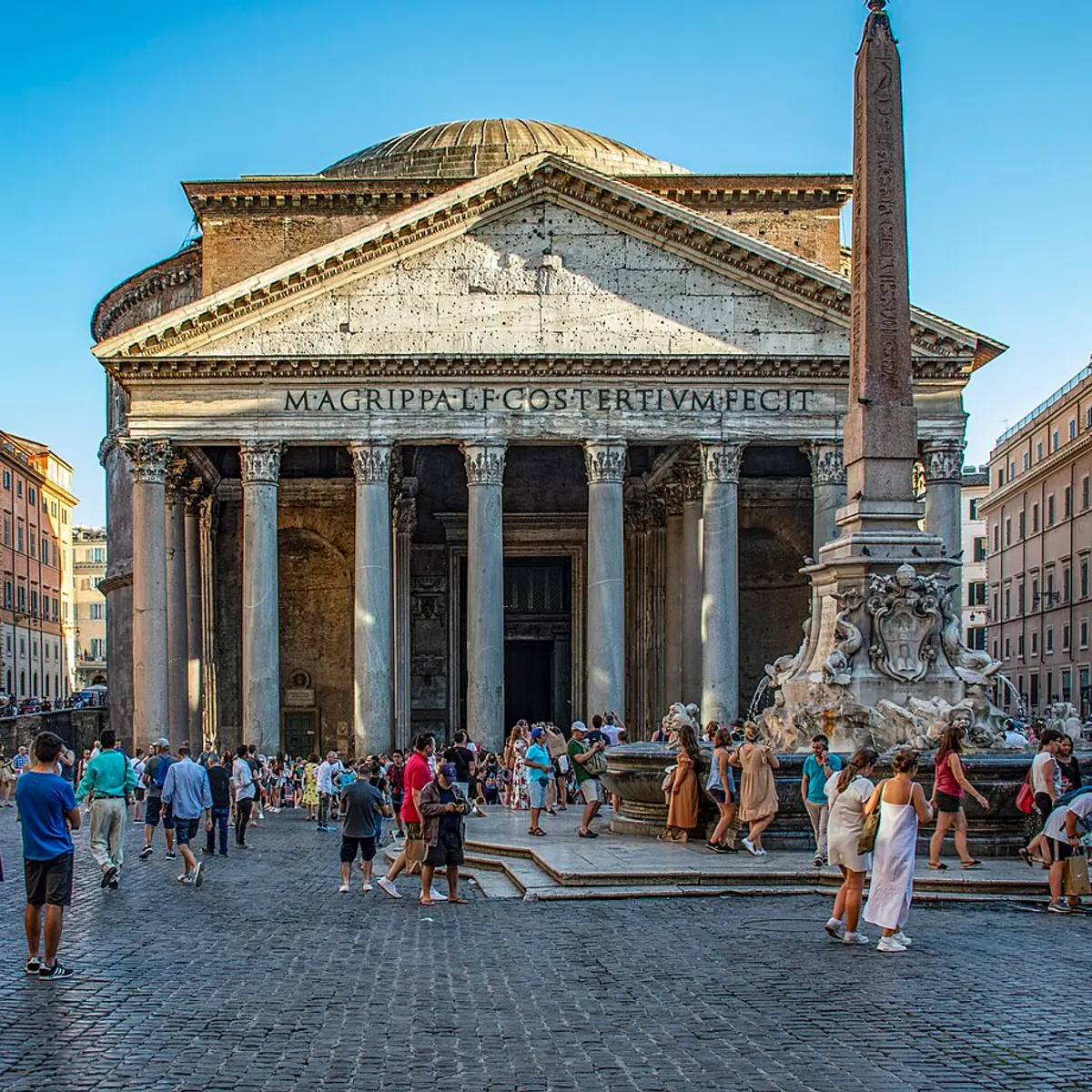
iASaber91 (CC BY-SA 4.0) Piazza della Rotonda
history