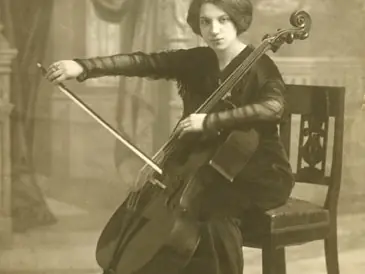
Guilhermina Suggia, Porto
Guilhermina Suggia was already leading Porto’s Orpheon orchestra cello section when she was only twelve. Born in Porto in 1885, she learned musical theory and cello from her father, then left for private study in Leipzig with Julius Klengel under Queen Maria Amélia’s patronage. Within a year, she appeared as soloist with the Gewandhaus Orchestra, conducted by Arthur Nikisch.
From 1906 until 1912, Paris was her home and workplace alongside Pablo Casals. Their partnership helped launch an international career, and Britain later became the country where audiences especially celebrated her. She settled there for many years, taught younger cellists, and returned after the Second World War to perform Elgar’s Cello Concerto for charitable causes.
Her story has a lasting sound beyond her own performances. The Montagnana cello she played is kept at Porto’s Conservatório de Música, while her Stradivarius was sold under her will to create a scholarship for emerging cellists. Casa da Música’s main auditorium bears her name: Sala Suggia. She died in Porto in 1950, aged sixty-five.