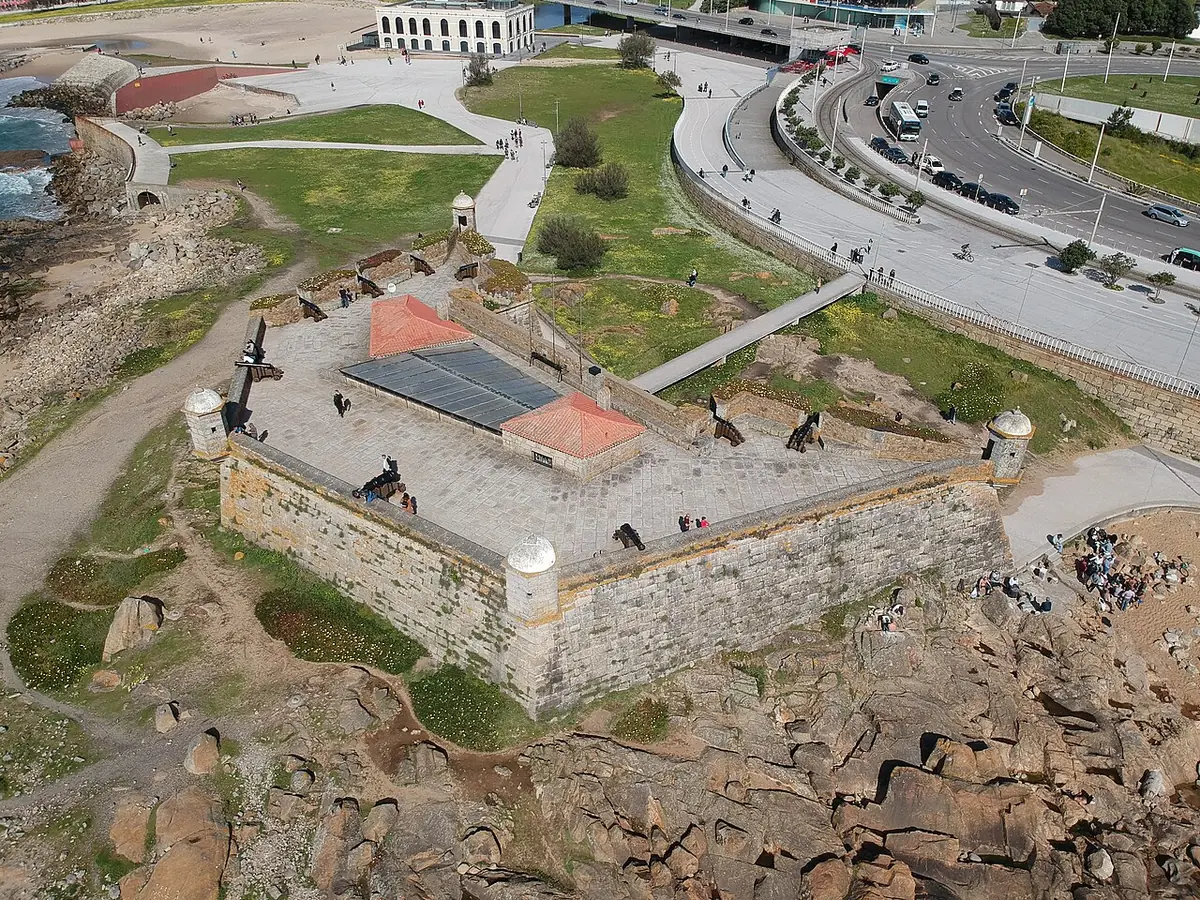
Forte de São Francisco Xavier, Porto
Castelo do Queijo is the familiar name for this coastal fort, formally called the Fort of São Francisco Xavier. Its walls rise above a rocky sea edge, and the unusual nickname comes from local tradition: the granite outcrop was thought to resemble a cheese. The present stronghold took shape during Portugal’s Restoration Wars.
King John IV commissioned a new fort in 1643; military engineer Miguel de l’Ècole designed it, and Fernando César de Carvalhais Negreiros directed the work. Its foundation is generally placed in 1661 or 1662, when a Galician fleet threatened this stretch of shore. Look at the entrance: a wooden drawbridge leads through an arched gateway, marked above by Portugal’s arms beneath a crown and a stone sphere.
The fort’s plan is angular, with stout granite walls, corner watchtowers and a dry moat that can be reached by the sea at high tide. During the siege of Porto from 1832 to 1833, Miguelist troops held the fort, while Liberal forces attacked it with shore batteries and naval fire. The damaged structure later served military and public purposes, and today its restored spaces contain a historical military museum and host cultural events.
.jpg)