Chafariz da Colher, Porto
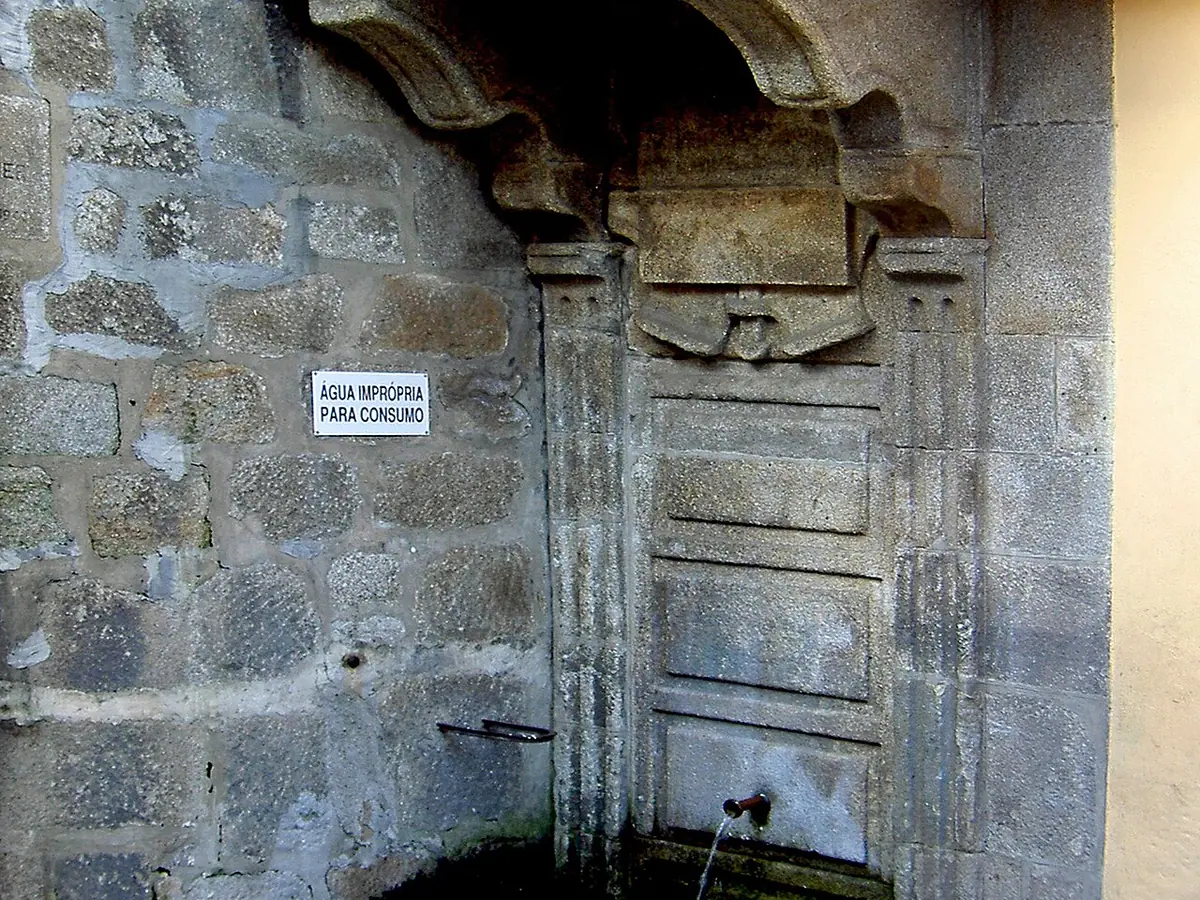
Hidden below Rua Nova da Alfândega, Chafariz da Colher is an old fountain in Miragaia. Its story reaches back to a 1491 document that bound Miragaia’s households to a payment connected with the fountain. Its name recalls a tax, not an ornament: a colher, or spoon, was the measure charged on goods arriving in Porto.
Merchants selling river-borne produce near Miragaia’s shipyards paid one spoon of tribute for each alqueire. The fountain’s water was counted among Porto’s finest, and the municipal council had a granite text installed declaring the water belonged to the city. The fountain is built into a house’s ground floor beneath a veranda.
Ribbed granite pilasters frame the slabs around its iron spout; another outlet appears at pavement level. Beneath the veranda, a devotional inscription carries the date 1629, when the fountain was rebuilt. Around 1871, construction of Rua Nova da Alfândega left it below the new street level, tucked away among the buildings. Chafariz da Colher has held Property of Public Interest status since 1938.