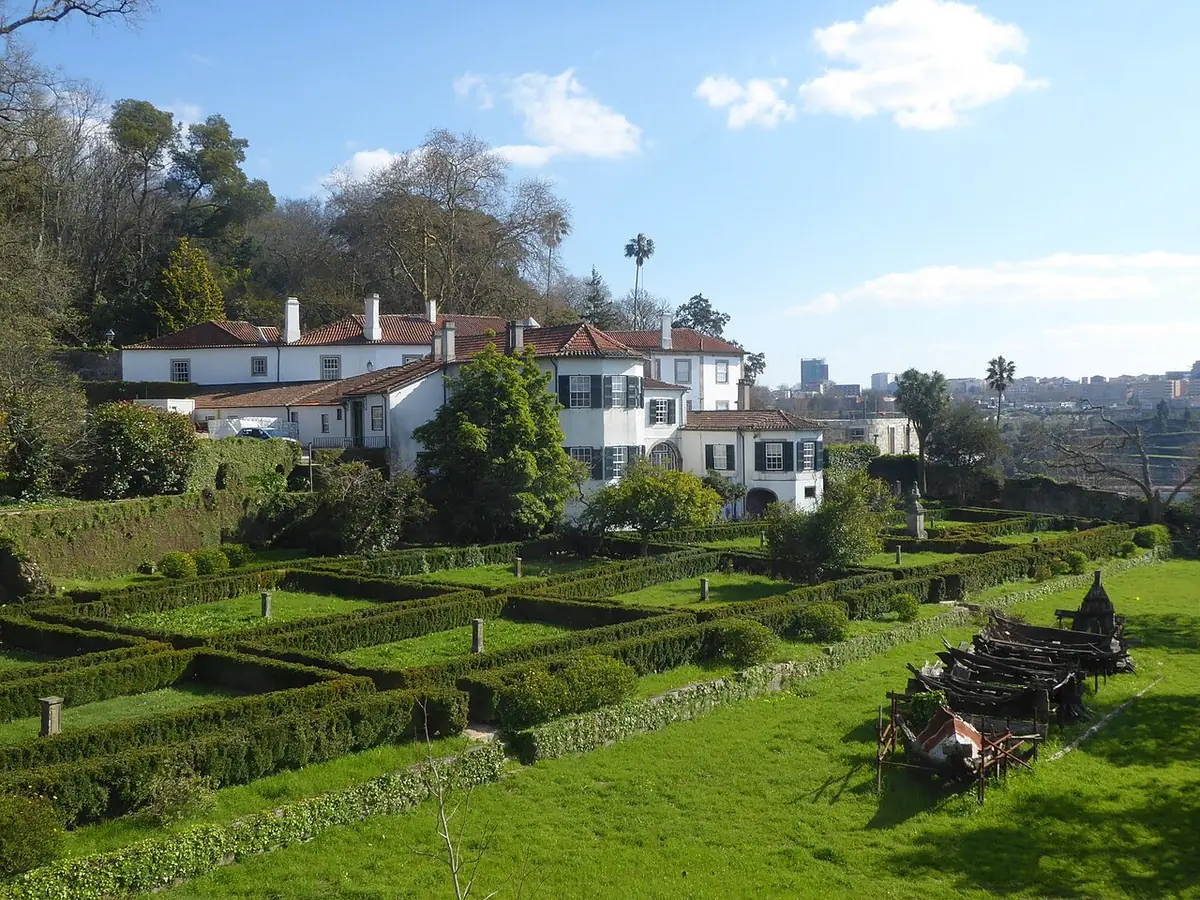
Casa Tait, Porto
Casa Tait is a former residence from the eighteenth century, enclosed by high walls in Massarelos. Its garden is the real surprise: a tulip tree more than 250 years old stands among collections of camellias and roses, and this tree has protected public-interest status. The property belonged to William Tait, a wealthy Port wine merchant and naturalist who acquired it in 1900 and introduced plant species to Portugal.
He also studied Portuguese birdlife and published work on it. Muriel Tait later inherited the house, and after her death in 1978 the estate passed to Porto’s municipal council with the intention that it become a public green space. Today, Casa Tait houses Porto’s museum programming department. From the garden, the house opens toward broad views of the Douro and its surroundings.

.jpg)