Prague
Prague Travel Tips: Getting Around, Money and Tourist Traps
Last checked
Prague's old centre is compact and almost entirely walkable, which leaves the practical side of a visit mostly about getting the ticket right — stamped once, not twice — and knowing which exchange counters near Old Town Square to avoid.
Arriving
Václav Havel Airport (PRG) sits about 20 km north-west of the centre, with every bus stop directly in front of the Terminal 1 and Terminal 2 arrival halls. Trolleybus 59 reaches Nádraží Veleslavín, on metro line A, in about 15 minutes; bus 100 reaches Zličín, on metro line B; and the Airport Express (AE) bus runs directly to the main station, Praha hlavní nádraží. Public-transport tickets must be bought before you board — from the vending machines (which take contactless cards), the DPP counters in the arrival halls, or the PID Lítačka app. On trolleybus 59 and the AE bus, you can also simply tap a contactless bank card as you board.
For a taxi, the airport's own contracted service is Uber Airport, picked up directly in front of the arrival halls through the Uber app, a self-service kiosk, or a staffed counter; the driver gives you a PIN to confirm the ride. The airport's own warning is blunt: don't accept ride offers from people standing outside the terminals or wearing "Official Taxi" labels, and if a driver asks for more than the displayed price or won't give a receipt, call the Municipal Police rather than pay.
Praha hlavní nádraží, the main station, connects to metro line C. Wikivoyage warns about both the taxi rank just outside it, where drivers quote inflated "fixed prices," and the exchange kiosks inside.
Getting around
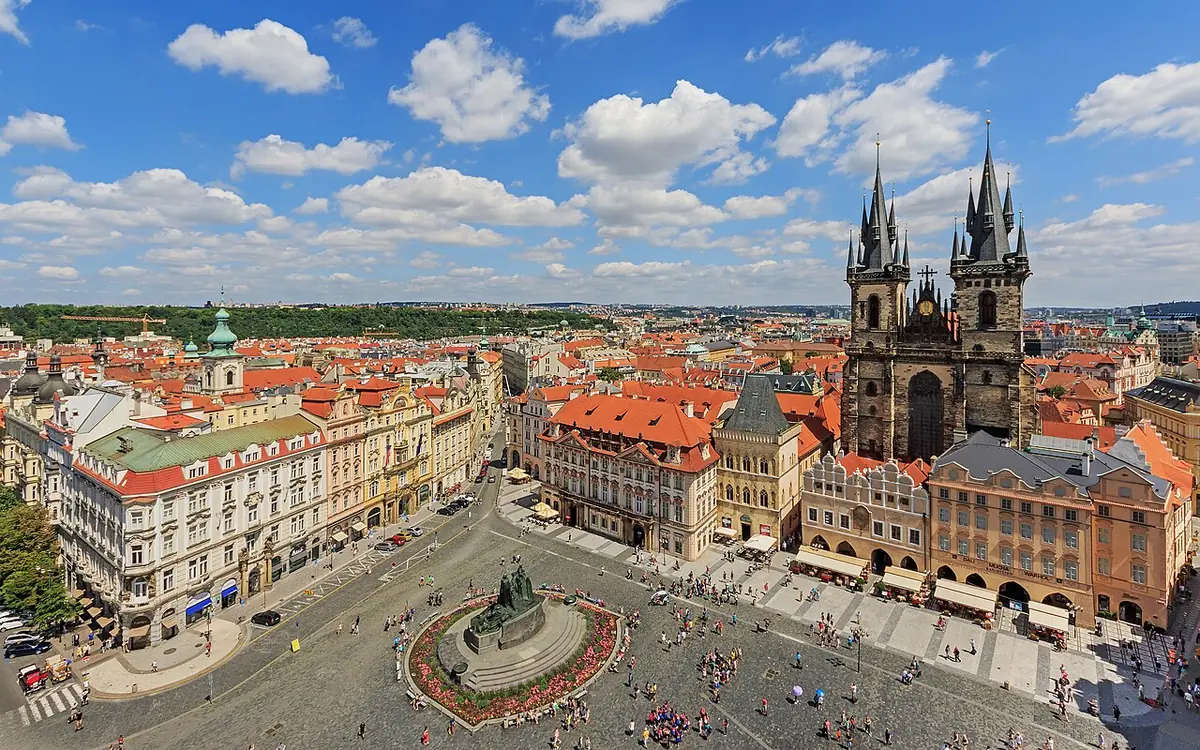
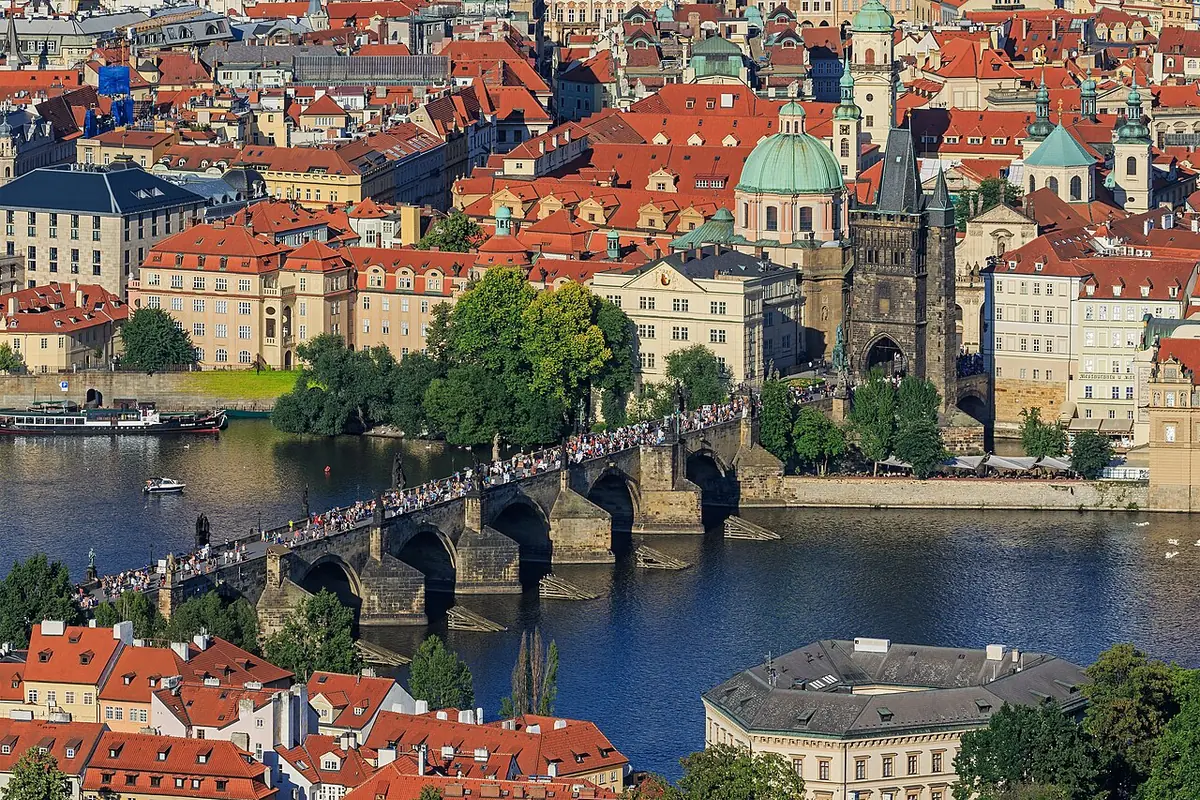
The classic walk runs Wenceslas Square to the Old Town Square, on to Charles Bridge and up into the Castle District — nearly all of it on cobbles, so comfortable shoes help, and trams have the right of way even over pedestrians at marked crossings.


One PID ticket system covers the metro, trams, buses, the funicular and the S-trains. Stamp a paper ticket at a validator at the station entrance (not on board the train) as soon as you start your journey; Wikivoyage adds that a ticket stamped twice becomes invalid, so stamp it only the once, on the first vehicle. A ticket bought through the PID Lítačka app or tapped by contactless card on board needs no further stamping — just pay immediately after boarding through a door marked with the contactless symbol. Real inspectors carry a visible badge — Wikivoyage reports fake ones working trams up toward the castle and some metro stations, so ask to see ID if you're in doubt.
Money and tipping
Czechia isn't in the euro area, so everything is priced in koruna. If a card terminal or ATM offers to charge you in your home currency instead, choose koruna — you'll almost always come out ahead. Cards are widely accepted, and you may barely need cash.
The Czech National Bank's own rules for exchange offices are worth knowing before you change money: read the full rate list, since you get koruna at the buy rate; a commission on top of that rate is against the rules; always ask for and keep a receipt; and you can cancel a transaction within three hours at the same office. Never change money on the street — the Foreign Office warns the cash offered there is often counterfeit, and Wikivoyage describes street changers handing over expired foreign notes.
Around Old Town Square, watch for exchange counters advertising a prominent "we sell" rate, a "0% commission" sign, or a good rate that only applies above a high minimum spend printed in small type — and avoid the blue-and-yellow Euronet ATMs, which charge fees and push a currency-conversion offer you should decline. Tipping is informal: rounding up is common, and about 10% is usual in tourist restaurants without being added to the bill automatically.
Tourist traps
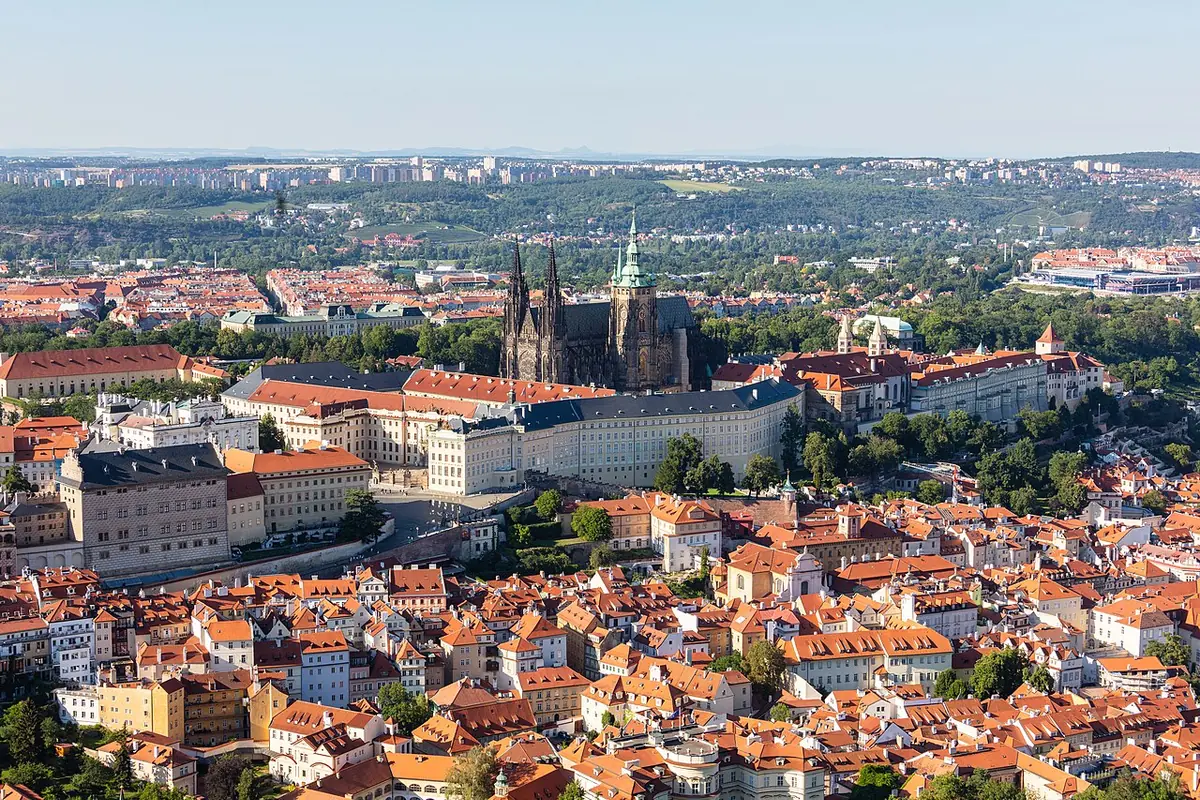
Tickets to the interiors of Prague Castle and St Vitus Cathedral are sold at the castle's own information centres in the second and third courtyards — the grounds themselves are open to walk through without a ticket.

Around Old Town Square, Wikivoyage's warning is that restaurants with big outdoor terraces are known for charging far more than the food is worth, and a restaurant billing itself as "traditional" can be a flag worth a second look at the menu first. Wikivoyage also points out that trdelník, sold everywhere nearby, isn't actually a traditional Czech dish, and calls the souvenir stretch between Charles Bridge and the square "particularly bad" — the fur hats and matryoshka dolls on sale there are Russian, not Czech. Wikivoyage's advice is to book river cruises online rather than through the touts working Charles Bridge, and near the square, to use a taxi app or call a dispatch company instead of hailing one from a stand, where per-kilometre rates can run very high.
Staying safe
Petty theft is the main concern — pickpockets work Charles Bridge, Wenceslas Square, Old Town Square, the areas just outside metro stations, and crowded trams up to the castle, often in teams; the Foreign Office's own general warning points to exactly these busy tourist routes. The Foreign Office also warns about people posing as plain-clothes police who ask to see your currency and passport; real Czech police have no right to do that, so ask for ID.
Don't accept drinks from strangers in bars and clubs, and keep an eye on your own. Carrying your passport is a legal requirement. For anything urgent, dial 112; Wikivoyage notes the operators there speak English. Prague's water utility, PVK, tests tap water against Czech and EU standards more than 15,000 times a year and calls the supply safe throughout the city.
Sources
- Wikivoyage — Prague
- Wikivoyage — Czech Republic
- Prague Airport — Public transport, buses
- Prague Airport — Taxi
- Prague Airport — Unofficial taxi services
- Prague City Tourism — Getting to Prague
- DPP — Cashless payment of fare
- Czech National Bank — Ten golden rules of currency exchange
- St Vitus Cathedral — For visitors
- European Commission — Czechia and the euro
- BEUC — An end in sight to currency conversion scams
- FCDO — Czech Republic travel advice, safety and security
- FCDO — Czech Republic travel advice, health
- PVK — Drinking water
Travel information adapted from Wikivoyage, licensed under CC BY-SA 4.0.
Walk Prague with an audio guide in your pocket
Join the beta and these tips become a route you can actually walk.