London
London Travel Tips: Getting Around, Money and Tourist Traps
Last checked
London's transport runs almost entirely on contactless pay-as-you-go, which makes a visit mostly about which card to tap and which long-running street scams to recognise on sight.
Arriving
London is served by six airports — Heathrow, Gatwick, Stansted, Luton, City and Southend — but Heathrow and Gatwick handle most visitor traffic. From Heathrow, the Heathrow Express runs non-stop to Paddington in 15 minutes; the Elizabeth line reaches zone 1 in under 45 minutes, and the Piccadilly line in under an hour, both taking contactless and Oyster.
From Gatwick, the Gatwick Express runs non-stop to Victoria in 30 minutes, twice an hour; Thameslink reaches London Bridge, Blackfriars, City Thameslink, Farringdon and St Pancras, and Southern reaches Victoria and Clapham Junction — most services take 30–45 minutes, and you tap in and out at the ticket barrier with contactless or Oyster.
London's main rail terminals are Paddington, Euston, St Pancras International (for Eurostar), King's Cross, Liverpool Street, Waterloo and Victoria; long-distance coaches use Victoria Coach Station.
Black cabs can be hailed on the street whenever the yellow light is showing, or picked up at a rank. Minicabs are different: TfL says they can only be booked in advance, through a licensed private hire operator, and any unbooked private hire car is uninsured, unsafe and illegal — never get into one that approaches you.
Most visitors from Europe, the USA, Canada and Australia need an Electronic Travel Authorisation (ETA) before they travel, one per person, children included. Apply only at gov.uk/eta — the government's own warning is specific: "Other websites may charge more to apply. Avoid websites that imitate government services."
Getting around
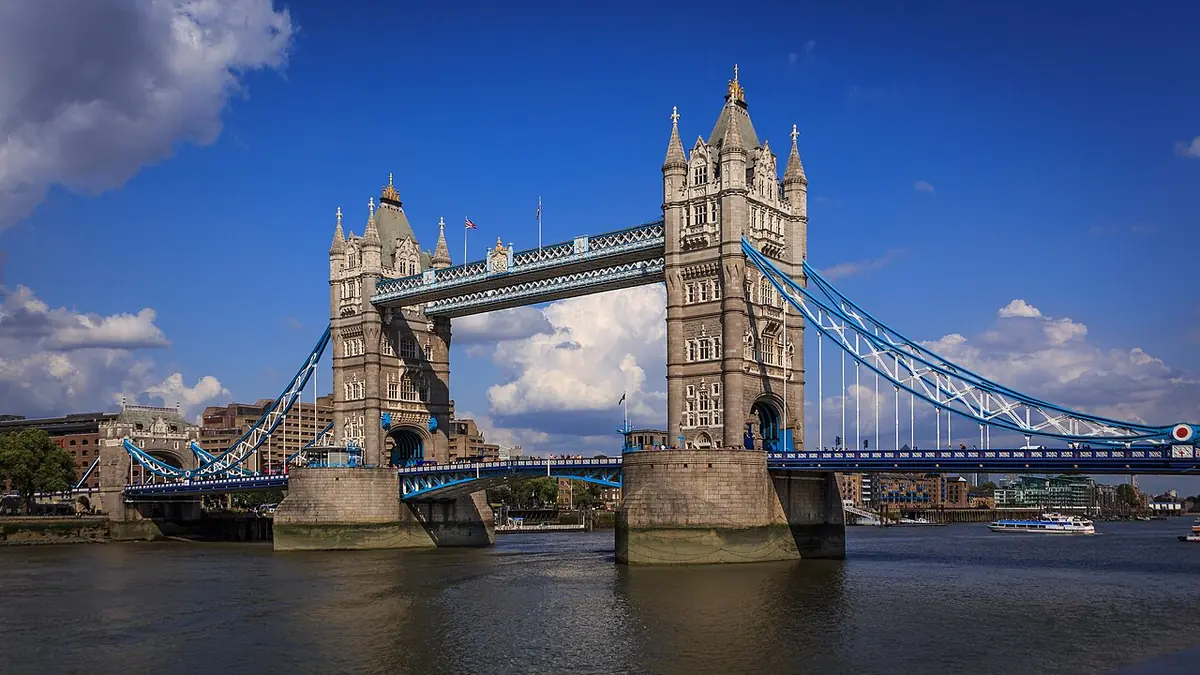
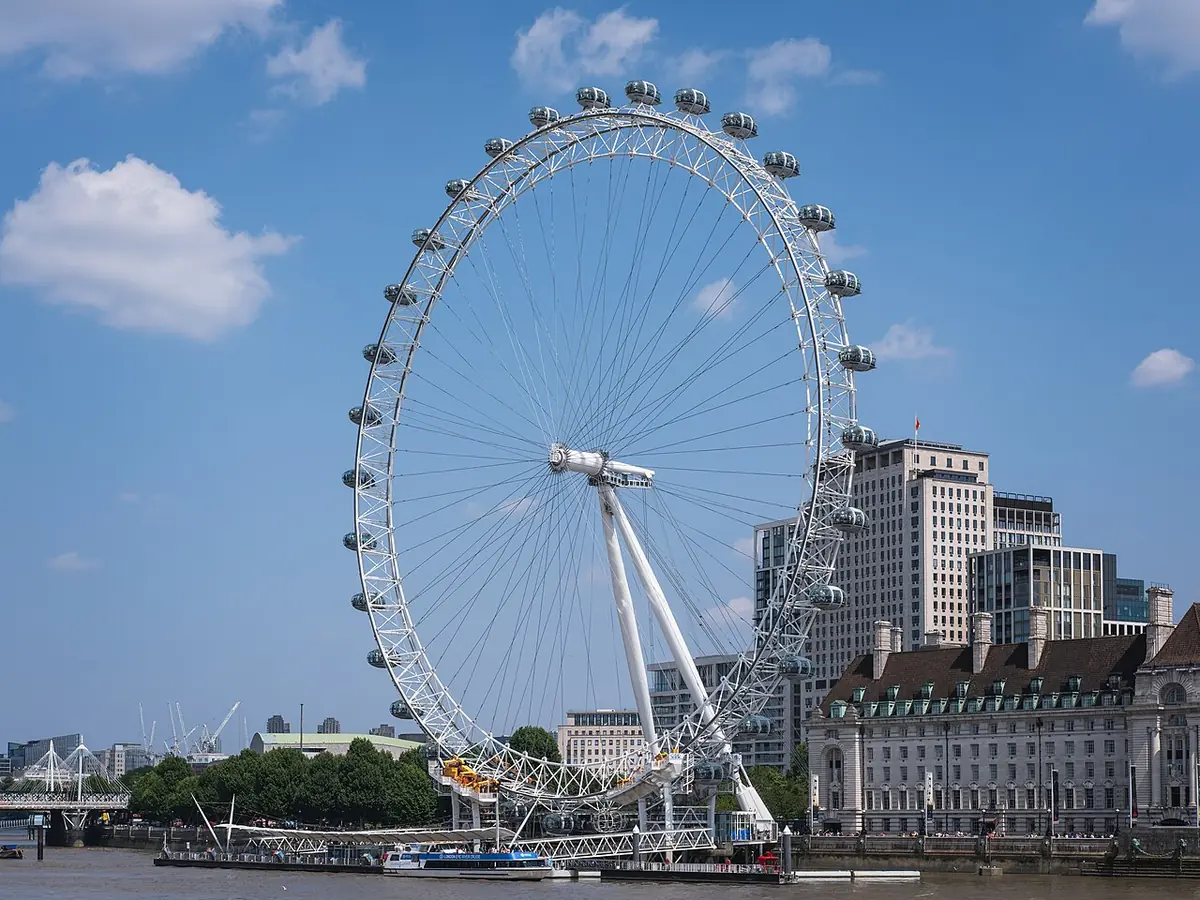
Central London is compact, and walking is often the quickest way between two points — a classic stretch runs from the Palace of Westminster and Westminster Abbey, along the river past the London Eye to Tower Bridge.


Most contactless cards issued outside the UK work for pay-as-you-go travel, and Apple Pay, Google Pay and Samsung Pay are all accepted. Fares are capped automatically per day and per week (Monday to Sunday) in zones 1–9 — just keep your cards apart to avoid "card clash," where the reader charges the wrong one.
On the Tube, DLR, Overground, Elizabeth line and National Rail, touch in and out on every journey, even when the gates are standing open, and always use the same card, phone or Oyster. On buses and trams you touch in only. Leaving a journey incomplete means you're charged a maximum fare, and TfL warns you "may incur a penalty fare or face prosecution." Contactless costs the same as Oyster, so for most visitors a bank card is simpler than buying a separate one.
Uber operates across London 24/7, and Bolt also runs here. One newer caution: pedicabs in the West End have been unregulated until now — the Mayor's office has cited "rip-off fares" — and TfL licensing for drivers and operators, with regulated maximum fares, becomes mandatory on 30 October 2026, with vehicle licensing following from February 2027.
Money and tipping
The pound sterling is the currency. Bank of England notes come in £5, £10, £20 and £50, all polymer, and notes showing both King Charles III and the late Queen Elizabeth II circulate side by side. Shops are legally free to refuse any payment method, including banknotes, so some no longer take cash at all — a contactless card or phone wallet is the safer default, and £50 notes in particular are often refused. If a terminal or ATM offers to charge you in your home currency, decline: converting through the merchant's own bank typically costs more than letting your card issuer do it.
For changing cash, bureaux de change in London can hide fees of up to 50% in their exchange rate — avoid the ones around Leicester Square and Tottenham Court Road, and use an ATM instead.
Many table-service restaurants already add an optional service charge; if one's on the bill, you don't need to tip again on top of it. Otherwise, about 10–15% is customary for good service, though never mandatory, and by law any tip or service charge must be passed on to staff. Tipping in pubs isn't customary, and in taxis people simply round up.
Tourist traps
Around Westminster Bridge, watch for the "find the ball" cup game: accomplices pretend to win, there's never a ball under any cup, and pickpockets work the crowd that stops to watch.
Soho and the wider West End, including the streets around Piccadilly Circus, see two long-running patterns worth knowing: "clip joint" bars where a stranger — often a woman who befriends a lone tourist — steers you to a bar that then runs up a bill in the hundreds, and, outside nightlife venues at closing time, illegal minicabs touting for business. Book through an app or a licensed operator instead.
A few smaller scams round out the list: someone "helping" at a station ticket machine who cancels your transaction and pockets the cash, and lucky-heather sellers or fake charity collectors — never hand over cash or bank details on the street.
Staying safe
London is generally safe for visitors, and ordinary precautions apply. The signature theft here is a phone snatched by someone on a moped, bike or e-scooter, often at a junction or while you're distracted — turning on your phone's anti-theft features is worth doing before you land. Hotspots worth extra awareness include restaurant tables (where a phone left out gets taken), the West End and Soho on weekend nights, and the crowds on Westminster Bridge.
Emergency numbers are 999 or 112, covering police, ambulance, fire and the coastguard on the Thames; for non-emergency medical advice, call NHS 111.
On tap water, the Drinking Water Inspectorate reports that public water supplies in England met standards in 99.97% of regulatory samples in 2025, and its Chief Inspector ranks tap water in England and Wales among the highest quality in the world.
Sources
- Wikivoyage — London
- Wikivoyage — United Kingdom
- Heathrow Airport — Getting to central London
- Gatwick Airport — Train
- Transport for London — Contactless and mobile pay as you go
- Transport for London — Touching in and out
- Transport for London — Book a taxi or minicab
- TfL Newsroom — Pedicab regulation announced
- GOV.UK — Apply for an Electronic Travel Authorisation (ETA)
- Bank of England — Banknotes
- Bank of England — What is legal tender?
- BEUC — Dynamic currency conversion
- Drinking Water Inspectorate — 2025 drinking water quality
Travel information adapted from Wikivoyage, licensed under CC BY-SA 4.0.
Walk London with an audio guide in your pocket
Join the beta and these tips become a route you can actually walk.