Dublin
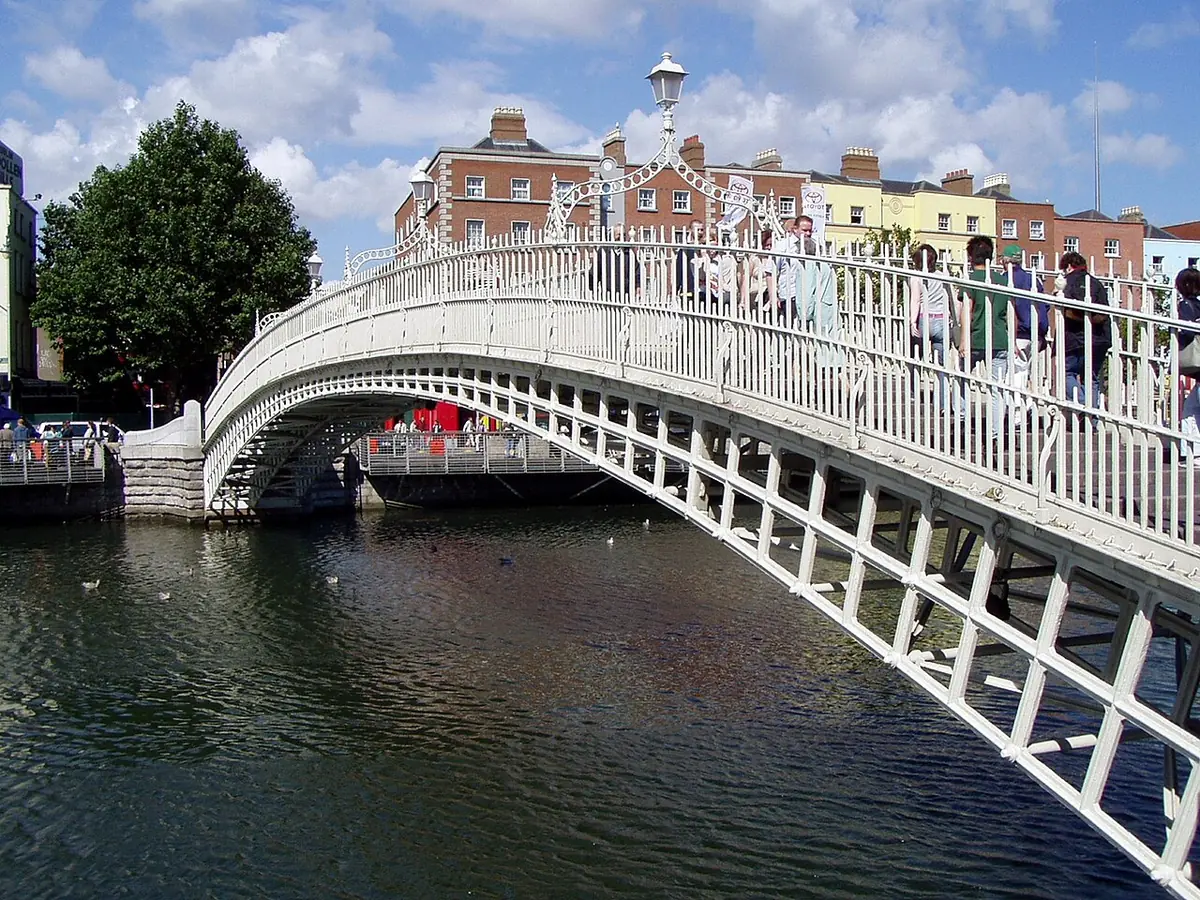
Dublin — Why Is the Ha'penny Bridge Called That?
The short answer is money. When the cast-iron footbridge over the Liffey opened in May 1816, it cost a halfpenny to cross, and Dubliners named it after the coin. The toll has been gone for more than a century, the bridge has had two official names, and neither of them caught on. The longer answer starts with a ferryman and his run-down ferries.
A ferryman's choice
Before there was a bridge here, there were boats. A man named William Walsh operated seven ferries across the Liffey, and they were in bad condition. Walsh was told he had two options: repair the ferries, or build a bridge in their place. He chose the bridge.
The deal that came with it is where the name comes from. Walsh was granted the right to collect a toll of a ha'penny, a halfpenny, from every person who crossed, and to keep collecting it for 100 years. While the toll was in force there were turnstiles at both ends, so you paid your coin to step onto the deck. For a while the charge went up to a penny-ha'penny, a penny and a half. The toll was finally dropped in 1919.
So the name is not a joke or a nickname. It is a plain description of what the bridge cost to use.
Iron from Shropshire
The bridge itself was not made in Dublin. Its manufacture was commissioned by the Lord Mayor of the day, John Claudius Beresford, from the Coalbrookdale Company in England, and the iron was cast in Shropshire. It was made in 18 sections, shipped across the Irish Sea, and put together over the river under the supervision of John Windsor.
Stand on the quay and look at the repeated ribs along the side of the arch, and remember that the whole thing arrived by sea in pieces. It was built as a crossing for people on foot, and it is still a pedestrian bridge today.
It has been repaired rather than replaced. In 2001 the bridge was closed for repairs, and the renovation was carried out by Harland & Wolff. That same year, the number of pedestrians crossing it each day was counted at 27,000. When it reopened in December 2001 it had been painted back to its original white.
Three names, one that stuck
The ironwork was not originally meant to carry the name of a coin. It opened as the Wellington Bridge, after the Duke of Wellington, who was born in Dublin. After the Irish War of Independence its name was changed, in 1922, to the Liffey Bridge, and that is still its official name.
Almost nobody uses it. The official name changed with the politics of the country; the spoken name never did. Whatever the bridge was called on paper, people knew it by what it cost them to cross. When someone in Dublin says "the Ha'penny," they are still quoting the fare.
That rename in 1922 is worth holding on to as you walk this part of the river, because it was not the only change the early 1920s brought to the Liffey's banks. Two of the great buildings James Gandon worked on along the quays, one upstream of the bridge and one downstream, were both set on fire within those same two years.
Temple Bar: the south bank
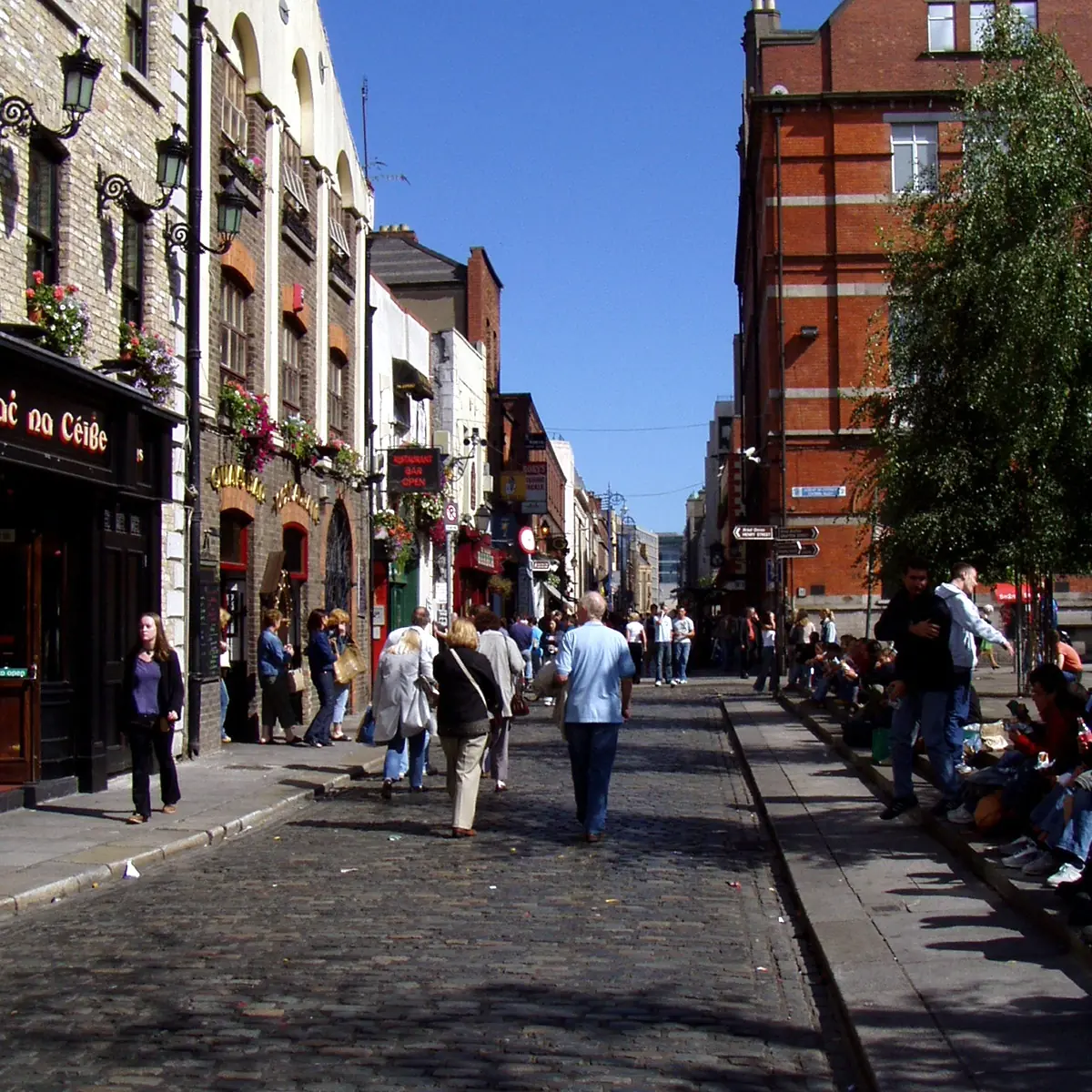
Step off the bridge on the south side and you are in Temple Bar, the area bounded by the Liffey to the north and Dame Street to the south. It is known now for its nightlife and its cultural institutions. During the seventeenth century, land along this marshy edge of the river was reclaimed and built on, so much of the district stands where the shoreline used to be.
The district's name is less certain than the bridge's. It appears on a Dublin map from 1673. The usual explanations are that it comes from the Temple family, whose house and gardens stood here, or that it was borrowed from London's own Temple Bar. The London theory has a good piece of evidence behind it: Essex Street and Fleet Street sit in similar positions relative to each other in both cities.
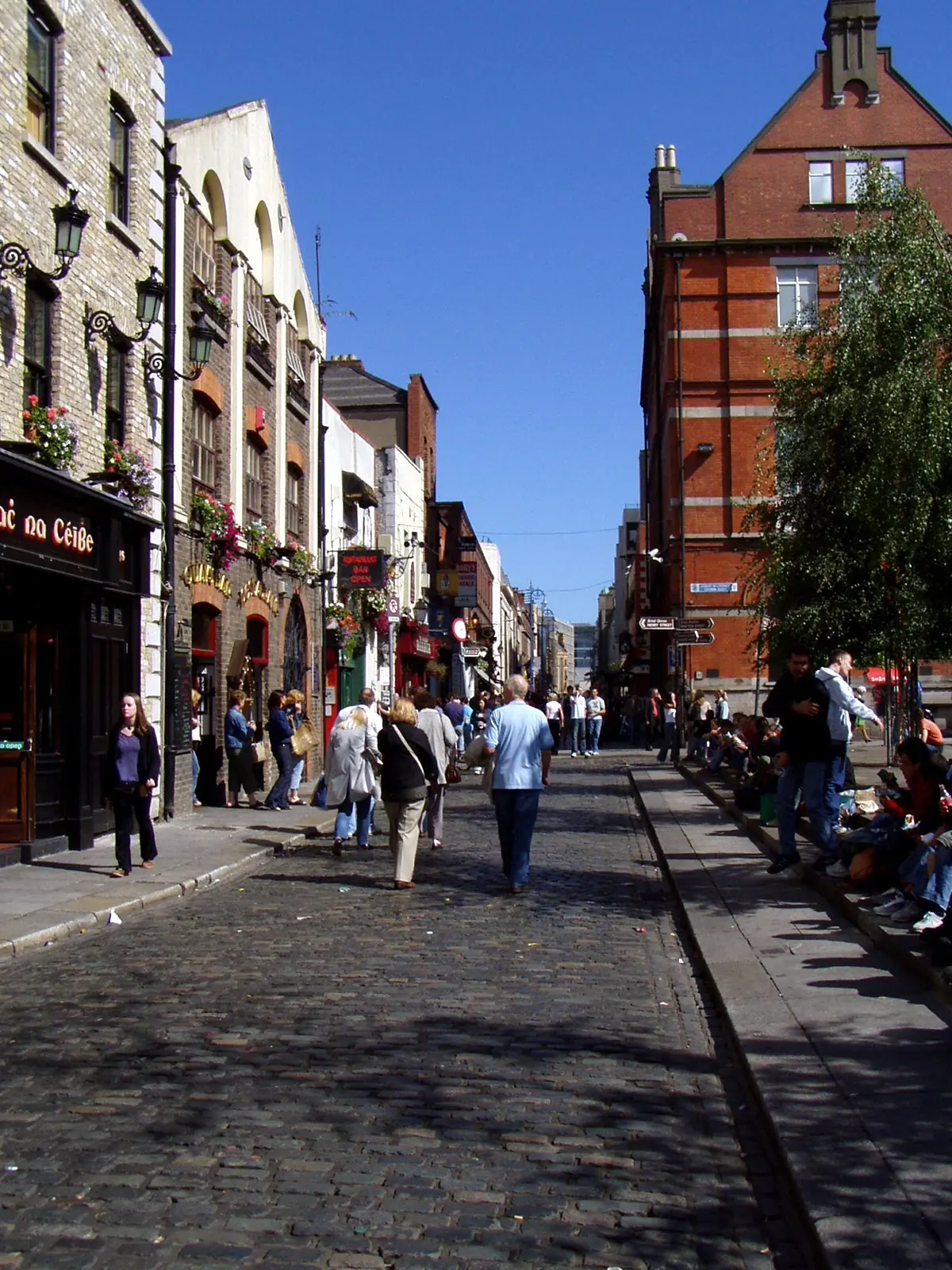
Two much older events happened here. On Fishamble Street, at its western edge, Handel's Messiah received its first performance on 13 April 1742, and the event is still marked every year at the same spot. On Eustace Street, in 1791, the meeting took place that formed the Society of the United Irishmen.
Temple Bar very nearly did not survive the twentieth century. In the 1970s and 1980s there were plans to demolish property here for a bus terminus, a shopping centre and an underground car park. While those plans were pending, buildings were let on cheap leases, and artists, galleries, cafés and small shops moved in. The bohemian character they created is what saved the district from the scheme. Today its institutions include the Irish Film Institute, the Gallery of Photography, the Ark and Temple Bar Gallery and Studios.
The pool that named the city
The Ha'penny Bridge is named after a coin, but Dublin itself is named after water. Walk south out of Temple Bar, across Dame Street, and you reach Dublin Castle, which stands beside the site of the Dubh Linn, the dark pool that gave the city its name. The pool connected the castle with the River Poddle and, through it, with the Liffey. The Poddle has not gone anywhere: it now runs underneath the castle complex, out of sight.
The castle began in 1204, when King John ordered a stronghold built here to defend the town, administer justice and keep the royal treasure safe. Most of what you see now is younger. After severe fire damage in 1684, much of the old fortress was replaced with a Georgian palace, and the Record Tower is the only medieval tower of the original fortification still standing above ground. Over the centuries the castle has served as an official residence, an administrative headquarters, a military base and a temporary court.
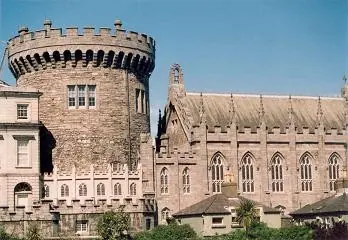
The castle also belongs to the story of the 1920s that runs along this river. After the Anglo-Irish Treaty was signed in December 1921, the castle was handed over ceremonially to the new Provisional Government led by Michael Collins. Since 1938, the State Apartments have hosted the inauguration of every President of Ireland.
Upstream: the Four Courts
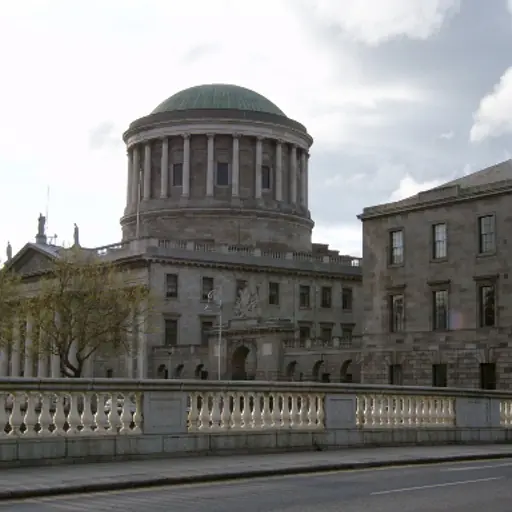
Walk west along the quays to the Four Courts on the north bank, on Inns Quay. The building is still the working seat of Ireland's Supreme Court, Court of Appeal, High Court and Dublin Circuit Court. Its name is another old description that outlived its facts: it refers to the four superior courts that were once housed here, Chancery, King's Bench, Exchequer and Common Pleas.
The building, in the Neoclassical style, was completed in 1796. Thomas Cooley began the design and James Gandon carried it through. Gandon is the name to remember on this river.
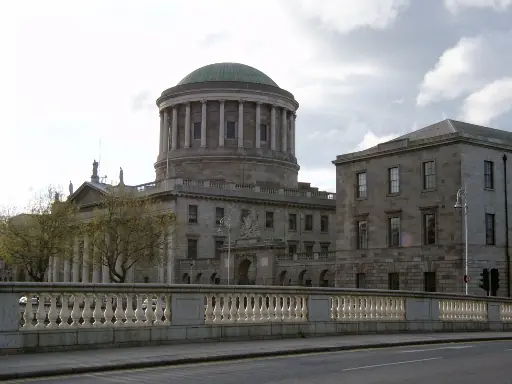
On 14 April 1922, IRA forces who opposed the Anglo-Irish Treaty occupied the complex. On 28 June the new National Army attacked to dislodge them, and during the fighting the west wing was destroyed in a huge explosion. It housed the Public Record Office, and nearly a thousand years of Irish archives were lost with it. The courts eventually came back to a rebuilt building, which opened in 1932, but much of the original interior decoration, including Gandon's decoration of the dome, was never restored.
Downstream: the Custom House
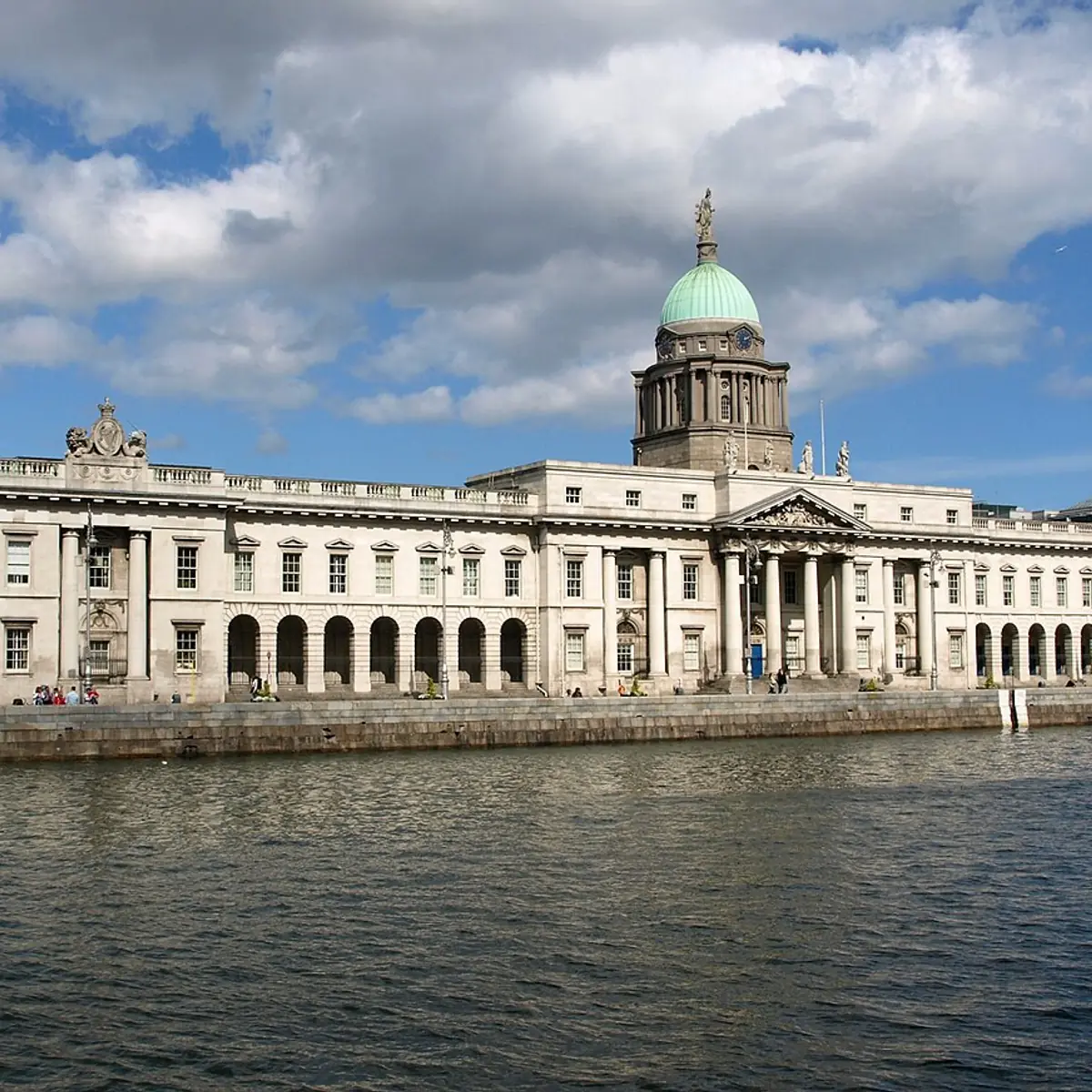
Now turn the other way. Downstream, the Custom House stands on Custom House Quay, also on the north bank. It is Gandon again, this time in the Palladian style, with a dome and broad stone façades. Construction began in 1781 and it opened for business on 7 November 1791, having cost £200,000.
Not everyone wanted it there. Dublin Corporation and some of the city's merchants complained that putting the customs house so far downriver moved the axis of the city and would leave too little room for shipping. It went ahead anyway, and Gandon also designed the original Custom House Dock and a swing bridge on its east side, completed slightly later, in 1796. In the end the port itself kept moving further downriver, and the building's original customs job became obsolete. Look up at the façade and you will see Edward Smyth's ornamental sculptures representing the rivers of Ireland, and on top of the dome a statue by Henry Banks.
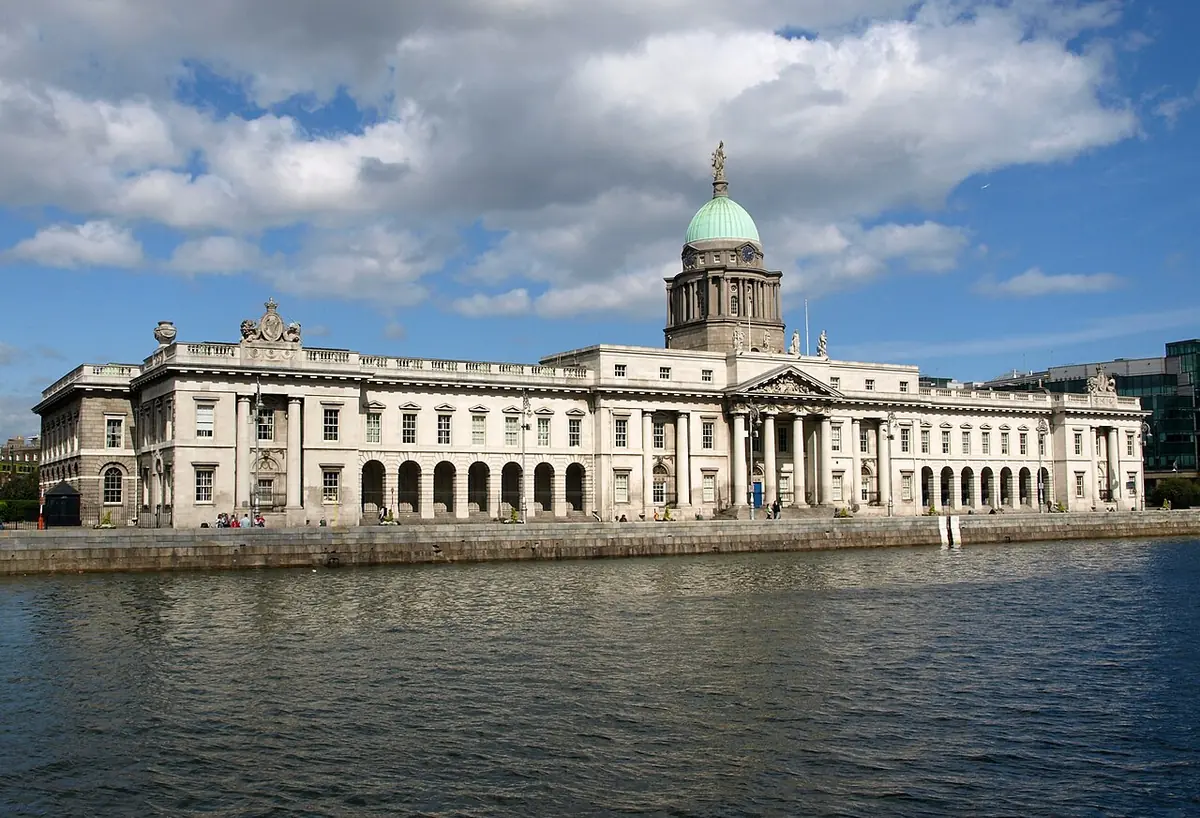
In 1921, during the War of Independence, the IRA set the building on fire to destroy the tax records kept inside. The fire consumed Gandon's interior and brought down the dome. The Irish Free State restored it afterwards, and if you look carefully you can see the repair: the replacement dome was built in Ardbraccan limestone, darker than the original Portland stone. A visitor experience inside now tells the story of the building, its burning and its restoration.
Walking the quays
Walk the river from the Four Courts to the Custom House and the Ha'penny Bridge sits between two buildings that each lost their interiors and their records in the fighting of 1921 and 1922: the tax files in one, the Public Record Office in the other. The bridge between them came out of those years with a new official name, Liffey Bridge, and Dubliners went on calling it after a toll that had already been scrapped in 1919.
If you are walking the river yourself, Guided can put the Ha'penny Bridge, Temple Bar, the Four Courts and the Custom House into one route along the quays, and tells you each place's story by audio as you reach it.
Sources
- Guided Tours narration for Ha'penny Bridge, Temple Bar, Dublin Castle, the Four Courts and the Custom House
- Ha'penny Bridge, Wikipedia
- Temple Bar, Dublin, Wikipedia
- Dublin Castle, Wikipedia
- Four Courts, Wikipedia
- The Custom House, Wikipedia
Places in this story
See everything in Dublin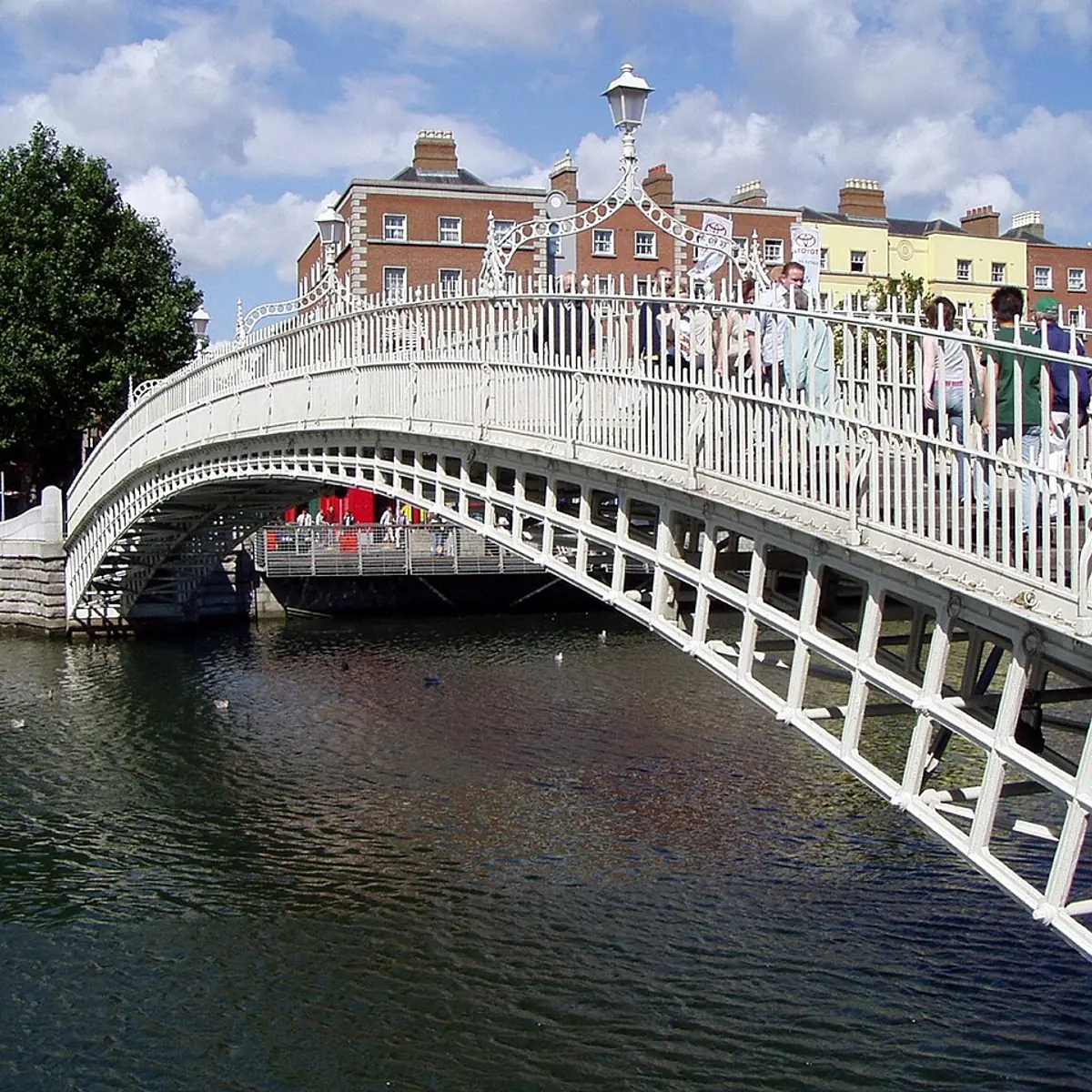


Walk Dublin with an audio guide in your pocket
Join the beta and this story becomes a route you can actually walk.