Porto
Porto — European Capital of Wine
Port wine takes its name directly from this city — fortified wine from vineyards up the Douro valley was historically shipped downriver and out to the world through Porto's harbor, and the trade shaped the city as thoroughly as any single industry has shaped any European city. You don't need a cellar tour to feel that history; a lot of it is written directly into the buildings the trade itself paid for, and into the river crossing that made moving goods and people between the two riverbanks possible in the first place.
What makes Porto's version of this story unusual is how international it was from the start. This was never simply a local product sold locally — the entire commercial apparatus of the Port trade, from the merchant houses to the exchange building to the river crossing connecting the aging cellars on one bank to the export quays on the other, was built by and for a trading relationship stretching from the Douro valley's vineyards to buyers in London, and from there across much of the rest of the world. The four stops below aren't incidental old buildings that happen to be near each other; each one is a specific, functional piece of that same trading machine.
The British Factory House
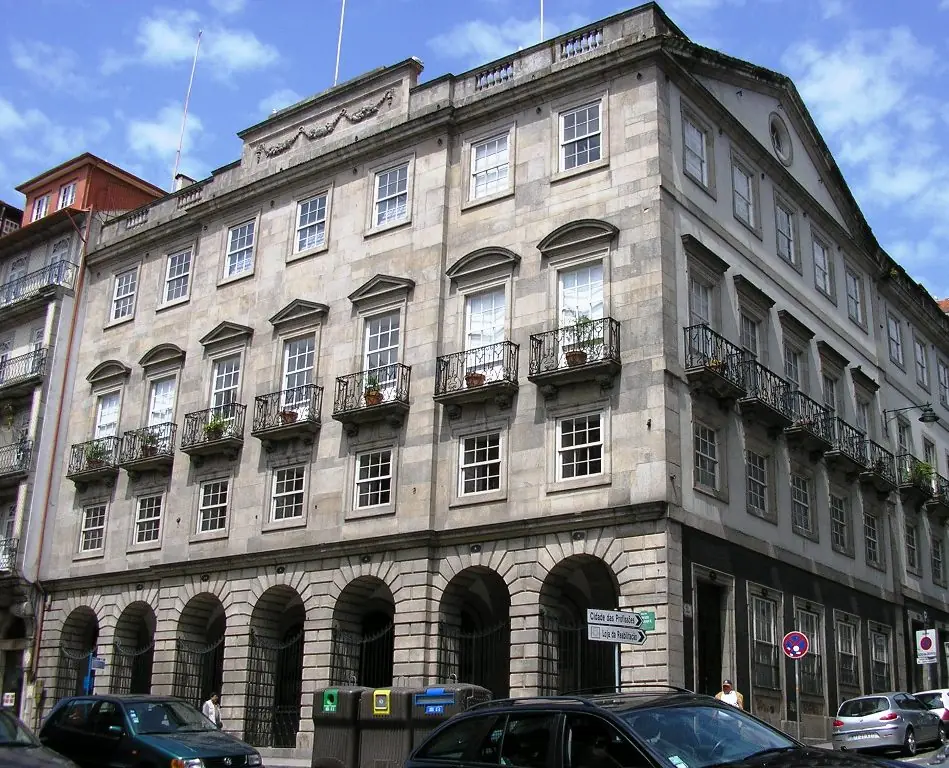
Central to that story is the Feitoria Britânica, the British Factory House. "Factory" here doesn't mean an industrial building; it's the historic English term for a merchants' trading post, and this particular one traces its institutional roots back further than the building itself — to an earlier English trading factory established in Viana do Castelo, further up the Portuguese coast, before the British Port trade community consolidated in Porto.
The building standing today went up between 1785 and 1790, paid for not by a single wealthy patron but through the ongoing yearly subscriptions of the British merchants actually working the Port trade in the city — a genuinely collective investment rather than one family's monument. It was designed by John Whitehead, who was, notably, the British consul in Porto at the time, not simply an architect for hire. Seven arches form the building's ground level, opening onto an exterior gallery before you even reach the entrance; above them, the façade rises in four carefully ordered tiers — tall principal-floor openings with balconies and triangular pediments, then progressively smaller windows toward the top. That disciplined classical face belongs firmly to the Palladian tradition, and its restrained granite presence suits a house built for serious, sustained commerce rather than display for its own sake.
What makes this particular building unusual on a European scale is simple: it's the sole surviving Factory House from a network of similar merchant institutions that once existed around the world, wherever British trading communities needed a shared base for meetings and for protecting their commercial interests abroad. Since 1811, it has operated continuously as The British Association, run by Port wine companies with British roots — a direct institutional thread running for more than two centuries from the height of the export trade to the present day. Inside, the entrance hall preserves portraits naming the Association's treasurers going back to that same year, 1811, and several of the family names on those portraits are still recognizable today on Port wine labels sold around the world. Beyond the entrance hall, the house holds a ballroom, a library, and — perhaps the most unexpectedly intimate detail — a top-floor kitchen that still retains its original equipment and tableware, as if the merchants who built it expected the institution to keep functioning exactly as designed indefinitely, which, more or less, it has.
The merchants' exchange
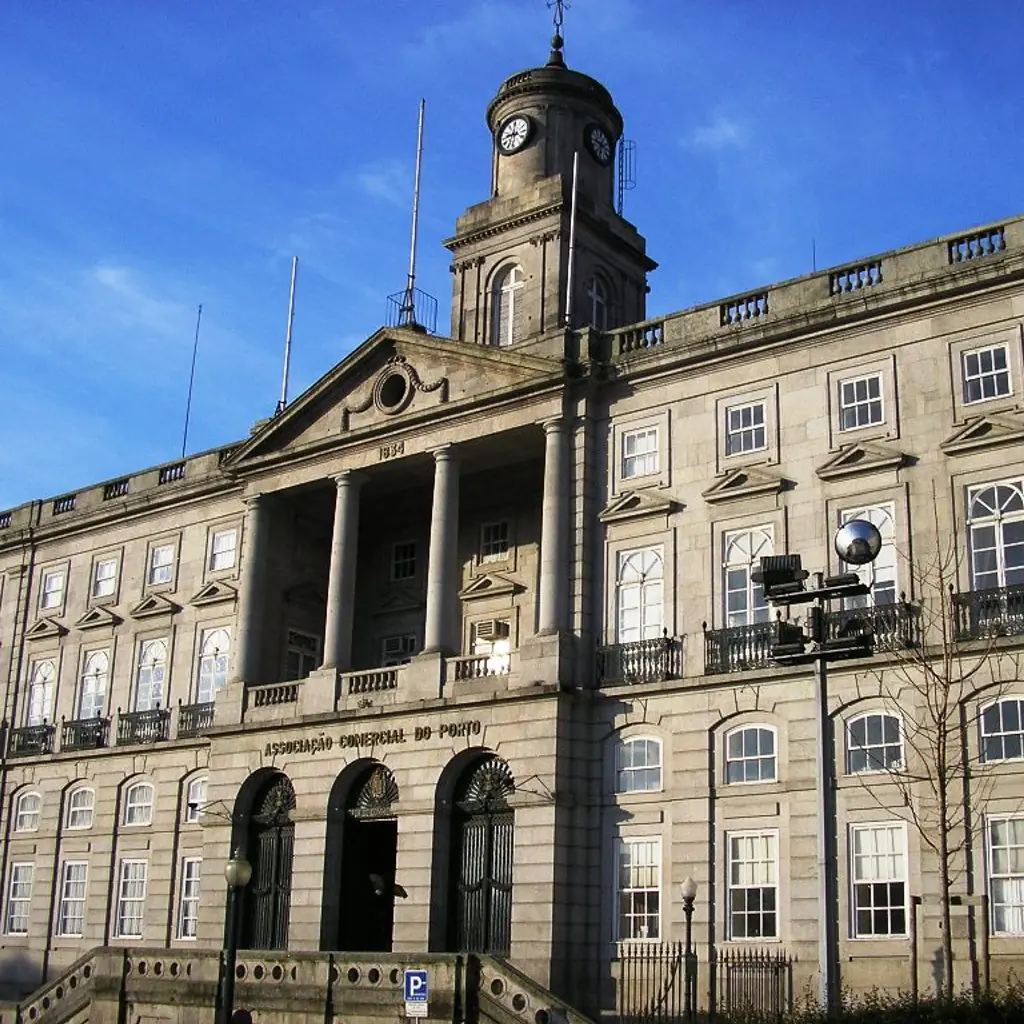
A short walk away stands the Palácio da Bolsa — the Porto Stock Exchange building — and the story of why it exists is almost comically practical. Before it was built, Porto's merchants had to take their negotiations out into the open air on Rua dos Ingleses whenever their previous trading house was closed, haggling over deals on the street like it was a marketplace stall rather than serious international commerce. That inconvenience is what led directly to the palace standing today: construction began in October 1842, and the building became the home of Porto's Commercial Association, a permanent, indoor answer to a problem that had apparently been going on for some time.
Architecturally, the building is a deliberate blend rather than a single style: nineteenth-century neoclassicism combined with Tuscan forms and English Neo-Palladian ideas, all worked together on one façade. It's not simply a historical curiosity today, either — the building still hosts the city's cultural, social, and political occasions, while remaining part of a formally classified heritage site, a working building rather than a museum piece behind rope barriers.
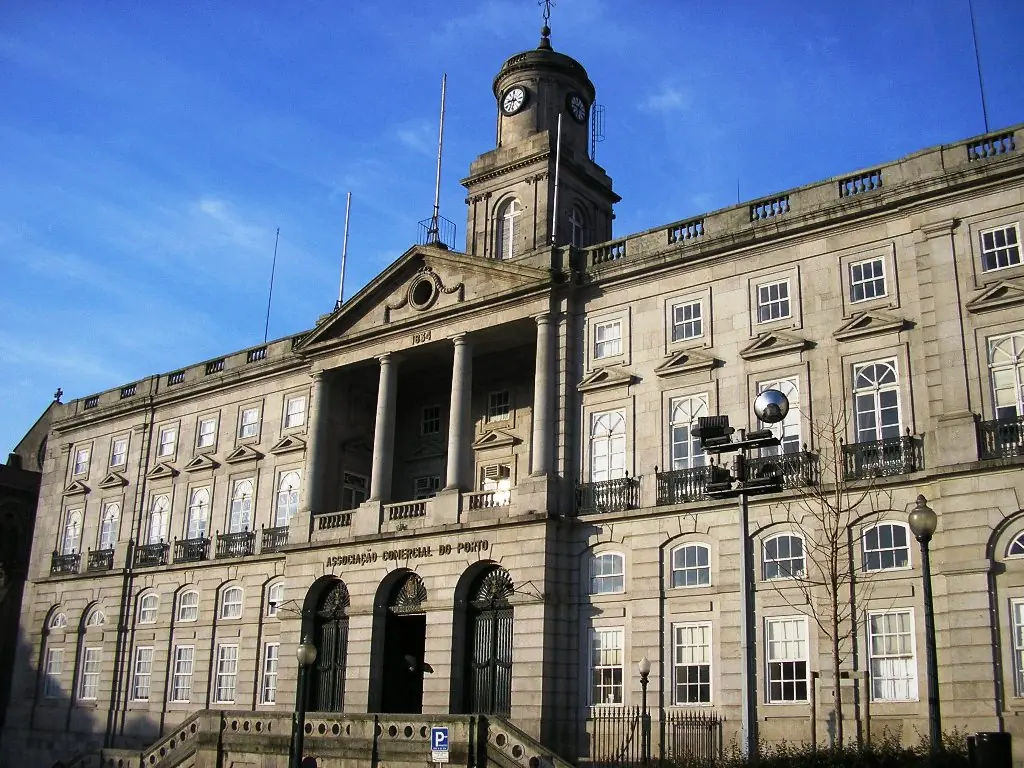
Its most celebrated interior space is the Arab Hall, where nineteenth-century plasterwork covered in gilded Arabic-style lettering runs across both the walls and the ceiling — an extraordinarily ornate room for a building whose original purpose was commercial administration, and one that's considered impressive enough that it's still used today to receive visiting heads of state. The Portrait Room holds a second, quieter feat of craftsmanship: a single table carved by Zeferino José Pinto that reportedly required three full years of work to complete. Between the two rooms, the building makes an unmistakable statement about what nineteenth-century Porto's merchant class wanted the world to understand about their wealth and their seriousness — not hidden, but put directly on display for the trading partners who walked through the door.
Crossing the river to the cellars
The wine itself wasn't aged where it landed. Historically, Port wine was shipped downriver from the Douro valley and stored and matured across the water in Vila Nova de Gaia, the district facing Porto on the river's south bank — which is why the crossing between the two banks matters as much to this story as either set of trading buildings.
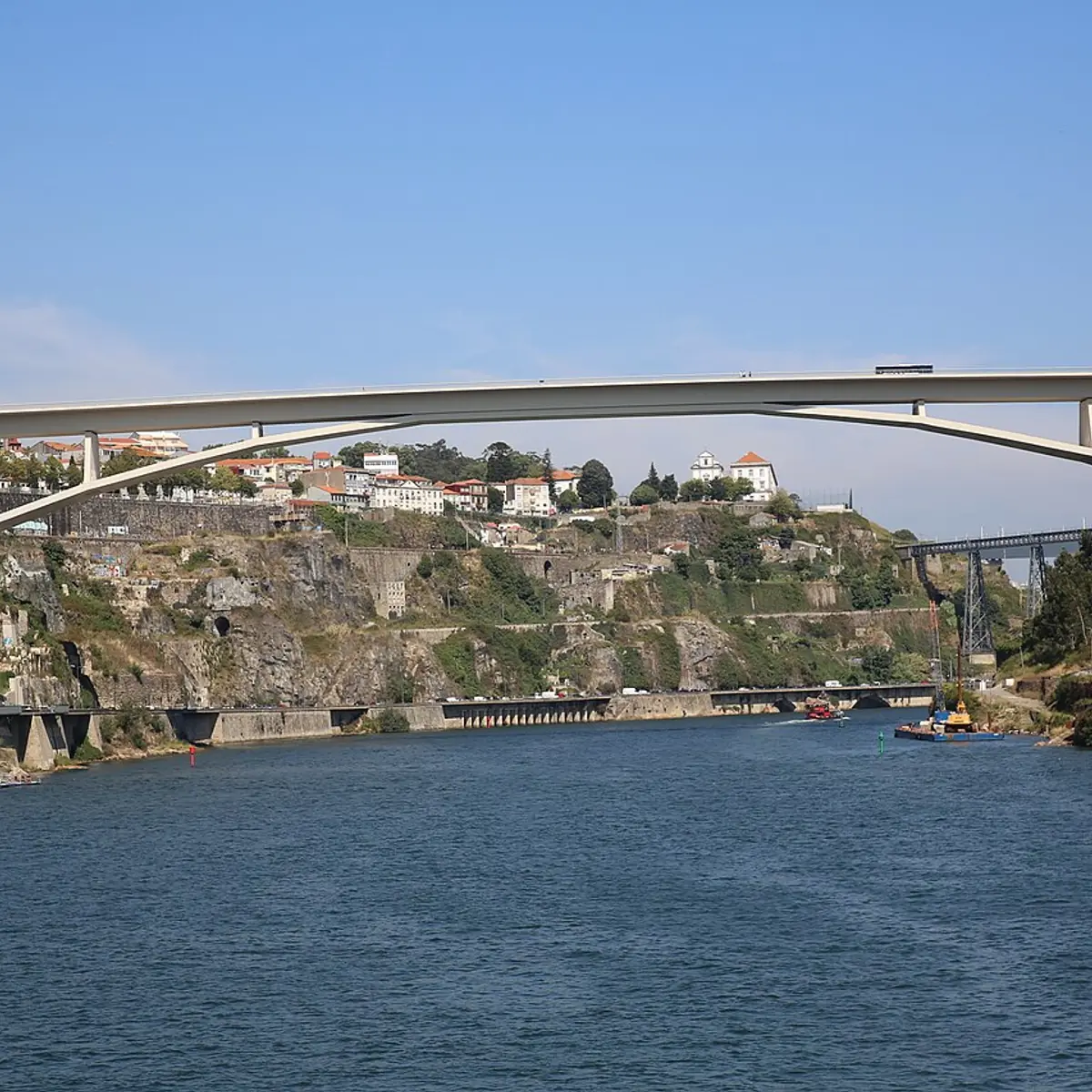
The Ponte Infante Dom Henrique is the crossing most people use today, and its engineering is genuinely unusual: at 280 meters across, its arch rises only 25 meters above its riverside foundations, an unusually flat proportion that places it among the shallowest arches of its kind anywhere in the world. The design deliberately takes inspiration from the Maillart bridges built across the Alps decades earlier — a European engineering lineage stretching from Swiss mountain valleys to a Portuguese river mouth. Usually shortened locally to simply "Ponte do Infante," the bridge was finished in 2003 and carries both vehicle traffic and pedestrians across a total span of 371 meters, passing 75 meters above the river at its highest point.
It took over a very specific practical job the moment it opened: that same year, 2003, the upper deck of the older Dom Luís I Bridge nearby stopped carrying road traffic entirely, making way instead for a line of the Porto Metro. In the sequence of crossings along this stretch of the Douro, Ponte Infante Dom Henrique sits upstream of Dom Luís I Bridge and downstream of the Maria Pia Bridge — three very different generations of engineering, from three different centuries, all still standing within sight of one another. Its name honors Infante Dom Henrique, Prince Henry the Navigator, who was born in this city and whose long shadow over Portuguese maritime history makes him a natural namesake for the bridge that still carries Porto's daily traffic across its own river today.
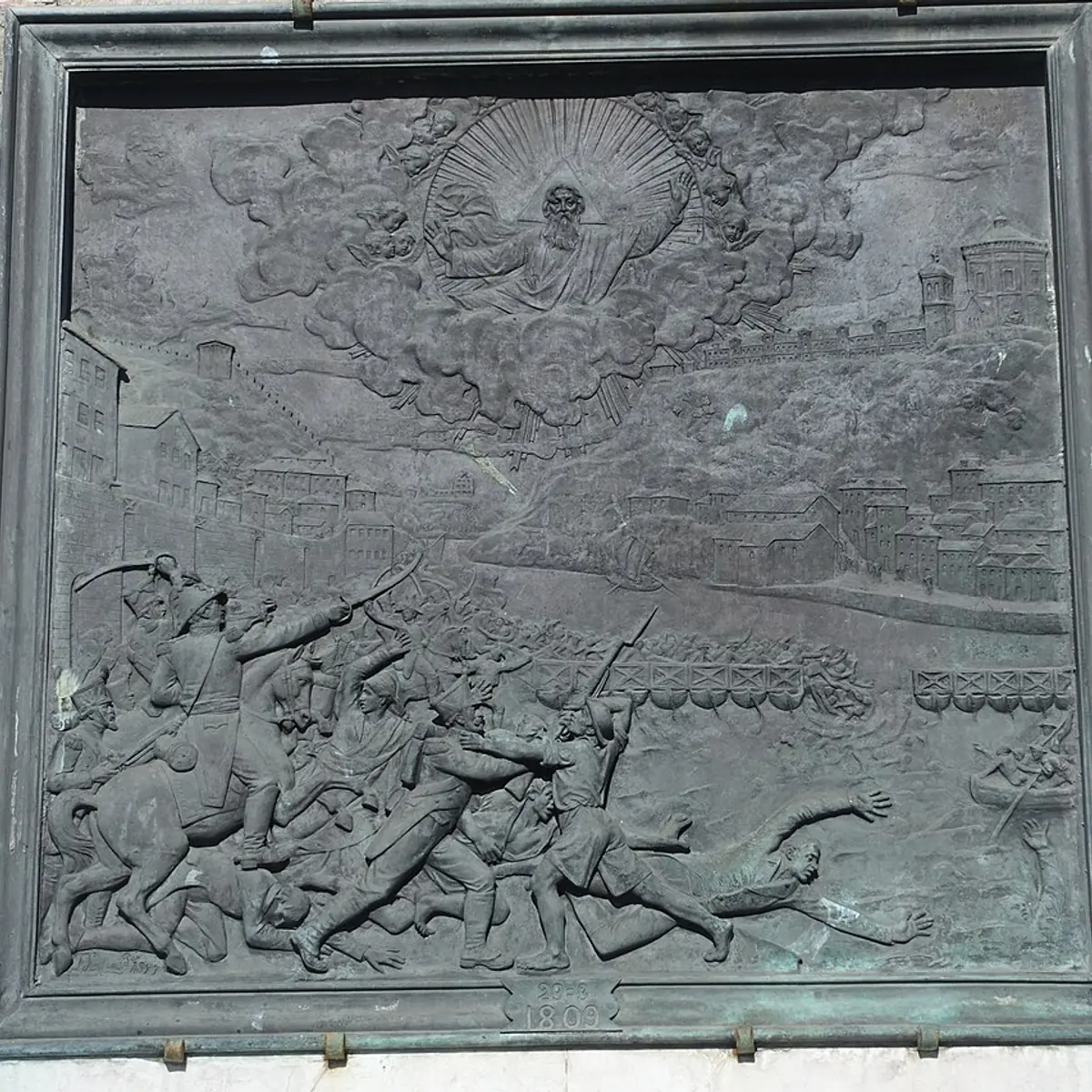
Near the bridge stands Alminhas da Ponte, a bronze relief made in 1897 by the sculptor Teixeira Lopes, and it's worth knowing exactly what it commemorates before walking past it. It marks the 29th of March, 1809, when Marshal Soult's French forces attacked and took the city during the Peninsular War, and residents together with retreating Portuguese defenders surged toward the crossing to Gaia in a desperate attempt to escape. The bridge they were fleeing across wasn't a permanent structure at all — it was an ingenious but fragile floating crossing, twenty boats fastened together across the river and decked over to carry people, animals, and carts. Under the crushing weight and terror of the fleeing crowd, that floating bridge collapsed. The precise death toll has never been fixed with certainty, but the commonly cited estimate is roughly four thousand lives lost in a single catastrophic afternoon.
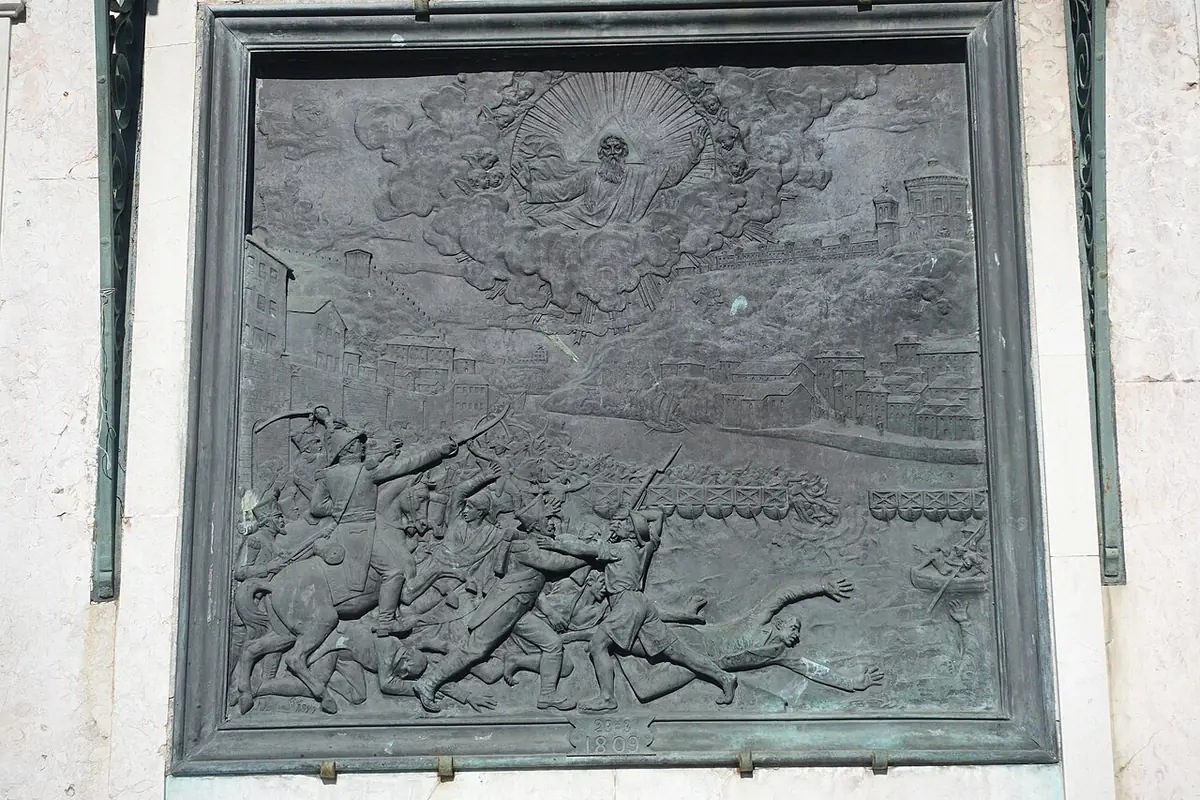
This small memorial carries an outsized weight of grief for its modest size, and locals still leave candles and flowers here today. One local legend attached to the tragedy names a specific act of individual courage: a clerk named Orlando Beirão Valente is remembered as having made sixteen separate crossings back and forth, carrying elderly residents and children to safety one at a time, before falling into the river himself on his seventeenth attempt. Whether or not every detail of that story can be verified the way the disaster's broader facts can, it's the kind of individual memory a community keeps precisely because the scale of the disaster itself — four thousand people, on one bridge, in one afternoon — is otherwise almost too large to hold onto directly.
Walking the trade route
None of these four stops require a cellar tour or a tasting menu to appreciate — they're the physical infrastructure and history of the crossing the Port wine trade actually depended on: a merchants' house built and continuously run by the British trading community for more than two centuries, an exchange built specifically to impress the wider trading world after one too many street-corner negotiations, and a river crossing whose present-day bridge and whose century-old memorial both mark how much has moved across this stretch of water — commerce in calmer decades, and tragedy in at least one catastrophic one. Walking between them traces the trade's real geography rather than a marketing version of it, and it puts a specific building, a specific date, or a specific name to nearly every stretch of the walk.
Guided builds a walking route through Porto based on your interests and how much time you have, and narrates each of these stops — the Factory House, the Exchange, the bridge, and the memorial beside it — with GPS-triggered audio as you arrive, hands-free and fully offline once the tour is downloaded.
Places in this story
See everything in Porto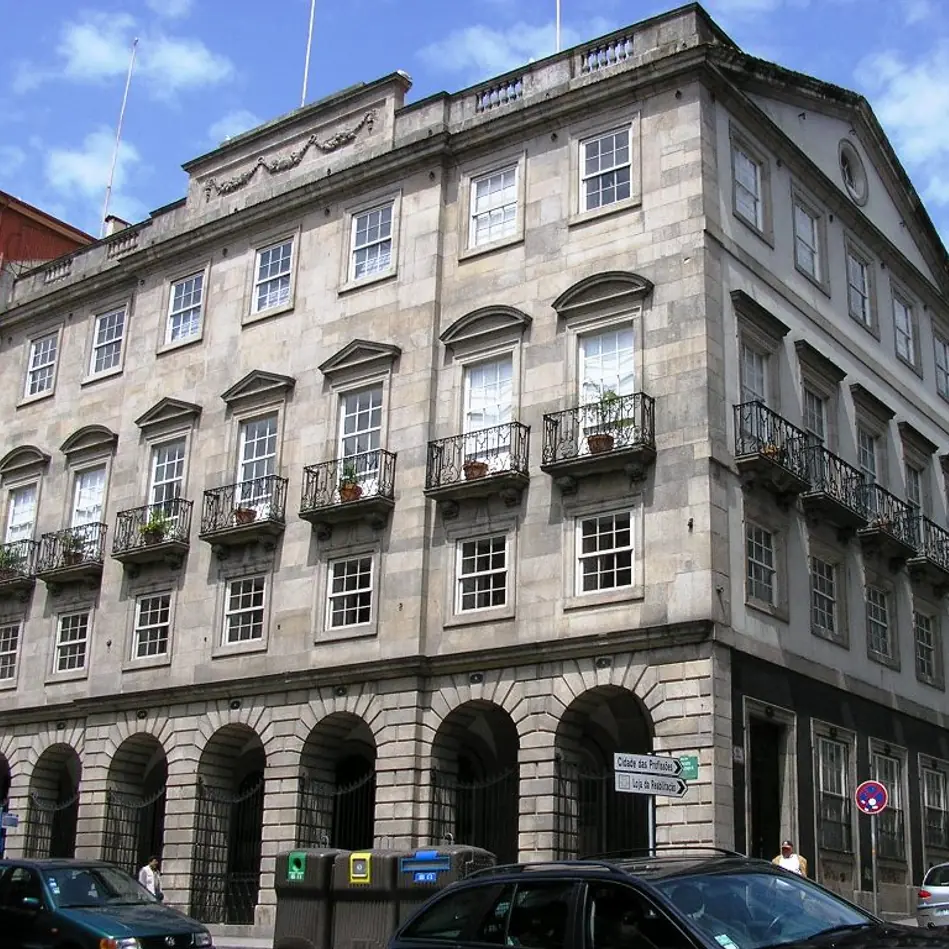
.JPG)
.JPG)

Walk Porto with an audio guide in your pocket
Join the beta and this story becomes a route you can actually walk.