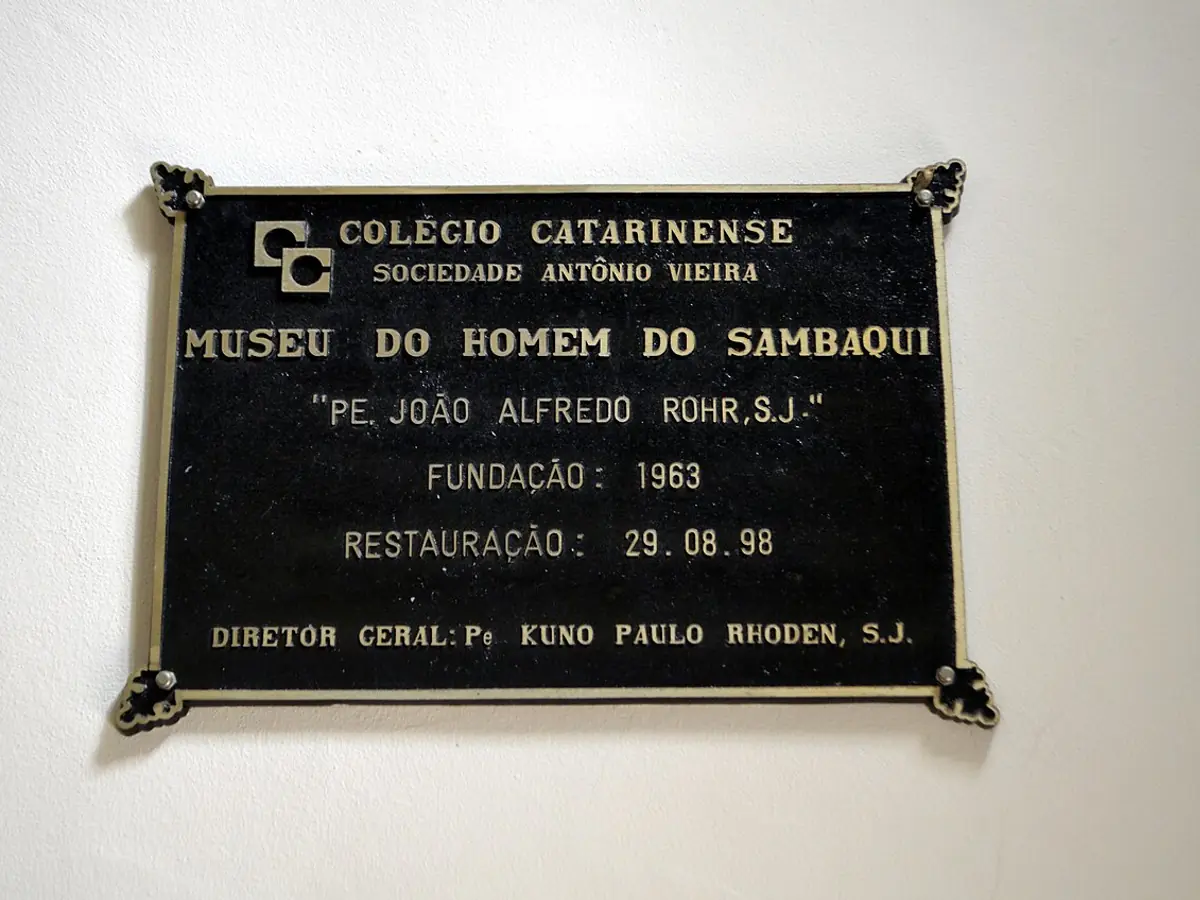
Nearly 200 remarkably well-preserved human skeletons, dating from about 1,055 to 1,552 years ago, form part of this museum’s collection. Inside Colégio Catarinense, the Museu do Homem do Sambaqui brings together natural-history material and evidence of human cultures, including preserved native animals and human artifacts. Its name leads you to the sambaquis: deliberately accumulated deposits of shells, organic remains, and lime-rich material.
The word comes from Tupi and describes a heap of shells. Along Santa Catarina’s coast, Indigenous communities used some of these places for burials, while others chose them as sites for their homes. The museum grew through the work of João Alfredo Rohr, a Jesuit priest and researcher who arrived at the school in 1941 to teach physics, chemistry, and natural sciences.
In 1958, his first on-site archaeological excavation covered 200 square metres at Caicanga-Mirim near the Florianópolis Air Base. There he recovered 54 Indigenous skeletons from a population related to the Xokleng and living in the 12th century. Rohr documented more than 400 archaeological sites across Santa Catarina.
The collection now includes about 8,000 sambaqui objects, stone animal carvings, roughly 80,000 fragments, and Guarani pottery. It also preserves an 1864 letter signed by Paraguayan president Francisco Solano López. Founded in 1963, the institution took its present name at its 1964 reopening.