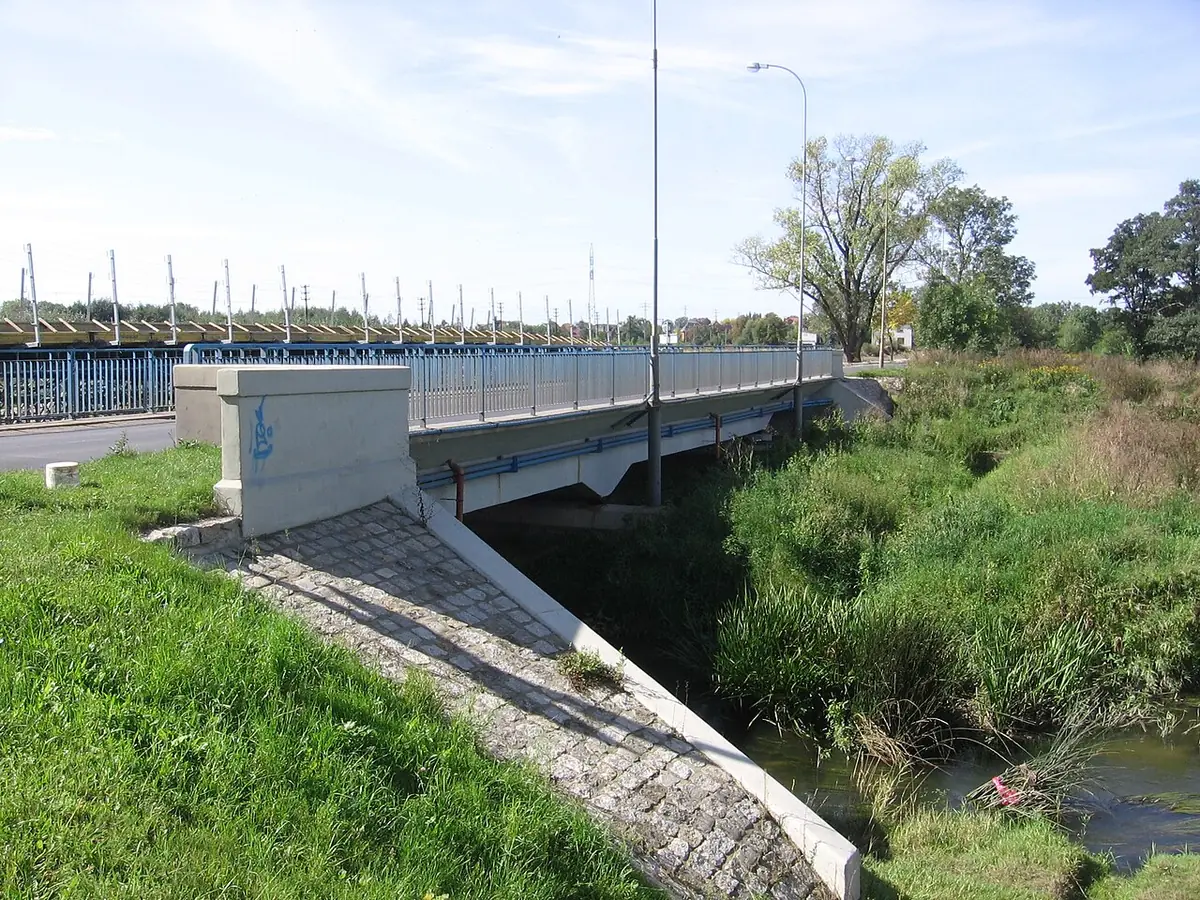

Most Żernicki, Wrocław
Most Żernicki carries Żernicka Street across the Ślęza in Wrocław’s Żerniki area. Built in 1932 and reconstructed in 1952, its narrow three-span reinforced-concrete structure prompted the addition of the Żernicka Footbridge for pedestrians and cyclists in 2007. Its earlier name connected it with the former Neukircher Strasse.
Most Żernicki is the road bridge carrying Żernicka Street across the Ślęza in the Żerniki area of Wrocław. What appears to be a modest local crossing has a practical history shaped by the limits of its width. The bridge was first built in 1932, then reconstructed in 1952 using its earlier supports.
Its structure has three reinforced-concrete spans, formed with a slab-and-rib system. The whole crossing measures 37.3 metres long and 7.3 metres wide; only 5.9 metres belong to the carriageway, with narrow pavements of 0.7 metres. That cramped arrangement led to the construction of the separate Żernicka Footbridge alongside in 2007, giving pedestrians and cyclists their own route across the river.
Before the war, this crossing was called Lohebrücke-Neukirch. “Lohebrücke” simply meant a bridge over the Ślęza, while “Neukirch” referred to the former German name of Żernicka Street, Neukircher Strasse, adopted in 1933. In 1948, the bridge briefly carried the Polish name Most Żerdnicki before becoming Most Żernicki.
Good for
Architecture
More places in Wrocław
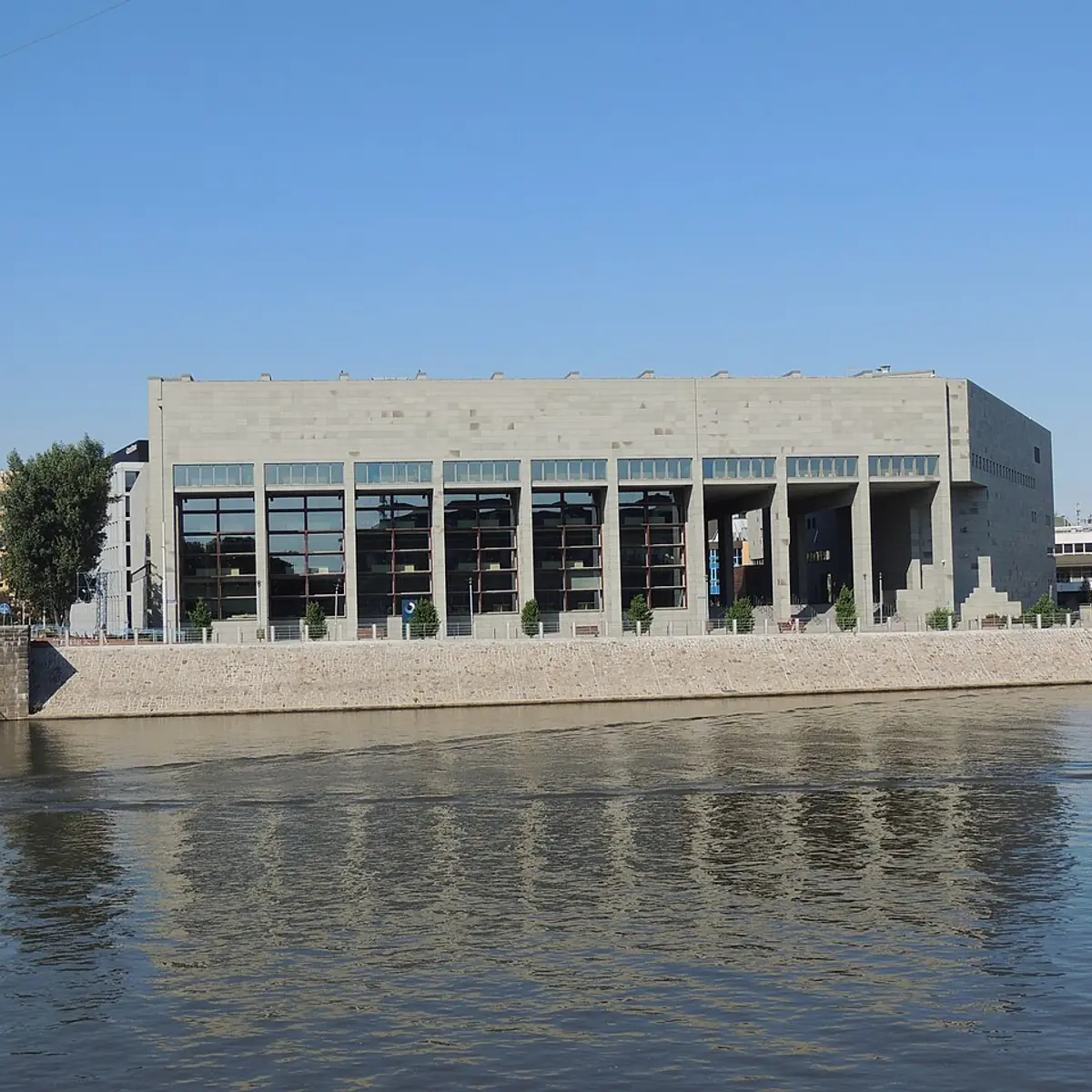
iJoee (CC BY-SA 4.0) Biblioteka Uniwersytecka
culture
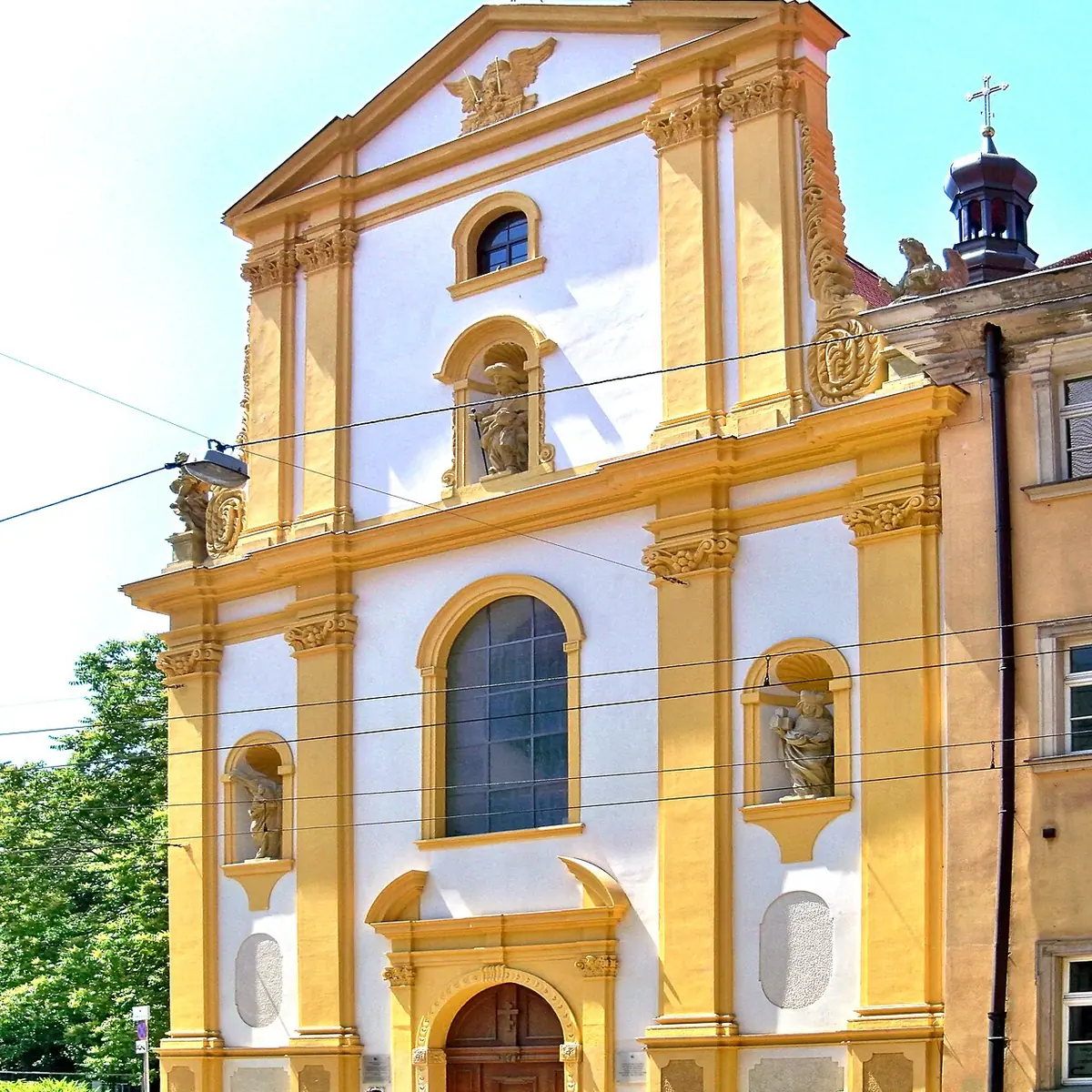
iPanek (CC BY-SA 3.0 pl) Cerkiew Świętych Cyryla i Metodego
history
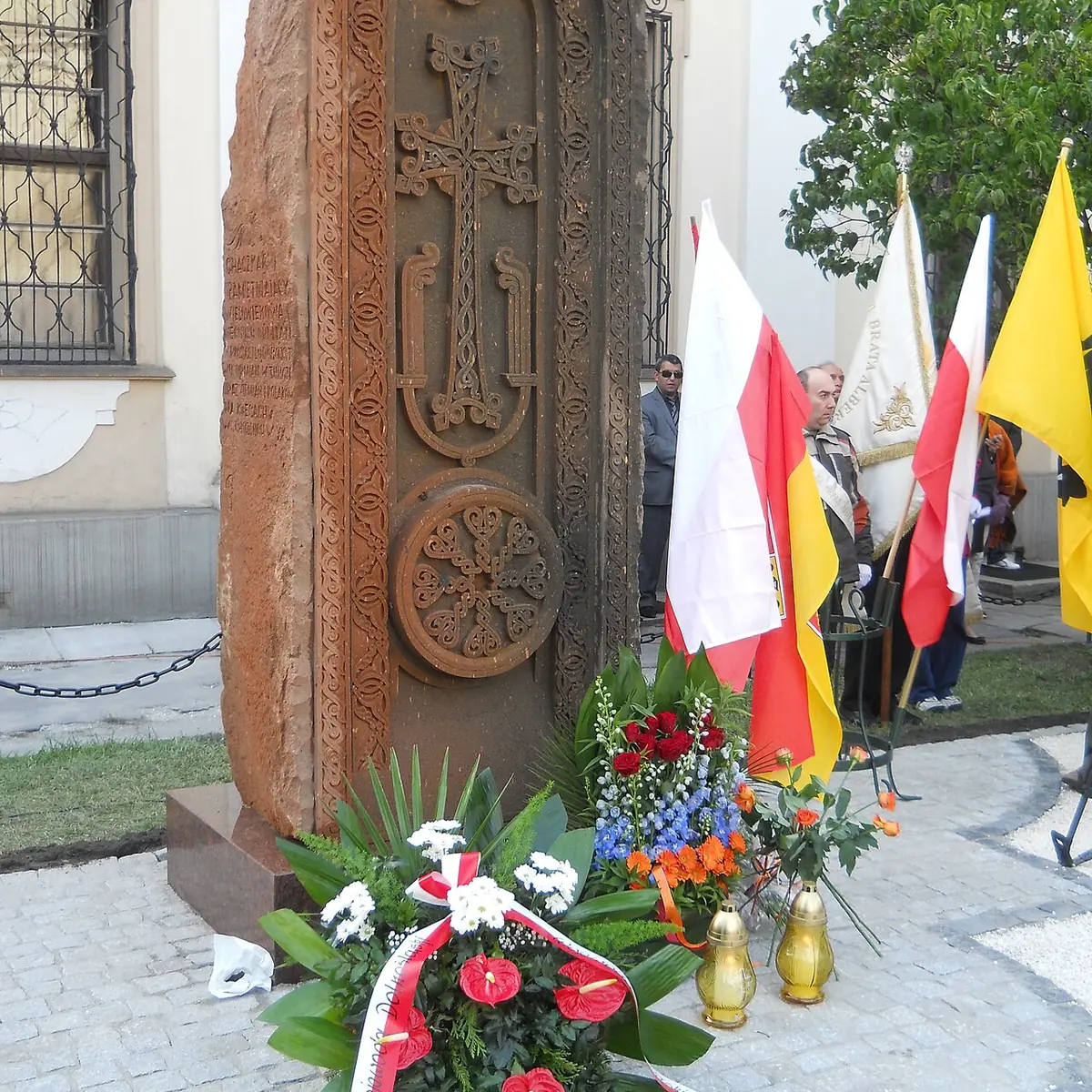
iNarekrock&roll (CC BY-SA 4.0) chaczkar
history
iJulo (Public domain) Cmentarz Grabiszyński
history